Skip to content
One Fish Foundation
  • Blog
    • Aquaculture
    • Education
    • Environment
    • Policy
    • Wild Harvest
    • Fish Tales
  • About
    • About One Fish
    • About Colles Stowell
  • Education
    • Elementary School
    • Middle School
    • High School
  • KNOW FISH Dinners®
  • Resources
    • One Fish Podcast
    • One Fish Foundation in the news
    • The 7 C’s of Sustainable Seafood
    • Newsletter Archive
    • Recipes
      • Skate with Capers and Butter — Chef Rizwan Ahmed
      • Grandma Davis’ Fish Chowder — Jane Almeida
      • Ginger Garlic Tamari Scallops — Colles Stowell
      • Fish Stock — Evan Mallett
      • Mussels San Remo — Chef Rob Martin
      • Salted Pollock Croquettes – Chef Mark Segal
  • Connect
    • Contact OneFish
    • Social
      • Instagram
      • Facebook
      • Twitter
All Blog Posts

Frankenmine: Pebble’s Worst-Case Scenario

  • February 10, 2020October 19, 2021
  • by Colles Stowell
Share it!
Share

Let me know if this makes sense to you.

The US Army Corps of Engineers is the federal agency responsible for ensuring that large civil engineering projects dealing with wetlands and other natural resources meet exacting specifications to ensure minimal impact on those resources.

This same agency announced on Jan. 23 that it would NOT consider a worst-case scenario tailings dam failure for the proposed Pebble Mine at the headwaters of the world’s largest wild sockeye salmon run in Bristol Bay, Alaska. Dam tailings are the highly toxic waste byproduct of open pit mining that must, in theory, be stored forever to preserve surrounding habitat. Any release of this material, which may contain arsenic, sulfur acid and other highly toxic material, could do irreparable harm to the natal streams and rivers that support the $1.5 billion economic engine driven by healthy wild salmon stocks.

Three days after this stunning announcement, Bristol Bay residents near King Salmon woke to an earthquake measuring 3.6 on the Richter scale.

So let’s do the math here. The USACE, which is supposed to ensure all of the nasty mining byproduct doesn’t leach into the landscape, ever, still feels confident nothing could go wrong.
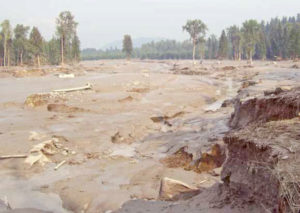
 

Aftermath of Mt. Polley tailings dam failure in 2014. This dam was initially engineered by the same firm slated to engineer Pebble’s tailings impoundment. What could possibly go wrong? Photo from Mining Watch/Chris Blake.


I guess it’s just a minor inconvenience that the damn tailings dam would be strategically located in a seismically active area along a geologic zone called the Ring of Fire due to constantly grating tectonic plates that force magma up through the earth’s crust and create volcanoes.

How active is it? According to the Alaska Earthquake Center, 2018 and 2019 ranked first and second respectively in the number of earthquakes tracked in Alaska, with only 50,289 reported earthquakes in 2019 ranging in depth between 0 and 165 miles. There were two quakes measuring 6.4 along the Aleutian Islands.

This would be great fodder for a Saturday Night Live skit if it weren’t so staggeringly unconscionable.
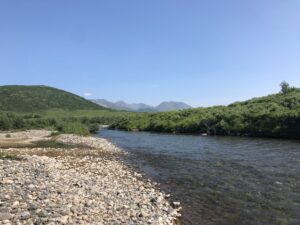
 

Contact Creek just south and a bit west of King Salmon in Bristol Bay. Pristine water like this is essential to salmon spawning. It could be irreversibly damaged by a tailings dam failure. USACE doesn’t seem to think that’s a possiiblity.


Frankenmine is alive…again

Credit goes to the fierce determination of the mine’s opponents that Pebble has not been permitted in the past nearly two decades since it was first proposed.

The twists and turns in the Pebble saga are dizzying. Consider:

  • Three of the world’s largest four mining corporations walked away from the project, citing massive opposition and gigantic economic risks;
  • A fourth, smaller potential financial backer also stepped away for the same reason in 2019;
  • The Obama administration had the mine on its deathbed, concluding after years of scientific review that as initially proposed, the mine would violate the Clean Water Act and threaten precious salmon habitat;
  • A 30-minute conversation between the Pebble Limited Partnership’s CEO and former EPA Administrator Scott Pruitt just a few months after the current administration took office in 2017 reversed course and put the mine back on track;
  • Alaska Governor Mike Dunleavy is a Pebble Limited Partnership puppet who has publicly courted potential backers while working with President Trump to streamline and accelerate approval. In fact, you may have seen this photo of Dunleavy and Trump on Air Force One, planning more “development” that would destroy Alaska’s precious natural resources despite widespread opposition;
  • Dunleavy appointed a former mining industry executive to head the state’s Department of Environmental Conservation;
  • The regional EPA office publicly decried the highly questionable conclusions in the USACE draft environmental impact statement, only to be forced by the administration to walk those comments back a few days later.
  • Most Alaskans don’t want the mine. Annual polls show that opposition has never dropped below 50%, and support has never risen above 40%. This despite all the money giant pro-mining corporations pour into changing opinions.

So the shaker near King Salmon had impeccable timing. It’s as if Mother Nature is rattling a warning.
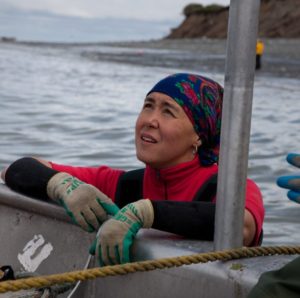
Melanie Brown on the Naknek River, doing what she loves best on the set net fishing site her great-grandfather established several decades ago.

Here’s the real worst-case scenario writ in big bold lettering so that even pro-mine “executives” in their big white offices should be able to understand. No matter how much you attempt to “store” all that toxic crap piled 500 feet high in a giant 1,000-acre “facility,” you cannot guarantee that an earthquake won’t shake it loose.

And if it does happen, and it likely would, the contamination would have an excellent chance of being near total, and potentially permanent. Thousands of people living downstream would be in danger. Wild salmon would lose their spawning grounds and the ability to ensure the longevity of the species.

I wonder what the Army Corps of Engineers would say then.
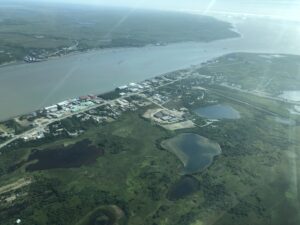
The fishing fleet in the Naknek River. The processing plants are visible along the shore. The population swells by a factor of 10 during the fishing season.

Defend Bristol Bay

For those of us in the lower 48 continuing to endure wave after wave of senseless rollbacks of environmental protections for precious natural resources across the country, the Pebble issue may seem like just another chapter in a painful narrative.

But this issue affects us all. If you eat wild salmon, you’re eating salmon that depends on crisp, clean, clear water in virtually undisturbed wilderness. Even if you don’t eat salmon, the battle to protect wild spaces is one you should care about.

I’ve met several people who have been fighting this fight for years. I’ve seen their land, their water, and their salmon. To those folks in Bristol Bay, this is a battle for their way of life – and their lives. They have no option but to continue to stand up to the blind greed, political bullying, and outright sham of the process.

We would do well to stand with them and set an example of how to change the narrative.

If you want to make your voice heard, contact your congressional representatives here. If you’d like to do more than that, check out the Defend Bristol Bay action page.

If you’d like to see what life is like in Bristol Bay for those who live and fish there, check out The Wild, the award-winning film directed by friend and colleague Mark Titus. Follow this link to see screenings near you.
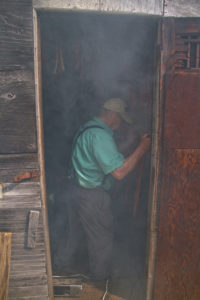
 

Eighty-eight-year-old Al Aspelund, an Aleut native, working his smoke shack magic as he has done for some six decades. Indigenous subsistence traditions like this are at stake.

Resources

Here are a couple of ways to get more info and get involved:

  • One Fish Foundation Fish Tales Podcasts:
    • Gayla Hoseth: Natural Resources Program Director and Second Chief of the Curyung Tribal Council
      • Audio only (downloadable)
      • Video (with photos)
    • Norm Van Vactor: President and CEO of Bristol Bay Economic Development Corporation
      • Audio only (downloadable)
      • Video (with photos)
  • Salmon State: Good resource for history of project and ways to get involved.
  • Pebblewatch, which also has some cool maps
  • National Park Service in-depth analysis of the long-term effects of tailings impoundment failures.
  • Bristol Bay Native Corporation: Good background on some of the indigenous opposition to the mine.
  • Bristol Bay Native Association: Another organization supporting the tribes of Bristol Bay.
  • Informative Anchorage Daily News Op-Ed about how the Trump and Dunleavy administrations have worked to gut the clean water act and its protections in Alaska.
  • Businesses of Bristol Bay
  • Bristol Bay Economic Development Corporation
  • July 1 EPA Region 10 letter from Administrator Chris Hladick, voicing concerns over Army Corps of Engineers’ Environmental Impact Statement
 

All Blog Posts

Bristol Bay Beckoning

  • July 17, 2019October 19, 2021
  • by Colles Stowell
Share it!
Share

Plan for them all you want, but rich experiences often require overcoming some challenges, adapting to surprises and simply making do.

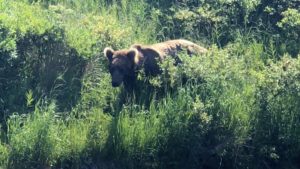
In the past two weeks in Bristol Bay, Alaska, I’ve watched massive brown bears stroll along the banks of the rivers I was fishing as they searched for their own meals, passively taking notice of us humans. Breathtaking.

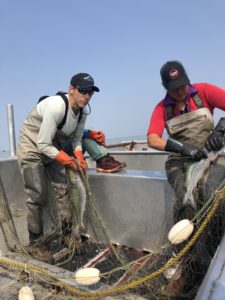
I’ve picked fish out of set nets by hand, learning from a master how to extricate gill plates, untangle fins and bleed the fish quickly and efficiently as we practiced a centuries-old ritual. Working three sets in a 15-hour period gave me a glimpse at just how demanding a full four-week season must be.

I’ve toured one of the eight or so big processing facilities that represent half of the commercial fishing economic equation in Naknek. One million fish a day are vacuumed up a large pipe from the waterfront to a huge warehouse with hundreds of hairnetted seasonal workers that head, tail, gut and fillet the fresh fish. The salmon are then either frozen and packed, or smoked, frozen and packed, each fixed with the private label of one of the fishermen who contract with the plant. It is a very smooth operation.
I’ve hitchhiked (for the first time, feeling at once a tad uneasy and adventurous) along the Alaska Peninsula Highway between Naknek and King Salmon, shortening the 15-mile distance, saving the $40 cab fare (and the $255 per day to rent a Kia) and meeting some really interesting people along the way. Hippie Doug may be a transplant from the 80s, but he sure seems to have carved out a creative, if off-color niche for himself smoking salmon in Bristol Bay.

The flora and fauna

I’ve checked off a significant, life-long bucket list item: fly fishing Alaska’s wild rivers and streams, catching a variety of stunning salmonids with different flies and approaches. The red flame of the rainbow trout and the iridescent pink spots of the Dolly Varden or Arctic Char are seared in memory, recalled at will. Same with the small chrome blue thumbprint marks along the sides of the 30 or so 2-8 inch king salmon smolts I caught while fishing King Salmon Creek alone.

We stood still and watched, being sure to keep a low profile. Click to watch a clip and turn up the volume!

Finding relatively fresh bear, moose and caribou tracks in the same vicinity along one of the creek’s banks spoke to the remarkable stable of wildlife in this place. I found a new sense of awareness following well-worn bear trails along the creek, mindfully following the advice I learned at “Bear Camp” at Brooks Creek by keeping a running conversation with myself. Ironically, I recounted a story I made up for my toddler daughter called “Esty and the Bear Cub.”

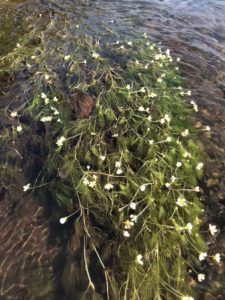
Mouse Ear Chickweed? Could be. Or it could be something else. Whatever it is, I sure did appreciate it at King Salmon Creek.

I drank in everything Nature had to offer. The colors of the fireweed, Toadflax (aka, butter and eggs), some form of lupine, something possibly called Mouse Ear Chickweed and countless other flowers I couldn’t identify. On one trek back from Contact Creek, I took in the cool shape and color of not-quite-ripe cloudberries, and the plethora of blueberry bushes along the trail, promising yet another ample food supply for bears, people and other critters in the next few weeks.

Bald eagles were fairly common, as were magpies, chickadees and some type of thrush providing the soundtrack for the wondrous ecosystem. On the flight from King Salmon to Dillingham, I watched beluga whales swimming in formation, chasing down a school of sockeye.

The people

I’ve also met some wonderful people who are corporeally and spiritually rooted to the land, the water and the resource. I was struck by their generosity, their openness and the power of their convictions. I spoke with both transplants and those whose roots to Bristol Bay extend for generations.

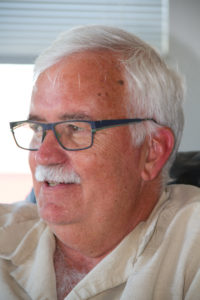
Al working his smoke shack magic.

Al Aspelund and his wife Lou were my endearing hosts at Al-Lous B&B in Naknek. At 88, he is a consummate putterer, always fixing something and tinkering with his smoke shack to get the right temperature, air flow, and humidity for the sockeye and king salmon he hangs. A lifelong resident of the area, he practices the craft passed down from the Aleut traditions of his heritage.

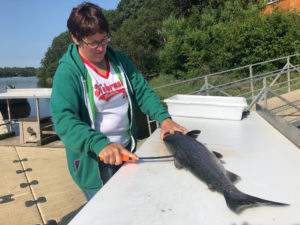
Lodge owner, fishing guide, master fish filleter and outdoors woman, Nanci Morris Lyon carefully cutting a king salmon I’d just landed.

Nanci Morris Lyon is a woman of the wilderness. She grew up on a subsistence farm in eastern Washington state, and has carried that wilderness spirit with her in her journey to become a commercial fisherman, a fishing guide and finally, a sport fishing lodge owner in King Salmon.

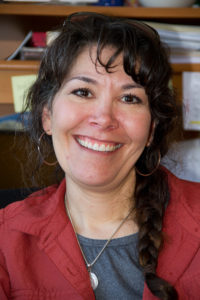
Gayla Hoseth advocates for indigenous rights and preservation of the wondrous natural resources of Bristol Bay.

Gayla Hoseth is a force of nature, striving to protect indigenous rights with a focus on preservation and access to Bristol Bay’s natural resources as director of natural resources at Bristol Bay Native Association in Dillingham, and second chief of the Curyung Tribal Council. Born and raised in the area, she clings to the traditions she fights to preserve for indigenous tribes, such as learning to use an ulu (traditional knife) to fillet salmon from her grandmother.

Years of adaptation on boat decks, in processing plants and running the Bristol Bay Economic Development Corporation have helped Norm Van Vactor put things in perspective.

Norm Van Vactor moved to Dillingham after graduating high school in the Philippines and soon became a deckhand on a tender (a boat which takes the catch from smaller boats to processors on shore). He’s spent much of his life on deck or in processing plants, eventually becoming president and CEO of the Bristol Bay Economic Development Corporation, charged with ensuring the rights of fishermen and others who want to earn a decent living in the area.

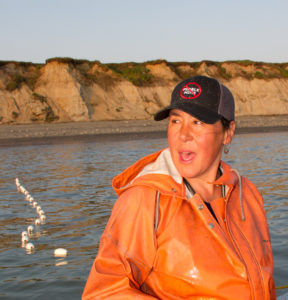
Melanie exudes good cheer, even during the fourth set of the day heading toward midnight.

Melanie Brown radiates love. She almost always has a smile on her face. She set net fishes with her son and daughter on the same sight her great grandfather established at the mouth of the Naknek River in the early 1900s, where thousands of sockeye funnel past heading many miles upriver to spawn. The one time I saw her really lose her smile was when she spoke about the impending threat of the Pebble Mine, showing her passion for protecting her rights, and those of everyone else who depend on the resource.

She wasn’t alone.

Unity in opposition

Everyone I spoke to let their raw emotions show on this topic. And every one of them echoed one clear sentiment. The proposed mine threatens something more valuable than the gold, copper and molybdenum couched in the earth at the headwaters of the world’s largest wild sockeye salmon run: the lives and livelihoods of thousands of people, natives, transplants and transient workers who depend on the health of that resource. And the economic impact of that resource cannot be overstated. The salmon fishery (both commercial and recreational) employs close to 15,000 people and generates a $1.5 billion economic impact.

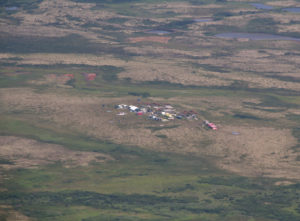
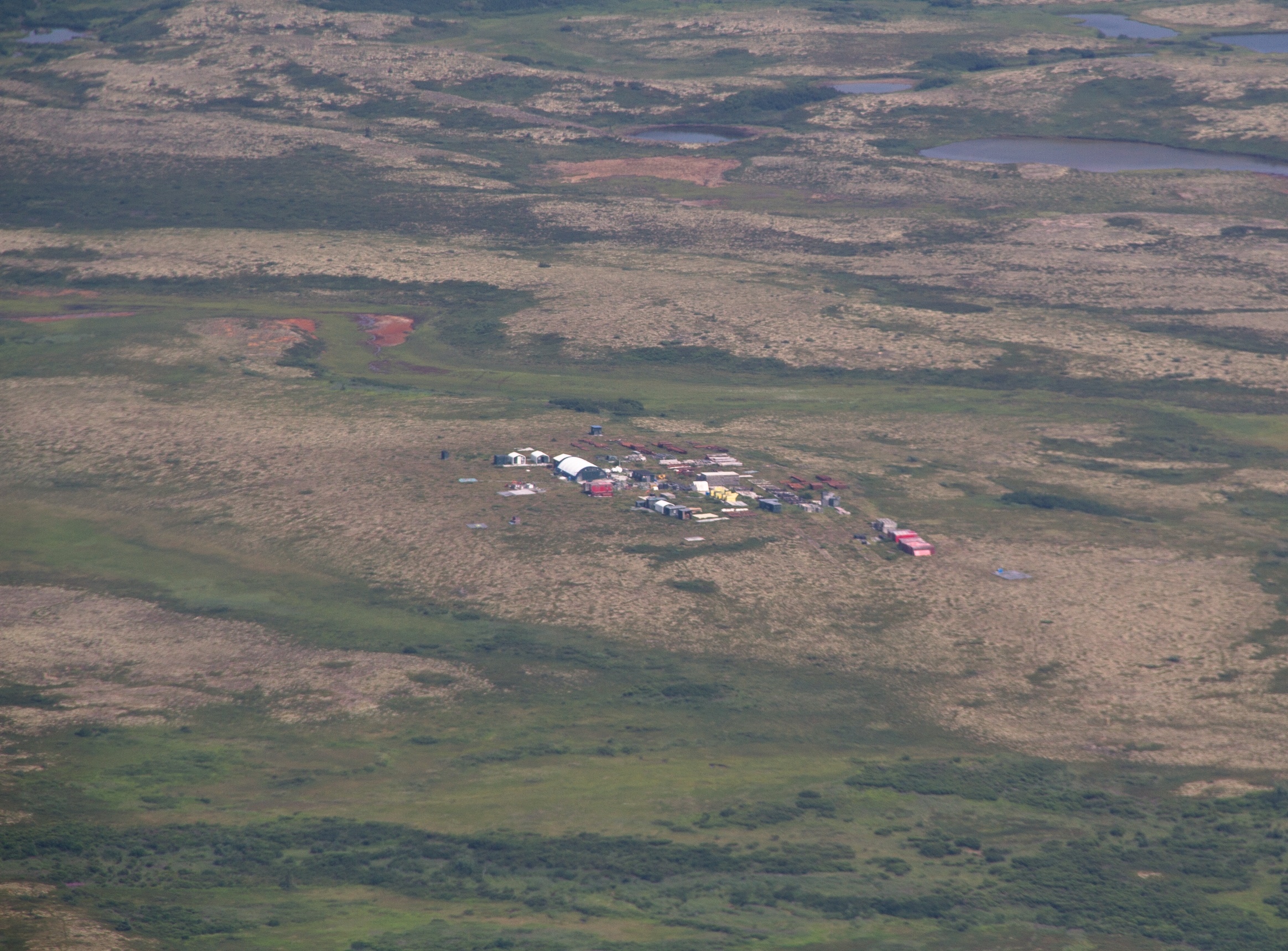
A scar on the tundra near Lake Illiamna, the watershed for much of the world’s largest wild salmon run. Wrong place. Wrong mine. Repeat.

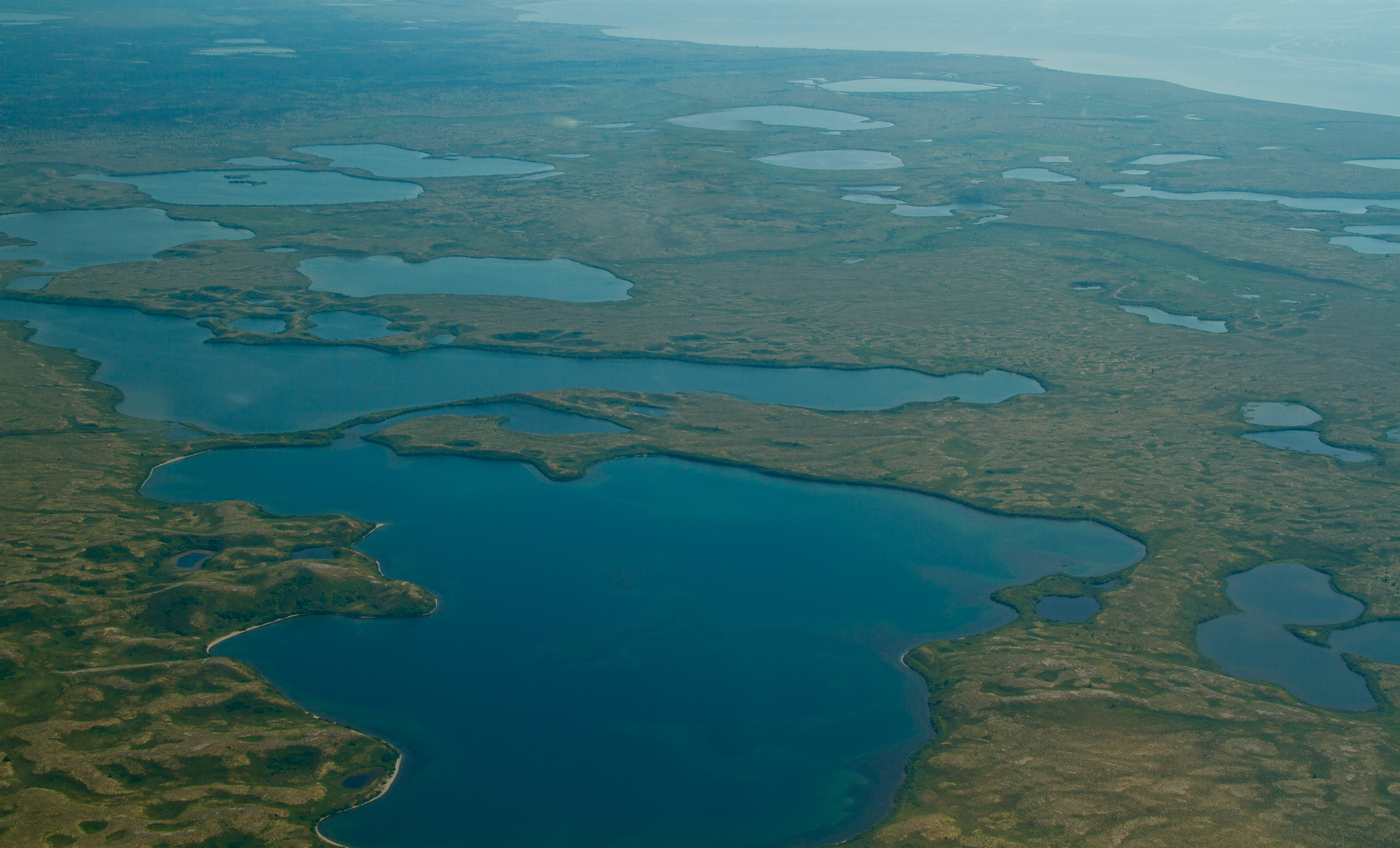
My mission to Alaska was twofold. First and foremost, I wanted to connect with these people and capture their stories for podcasts and blogs that I will share for broad distribution. This pitched battle has national significance, beyond what’s happening in Bristol Bay. These human stories will shed light on what’s at stake when huge multinational interests driven by profit and greed paint a rosy veneer over the devastating impacts of their operations. They want everyone in the lower 48 to assume this mine will bring jobs and boost local economies, ignoring the imminent ecological destruction of when (not if) the mine fails and leaks toxic chemicals into a priceless and fragile ecosystem. Flying over the pristine, water-veined tundra near Lake Illiamna, I wondered how anyone who saw the ugly outcropping of buildings dumped on this wondrous terrain could possibly think this mine was a good idea.

Second, I wanted to experience Bristol Bay firsthand, picking fish in set nets, walking across the tundra to remote rivers and streams to fly fish, seeing life in Naknek and King Salmon, touring a processor, and meeting new people. I visited at a time when the sockeye run is again above projections, showing the resilience and bounty of the resource, especially when it’s properly managed and allowed to thrive in healthy ecosystems.

I’ve done that. And there’s still much more to do. Stay tuned for the upcoming Fish Tales Podcasts featuring Nanci, Melanie, Norm, Gayla, Al and others to hear them tell their stories, and why preserving the resource matters to them, everyone in Bristol Bay, and to all of us who stand witness to the fierce battle to protect a priceless, irreplaceable resource.

Recent Posts

  • Hurricane Ida wreaks havoc on Louisiana’s seafood industry
  • EPA Should Use Clean Water Act To Kill Zombie Mine
  • Slow Fish 2021: Relationship Matters
  • Faith, Façades, and Futility
  • Pebble Permit Paused: Politics at Play

Archives

  • September 2021
  • August 2021
  • April 2021
  • December 2020
  • August 2020
  • June 2020
  • February 2020
  • December 2019
  • November 2019
  • October 2019
  • July 2019
  • May 2019
  • April 2019
  • March 2019
  • January 2019
  • December 2018
  • November 2018
  • June 2018
  • May 2018
  • March 2018
  • February 2018
  • January 2018
  • December 2017
  • November 2017
  • October 2017
  • September 2017
  • August 2017
  • July 2017
  • June 2017
  • May 2017
  • April 2017
  • March 2017
  • January 2017
  • December 2016
  • November 2016
  • October 2016
  • September 2016
  • August 2016
  • July 2016
  • June 2016
  • May 2016
  • April 2016
  • March 2016
  • February 2016
  • January 2016
  • December 2015
  • November 2015
  • October 2015
  • September 2015
  • July 2015
  • June 2015
  • May 2015
  • April 2015
  • March 2015
  • February 2015
  • January 2015
Theme by Colorlib Powered by WordPress