Skip to content
One Fish Foundation
  • Blog
    • Aquaculture
    • Education
    • Environment
    • Policy
    • Wild Harvest
    • Fish Tales
  • About
    • About One Fish
    • About Colles Stowell
  • Education
    • Elementary School
    • Middle School
    • High School
  • KNOW FISH Dinners®
  • Resources
    • One Fish Podcast
    • One Fish Foundation in the news
    • The 7 C’s of Sustainable Seafood
    • Newsletter Archive
    • Recipes
      • Skate with Capers and Butter — Chef Rizwan Ahmed
      • Grandma Davis’ Fish Chowder — Jane Almeida
      • Ginger Garlic Tamari Scallops — Colles Stowell
      • Fish Stock — Evan Mallett
      • Mussels San Remo — Chef Rob Martin
      • Salted Pollock Croquettes – Chef Mark Segal
  • Connect
    • Contact OneFish
    • Social
      • Instagram
      • Facebook
      • Twitter
All Blog Posts

Seafood Lovers and the Supply Chain

  • October 17, 2019October 19, 2021
  • by Colles Stowell
Share it!
Share

Most American consumers don’t know where their seafood comes from. In fact, a recent report from the Food Marketing Institute suggests that less than 30% of domestic consumers consider themselves knowledgeable about the seafood they eat.

 So why is that? And what can we do about it? What is the consumer’s role in the supply chain? It would be a fair assumption that the remaining 70% of those surveyed by FMI take a passive role. That is, they either rely on third-party information like eco-labels or they just don’t care. They surrender responsibility of the decision to someone else.

 No wonder our markets are so jammed with cheap, unhealthy imports.

 This topic was the crux of the fifth installment in the SlowFish webinar series, Slow Fish 201: Role of the Consumer, held on Sept. 23. To follow is a blog written by One Fish Foundation Intern Jennifer Halstead. In it, she captures some of the most salient points about how fishermen, fishmongers and others in the supply chain can help engage consumers in conversations about why they should care where, when, how and even by whom their seafood was harvested.


by Jennifer Halstead

Throughout the Slow Fish 201 Webinar series, expert panelists from different backgrounds, geographies and perspectives shared thoughts on how each link in the supply chain can help ensure the availability of responsibly harvested seafood. During the most recent webinar, Role of the Consumer, each panelist was thought-provoking, sharing their stories on how to engage consumers in the supply chain. Attendees left the discussion with a clear understanding of how consumers can become better informed (ASK QUESTIONS!!!) and assume a more active role in the supply chain.

On the panel were:

Patty Lovera, Food and Water Program Director, Food & Water Watch

Chef Evan Mallett, Chef, Co-owner, Black Trumpet

Capt. Tim Rider, New England Fishmongers

Charlie Lambert, Fisherman, Co-founder, Ocean2Table

Kirk Hardcastle, Premium Sales Accounts, Seafood Producers Cooperative

Colles Stowell, President, One Fish Foundation

Jessica Hathaway, Editor and Chief, National Fisherman, served as moderator

Each of them views the supply chain from a different perspective. But all of them agree that change within the supply chain is not only possible, but that it in many ways depends on consumers making smarter choices.

Fraud, mislabeling and a lack of transparency continue to cast a shadow over seafood sales in the U.S. It’s easy to see how consumers can feel helpless when it comes to fixing such issues. There are so many eco-labels providing conflicting guidelines and grocery store displays touting green-label “fresh, sustainably raised farmed salmon from Chile.”

As discussed during the webinar, well-informed seafood eaters have the power to pressure suppliers into knowing more about the products they are selling and to source from community-based fishermen who care about the resource.

Where to start

Panelists agreed that consumers should be asking restaurants and grocers a couple of questions just to get a part of the story of the seafood. It doesn’t have to be complicated or intimidating. You learn much just asking where, when and how it was harvested or grown. Even better if you can find out who harvested it. Is it local? Regional? Domestic? The U.S. has some of the best seafood safety and fisheries management policies in the world. If you can’t get domestic seafood, you’re better off choosing something else. Imported products carry a high risk of having been unsustainably farm raised or harvested.

“There is a lot of burden on the consumer,” said Patty Lovera. “We have to ask a lot of questions. The status quo in the supply chain isn’t good enough.” She and Colles Stowell both mentioned the influence consumers can have over retail seafood sourcing. If suppliers don’t know the answer to these questions, they will either feel compelled to learn, or responsible consumers will feel compelled to spend their money elsewhere.

What’s in season?

Chef Evan Mallett, Capt. Tim Rider and Charlie Lambert spoke about the importance of consumers better understanding seasonality. Just like when you go to the grocery store or market for vegetables and find different items available throughout the year, fish have their own seasonality. In New England, the height of the scallop season is in winter, while squid are generally available for a few weeks in the spring. Understanding what should be available during different times of the year will help consumers filter out which purveyors are supplying fresh, local fish and which are importing or using frozen, stored fish. “Being a chef is understanding sense of place, seasonal food, and the changes that the seasons bring,” said Mallet. That should also be true for consumers.

Eating seasonally enables consumers to enjoy fresh product throughout the year, experience cooking and preparing new species, support local fishermen, and promote healthy ecosystems by reducing fishing pressure on more popular species.

Location, location, location
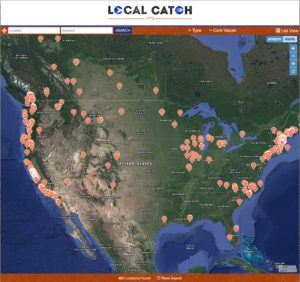
Some tools, such as the Local Catch nation-wide Seafood Finder, can help seafood eaters find local, responsibly harvested fish, shellfish and seaweed. In a map or list view, you can search for purveyors by location and species.

All agreed that consumer education is critical. Once consumers have enough information, they’ll feel empowered to own those decisions and will likely make smarter decisions again in the future. “Instead of telling people what to buy, which is what eco-labels do, we need to educate and equip them with tools to make the decision on their own,” said Colles. Charlie added, “We’re providing them with information and letting them complete the thought process on their own, … and not force-feeding the consumer.”

Buying local benefits the consumer, economies, and even the ecosystem. Fewer food miles, fresher products, strengthening local economies by building relationships with fishermen, and supporting healthy ecosystems are all advantages that consumers can feel good about.

Charlie acknowledged that carbon footprint is a growing concern for his customers. The average distance seafood travels from boat to plate in the U.S. is an astounding 5,000 miles. “The supply chain was largely hidden, and when it was exposed, it was very nasty. The West Coast is famous for market squid and calamari, but the supply chain is tumultuous. [The squid] is landed, frozen, shipped overseas, thawed, processed, refrozen, shipped back, thawed, then distributed to local businesses and consumers. The amount of food miles is not right,”he  said.

Quality is everything

Distance traveled can also (but not always) affect freshness. A fresher product tastes better and has a better shelf life. Rider said both his restaurant and retail customers note the long shelf life of his product because his crew properly bleeds and brines the fish on board the vessel at the time of catch, ensuring the fish is as fresh as possible for as long as possible. “Shelf life is huge. If something comes up and you can’t cook it when planned, it’s still good four days later.”

Chef Evan agreed: “ It was really with the first fish I got from Tim that I saw a marked difference between everything that I was getting from the Gulf of Maine before that.”

Product quality is integral to attracting and keeping customers. Kirk Hardcastle drove this point home, drawing on his decades of experience as fisherman, chef, distributor and now marketer with Seafood Producers Cooperative. “It starts with the fishermen, not the eco-labels, … making sure the quality of the product really comes through. … If it gets to someone’s house and the fish is poorly handled… You can put millions into messaging and you’ve burned it all away with the first bite of fish. Go for quality first and everything after that is easy,” he said.

Know your fisherman!

Charlie and Capt. Tim both sell directly to consumers: Charlie providing product from the network of fish harvesters he sources from in Monterey Bay up to San Francisco to his community supported fishery (CSF) customers, and Capt. Tim from the two boats he and his crew operate out of Maine and Mass. via drop-off points and farmer’s markets. When fishermen come off their boats into the community to sell their fish and meet customers, they’re building relationships that help support a stronger local economy.

These relationships build trust and help harvesters and consumers alike have open discussions about the industry, fishing methods, problems and challenges that fishermen have.

In the end, failure to know the story of seafood surrenders consumer decisions to other elements in the supply chain, which is often driven by industrial players with only profit in mind. Complacency in the supply chain will only ensure that consumers receive sub-par products, and the supply chain grows more opaque, rather than transparent. Lack of communication and interest can lead to what started this conversation last year, intentional mislabeling to turn a buck.

Smarter, responsible consumers and the relationships they forge with fishermen and fishmongers will help shift supply chains away from industrial-driven structures and toward a supply chain rooted in trust and knowledge.

In short, the role of the consumer is to ask questions and make responsible decisions. However, fishermen, chefs, retailers, distributors, educators, advocates and others in and around the supply chain should help consumers get smarter. That means telling the story of the seafood they’re selling.

Not sure where to start? Seafood eaters should ask the questions mentioned above. Check out the 7 C’s of Sustainable Seafood. If you can, buy local. If you can’t buy local, buy US caught and processed.

Fishermen, chefs and retailers should get to know their customers and tell them more about the seafood they’re selling them.

A supply chain built on trust is the best path forward.


Resources

7 C’s of Sustainable Seafood

Local Catch Core Values: Another reference point for how to think about the seafood supply chain.

Slow Fish Values: More values regarding seafood’s journey from boat to plate.

Eating with the Ecosystem, The 5 Anchors: A New England-focused view of values to consider when choosing seafood.

To view a recording of the webinar, follow this link.


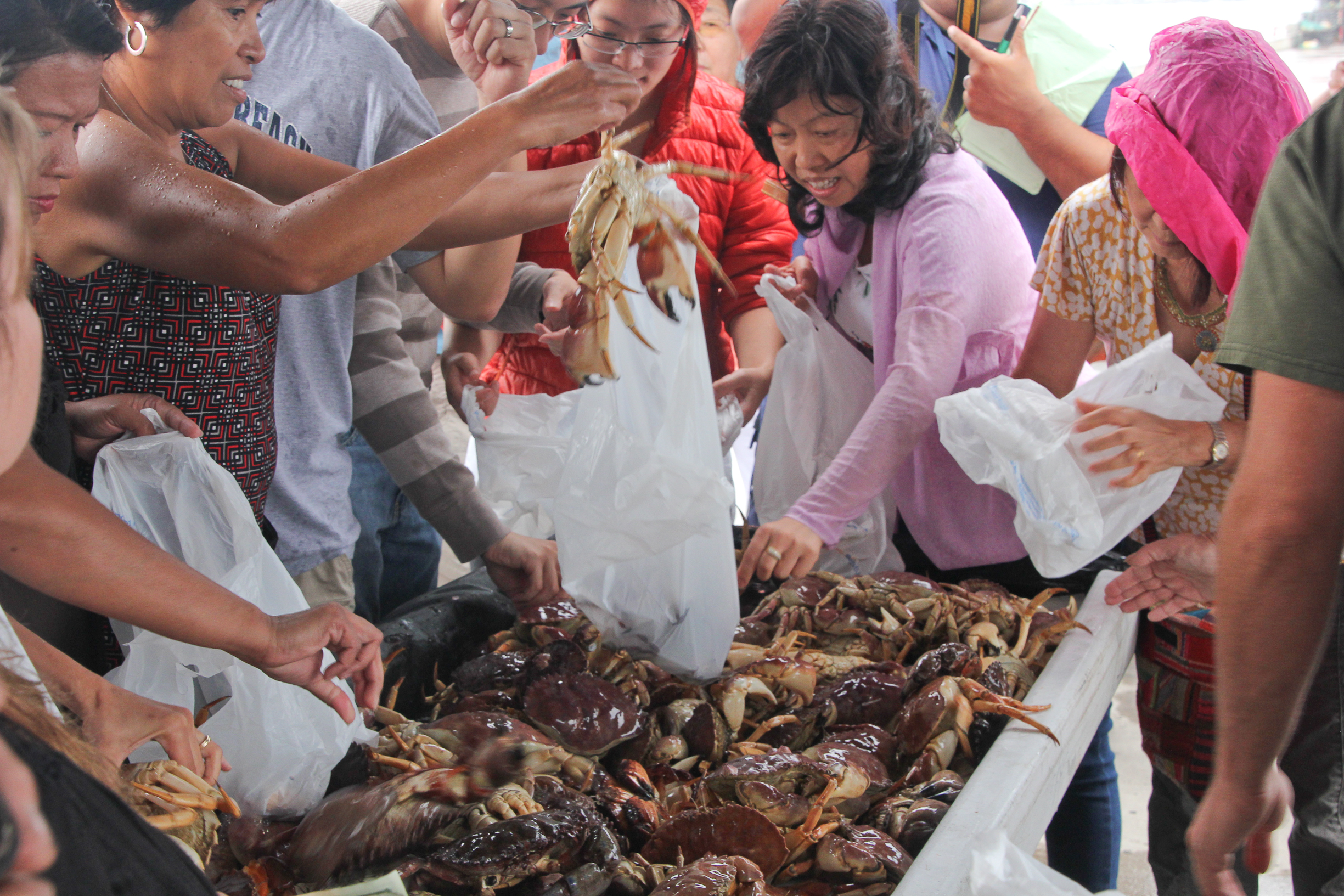
Top photo: Boat to consumer…literally.  Opening day for the Tuna Harbor Dockside Market in San Diego. Credit: Eric Buchanan
All Blog Posts

What It Means To Be Local

  • June 16, 2018October 20, 2021
  • by Colles Stowell
Share it!
Share

Update as of 4:45 p.m. 6-17-18:

Adding a link to the latest response from Sea To Table Founder Sean Dimmin to the AP story. In the response, he goes on the defensive, calling out “numerous misstatements and false allegations,” alluding to shoddy or incomplete reporting. Dimin points out instances where the reporting does seem to leave a bit of detail and process open to question. He also admits Sea To Table could have better communicated with its suppliers (in particular, Gosman’s) and with its customers.

That’s all fine. He’s saying the right things for someone in his predicament. But I don’t think the conversation should end there. Those in the domestic seafood industry, and those who promote it, face a steep challenge. Trust is absolutely essential to trying to convince even small percentages of US consumers to get seafood smart and buy domestically. The original premise behind Sea To Table or any similar minded operation is to promote local seafood, fishermen and waterfronts, often regardless of customer geography. So even if lapses in communication to customers or partners that led to  mislabeling, etc., are the only truly valid mistakes made, we need to be having this conversation. As we’re trying to limit the more than 1.5 million tons of cheap, imported farmed shrimp (among other unsustainably harvested species) flooding markets in this country every year, we need to be honest and forthright.

I do not agree with some who claim the negative attention and likely serious sales hit to Sea To Table is just desserts and the company should go away. I think these communications issues don’t rest with Sea To Table alone in the industry. It’s a tough, and generally laudable mission these companies try to accomplish. But I also don’t think we can make excuses for those whose lapses could set the entire movement back by calling trust in domestic seafood systems into question. We need to have these conversations, find solutions and move forward to turn that 90% domestic import figure around.


It all comes down to trust … and relationships.

This week’s news that one of the rising stars of the locally sourced, sustainable seafood movement may have been selling seafood that wasn’t local, may have been mislabeled and was possibly linked to slave labor in other countries sent shock waves through the industry.

Brooklyn-based Sea To Table has built quite a following with its promise of sustainable, traceable, domestically harvested wild seafood delivered to your doorstep. Clients included celebrity chefs like Rick Bayless national food chains such as Chopt Creative Salad, a bunch of universities like Yale, eateries at the Empire State Building and Chicago O’Hare airport and the home meal kit provider Hello Fresh. It can be found in almost every state.

But an Associated Press report issued earlier this week shed light on some of the issues that can arise with this boat-to-table model and the temptation of entrepreneurs to co-opt, then sweep aside the spirit and intent of terms such as “sustainable seafood” and “local.”

The colossal irony being that they may be knowingly or unknowingly violating the principles they promote, all in an attempt to bring clarity and trust to what Sea to Table Founder Sean Dimin calls “the historically opaque seafood industry.” The Sea To Table business model is to work with some 60 “local” fishermen and fishing operations/distributors to source “traceable” seafood from around the country.

The AP report outlines a lengthy investigation uncovering a slew of allegations that run headlong into the company’s  mission statement. For example, promoting fresh, locally caught yellow fin tuna in the winter off New York, when the migration south occurred several months beforehand and no local fishermen had been out. Or charges that some of the seafood Sea to Table sold was in fact imported and linked to Indonesian operations with a history of labor abuse. Other charges included selling farm-raised seafood despite the wild-only claim.

So yes, this was big news in that it surprised many in the industry. It will also raise lots of questions, piss some people off and confuse the hell out of consumers. What are they supposed to do to be sure they are buying local, sustainable seafood?

Dimin is correct in that the seafood industry is indeed opaque. There are few places that have completely transparent supply chains. Consider that seafood travels more than 5,000 miles on average from boat to plate in this country, often changing hands at least seven times.

The AP report is informative and sad, but it isn’t really broaching any new allegations about industry practices. Check out this exhaustive AP report on slave labor linked to imported seafood. The fact we import 90% of the seafood we eat just means more of the seafood consumed in the U.S. may be linked to brutal labor practices.

But the issue of trust and misrepresentation goes beyond just the seafood industry. The whole concept of questionable food sourcing and marketing practices isn’t new. For example, the Tampa Bay Times ran a series in 2016 about the farm-to-table movement, and how many restaurants and purveyors were glazing over, and sometimes outright lying about the provenance of their food.

What is local?

All of this goes back to a discussion I had this week with Josh Stoll, a research professor at the University of Maine and a co-founder of Local Catch, an organization that promotes community-supported fisheries and other direct-to-consumer operations aimed at bringing people closer to their seafood.

We discussed how the Sea to Table news raises the very valid question of how to define “local” and how to re-build consumer trust. Josh spends much of his time working to streamline and improve community-based fisheries governance for the benefit of fishermen, their communities and consumers.

“The definition of ‘local’ is evolving,” he said. “It’s less about geography and more about relationships.”

He’s exactly right. Just as the terms “organic” and “sustainable” have been stripped of their original intents by overuse and bastardization of meaning, “local” without valid context has become vapid marketing speak. It could mean so many things and nothing at all if there is no valid context to support its use.

Case in point: Sea To Table uses “local” in the first sentence of its mission statement to showcase the quality of the seafood it sources. Now, regardless of whether the company knowingly misled customers, it has much work to do to re-establish credibility. Dimin and his crew can’t just plead that they are still offering “local” seafood. They have to earn back that trust.

How? By going back to the basic mission and working to repair the relationships that the company was built on. Not an easy task.

When I host KNOW FISH Dinners® and invite people to talk to the fish harvester who caught the fish they are eating, I’m creating a direct link to the food producer that more often than not remains a mystery in this “opaque” industry. I tell people I want them to think about their next seafood purchase the same way they think about buying eggs or produce from a farmer at a farmer’s market.

Those are the kinds of relationships that define “local” for me.

Know your seafood, know your provider

So, say you live in Kansas. You probably don’t live next door to a commercial fish harvester. This is where enterprises like Sea To Table have begun to fill the void. The problem arises when customers take the “local” claim on faith without establishing some kind of relationship with the provider. If they get to know the provider, even if the provider is a distributor with direct links to the fish harvester, they get a better sense of the values and ethics used by the provider to promote their product. They should also be able to get the story of the fish harvester as well. Same goes for distributors like Sea To Table. They need to build solid relationships with the fish harvesters and docks providing the seafood to ensure they hew closely to strict guidelines.

That’s how you build trust. The AP story calls the latter point about Sea To Table’s supplier relationships into question.

Sure there are situations when establishing that level of trust isn’t possible. But one of the key points I make with folks is that knowledge really is power. Consumers fare much better ensuring the quality and provenance of the seafood they purchase when they get smart about what is locally and seasonally available, who has the best product, and who is trustworthy. This all takes time.

But it’s worth it.

Owning the relationship

Can things still go awry? Absolutely. Sea To Table is the proof. I’m not sure I believe this was a wholesale willful violation of trust. Read Sean Dimin’s first letter in response to the AP story. As I said, there are no new revelations in the news story about what happens in the industry. And Sea To Table has much work to do to repair its reputation. More so now that Sen. Edward Markey has asked NOAA and the Federal Trade Commission in a letter to investigate the claims against Sea To Table.

The situation underscores the fact there are many gray areas in domestic food systems. But it also reinforces the notion that people should take more ownership of their seafood purchases. Again, it’s all about relationships. We talk about the relationship people have to the seafood they eat during these hosted KNOW FISH Dinners. Their (our) choices have an impact on the resource, the fish harvester and the community. Getting closer to the source, even if that closeness is more relational than geographic, will minimize the risk of being misled.

That 90% import statistic won’t change unless we build, strengthen and multiply these very important relationships.

Check out the Local Catch website as it is a good resource for finding responsibly harvested seafood throughout the country. I believe there are several  operations who are delivering on their promise of responsibly harvested product. You can find some of them listed on the Local Catch website.

Also, stay tuned for more discussion about this topic. It is a fundamental reason for why we should care where, when, how and by whom our seafood was harvested.

If you’d like additional perspective, read Paul Greenberg’s take on the situation here.


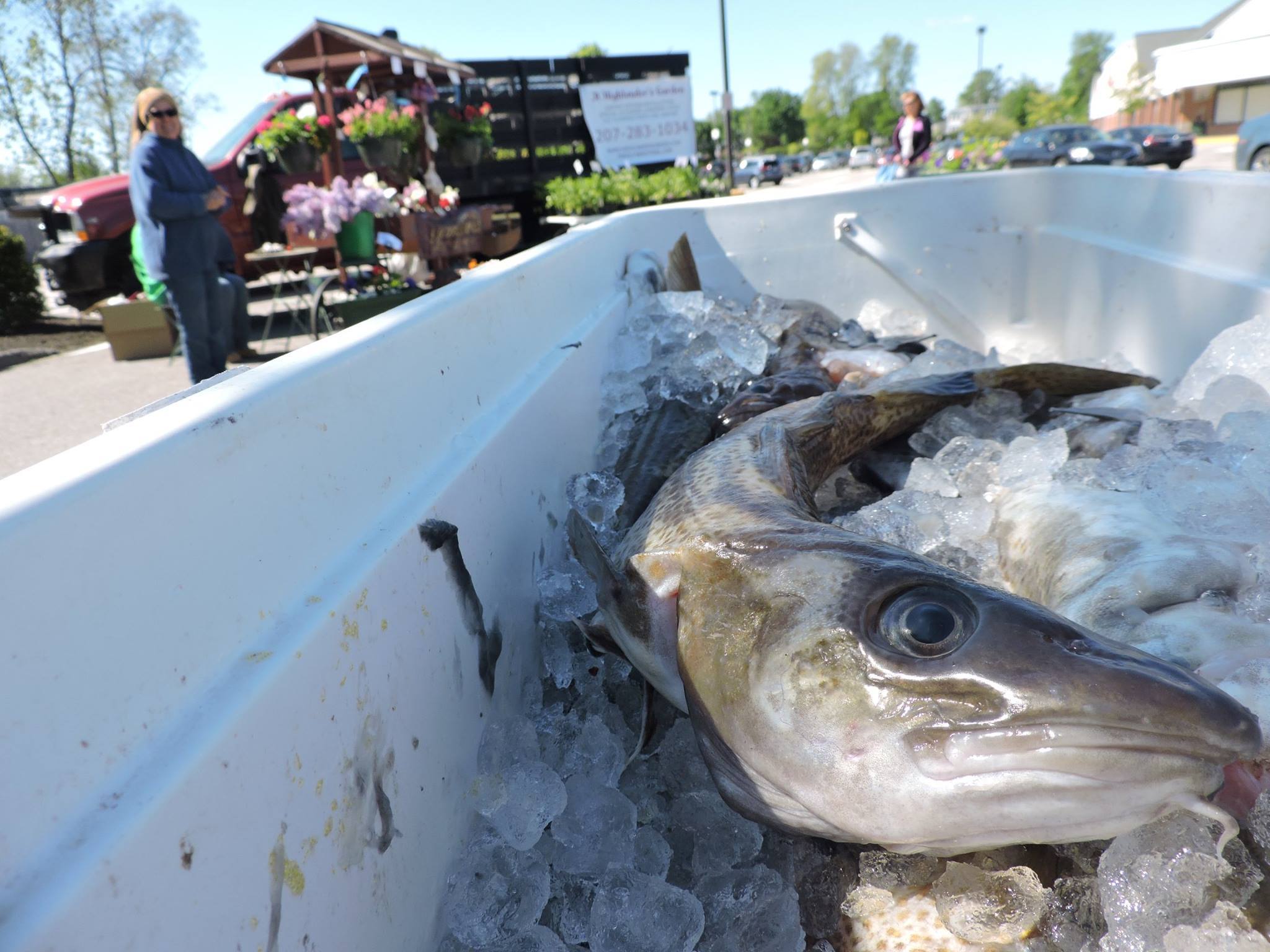
Photo courtesy of New England Fishmongers

All Blog Posts

MSC Ecolabel Trashed by Founder

  • December 7, 2016October 20, 2021
  • by Colles Stowell
Share it!
Share

The question invariably arises at sustainable seafood dinner events or even in casual conversation.

“What about the MSC (Marine Stewardship Council) standard?”

Involuntarily, I shake my head, before explaining the complex nature of ecolabels, which seek to certify seafood as sustainably harvested, but often raise more questions than they answer.

That complexity came to the fore last week when the World Wide Fund for Nature (WWF) ignited a firestorm with a detailed … and leaked … report castigating the MSC, one of the best known labeling organizations. The report questions the non-profit’s neutrality, process and overall effectiveness in adequately protecting the resource and objectively informing consumers about the sustainability of the seafood they purchase.

The colossal irony here is that WWF was one of the key founders of MSC, a non-governmental organization (NGO). And now it has become an outspoken critic. Here is a link to the leaked WWF report. WWF claims the report was not finalized and has tried to backtrack. However, the 58-page document has detailed citations and thoroughly explained timelines noting the events that led to the drafting of the report, which by the way, is marked “FINAL.”

What rules?

The catalyst for this report was the MSC certification of certain tuna fisheries in the Indian Ocean. One of the key principles of the original MSC guidelines for certification was that fisheries have a set of harvest control rules (HCRs) that ensure the health of the fishery. WWF now claims there are “several troubling systemic flaws” in the MSC certification process and that the mission appears to have become more about profits from the royalties paid to have the MSC logo than the original mission.

That’s a stinging accusation from one of the organization’s original founders.

Some of the most damning accusations include:

  • Certification of fisheries where no credible HCRs exist;
  • Changing the process language on the fly to accommodate certification of fisheries whose certification has been challenged;
  • A clunky appeals/challenge process that generally falls on deaf ears; MSC admits that very few stakeholder comments (13%) have any impact on the process;
  • A system of contracting third-party certifiers that do not respond to stakeholder comments;
  • Conflict of interest whereby MSC profits from the royalties on the logo fees while “objectively” certifying the fisheries.

And if this report weren’t enough, Brendan May, MSC’s former CEO for five years wrote a blog about the WWF report. While he doesn’t directly indict MSC, the fact he is taking time to acknowledge the report says something about its significance.

An ecolabel’s complicated path

When I started writing about sustainable fisheries six years ago, I initially supported the concept of transparency in labeling. There were a few emerging standards, Friend of the Sea, Dolphin Safe and the Marine Stewardship Council among them. MSC’s goals were broad and ambitious. The U.K. based non-profit set a goal to certify 20% of the world’s fisheries by 2020.

But as I dug deeper in my research, I started seeing inconsistencies. Accusations from within and outside the industry arose, claiming MSC certified fisheries that aren’t sustainably managed and that the NGO instituted a system that isn’t objective. Witness the certification of the North Atlantic longline swordfish operation. The fishery was certified despite the high bycatch of sharks. The further I dug in, the more I realized how complex and thorny implementing proper transparency schemes really is.

So when asked, I explain this complexity, and some of the issues with all ecolabeling systems, then go into some detail about MSC.

This leaked report further underscores that complexity, and where good intentions can get thoroughly clouded by money. I still strongly advocate for transparency in seafood distribution from boat to plate. The U.S. has a long way to go, as do many other countries.

But if you aren’t going to really be transparent or objective, why bother?

When in doubt, ask questions

I tell my students and interested adults their best line of defense is knowledge. Get smart about some of the issues around seafood sustainability. Learn more about the environmental, ecosystem, socio-economic impact of different harvest and aquaculture methods.

Ask questions:

  1. Is it local? Was it caught, cleaned and/or filleted locally?
  2. How was it harvested?
  3. If it was farmed, were there any antibiotics, hormones or pesticides used?
  4. When was it harvested?

If you can’t get answers to these questions from your fishmonger or restaurant, perhaps you should consider something else.

I suggest people take a look at the Local Catch core values, which gives a good overview of how local, transparent community-based fisheries benefit both consumers and fishermen. These principles are rooted in accountability and trust: accountability in the fishermen who strive to take care of the resource and trust from the community that the fishermen are delivering sustainably harvested seafood.

Additional resources:

Marine Stewardship Council standards

World Wide Fund for Nature Overview of Tuna fisheries and relationship with MSC

The Times article, in which the publication first announced the leaked WWF report.

Undercurrent News article, in which MSC responds to the WWF report.

Ecolabel Index — gives a quick overview of different ecolabels from building design to farming and seafood.

All Blog Posts

Slow Fish Rises to the Challenge

  • March 22, 2016October 20, 2021
  • by Colles Stowell
Share it!
Share

To say Slow Fish 2016 (March 10-13) in New Orleans was a success is an understatement. Overcoming last-minute weather challenges that shut down the planned venue, moving several thousand pounds of food around and getting people to deliver and attend informative, compelling presentations at three different, distinct venues was a stroke of genius from the event organizers and their motivated team. Here is the blog I wrote about the experience. 

It’s a surreal, if a bit funny experience to eat oysters surrounded by larger-than-life representations of male and female anatomy. Kind of a Harold-Robbins-meets-Jules-Verne aura.

How a bunch of fishermen, chefs, scientists and seafood activists from around the world ended up in a dilapidated warehouse surrounded by lewdly, yet very craftily decorated Mardi Gras floats for the Krewe du Vieux (pronounced “croo du voo” and which pulls no punches lambasting anything/anyone political or sexual) is a study in adaptation.

We had gathered for the Slow Fish 2016 event in New Orleans to discuss important fisheries issues, make connections and celebrate locally caught, fresh and delicious seafood. Naturally, intense Louisiana spring weather turned carefully planned scheduling on its head with impending violent thunderstorms and potential flooding. Not one hour into the 150-person event at the Old US Mint, the state called for emergency evacuations and closed our base of operations for the next three days.

Krewe du Vieux warehouse, where Slow Fish 2016 attendees got an eyeful in New Orleans.
Krewe du Vieux warehouse, where Slow Fish 2016 attendees got an eyeful.

So instead of celebrating the gathering on the grounds of a historic building, we found ourselves feasting on pompano and sea bass in the shadows of papier-mâché sex. Ironically, that kind of mandatory last-minute logistical two-step closely parallels the rapid fire challenges many family fishermen face, constantly having to adapt to ever-shifting polices, seafood markets, climate, etc. beyond their control. We banned together at Slow Fish to pull it off, perhaps serving as proof that collaboration and flexibility are critical to addressing broader policy and market challenges ahead. That was the first of several truly unique experiences at Slow Fish 2016.

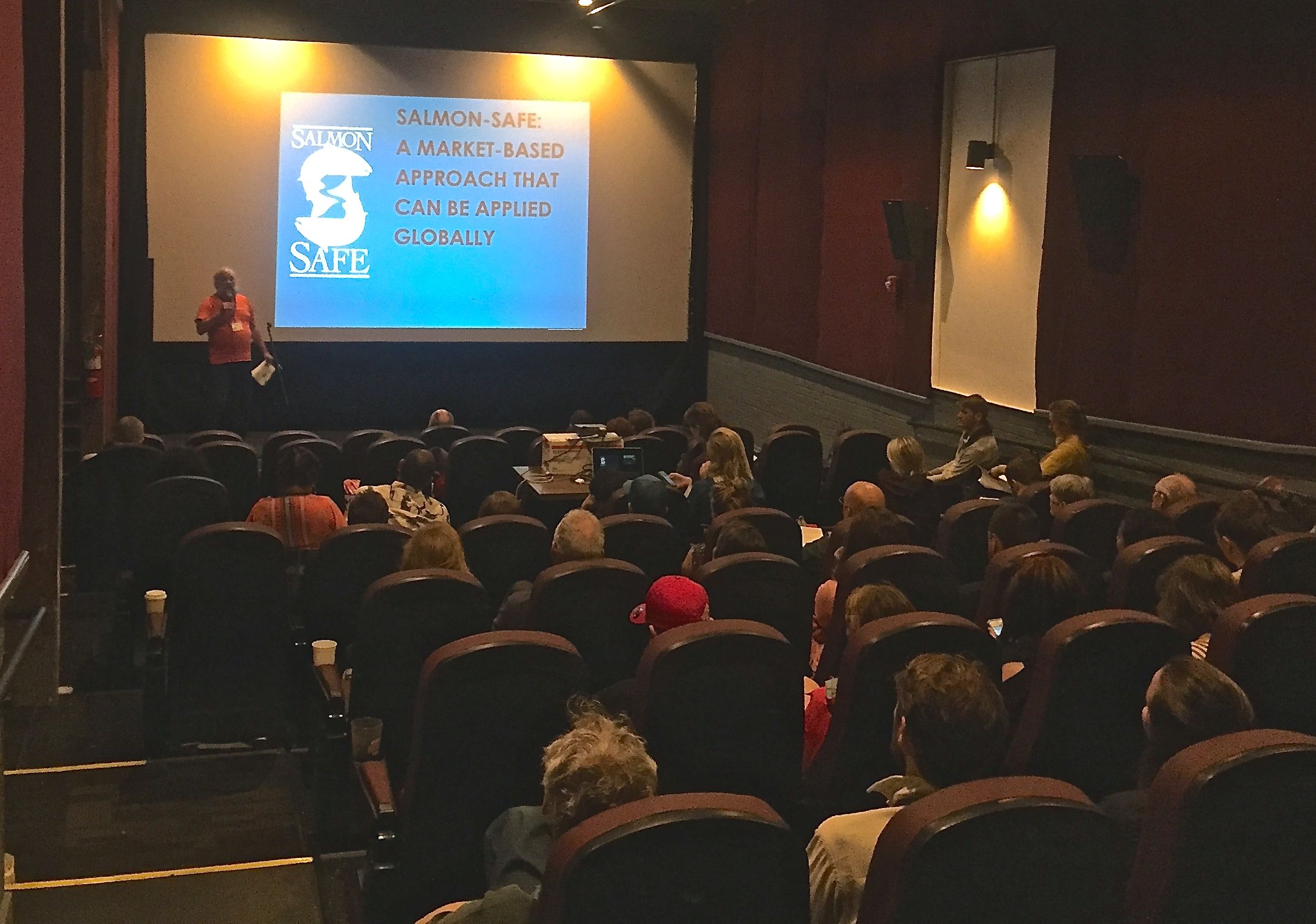
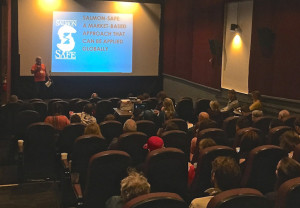
The next was the following day at the quirky Broad Theater in Mid City, a neighborhood at the heart of New Orleans. There, fishermen ranging from Alaska to California, and from Louisiana to Maine shared stories about their watersheds, community-based fisheries traditions and the management policies changing the landscape of how, when and where they can fish.Kevin Scribner discusses Salmon Safe's success.

Kevin Scribner highlights Salmon Safe's success.
Kevin Scribner highlights Salmon Safe’s success.

They discussed challenges such as privatization and resource allocation, biodiversity, policy impacts and ways to protect watersheds and fishing community heritage. Former Alaskan salmon fishermen and current Slow Fish board member Kevin Scribner described how the Salmon Safe program has worked with farmers, businesses and urban planners to reduce downstream impacts on native salmon habitat. This means the owners or tenants of more than 95,000 acres of agricultural and urban land (including the Nike campus, and several major farms) in three states and British Columbia have committed to reducing harmful nutrient and pollutant discharge into precious streams.

Kindra Arnesen spoke passionately about the challenges facing fishing families on the Mississippi River delta. She described her Herculean efforts to unite struggling fishermen after the BP oil disaster, first to get jobs helping with cleanup, then to challenge BP, the EPA, NOAA and other local, state and federal agencies on their methods of cleanup, cover-up and compensation. It was yet another story of adaptation and survival.

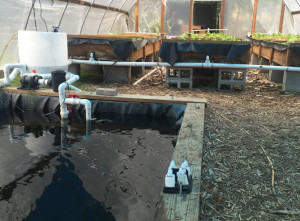
Happy Recirculating Farms Coalition catfish swimming in water filtered through lava rocks holding the lettuce in the background.

Other presenters discussed creating direct channels between fishermen, retailers and chefs to bring fresh seafood inland from the coast. Marianne Cufone, executive director of Recirculating Farms Coalition, showed the audience how a motivated team was able to start a clean, productive aquaponics operation right in a Central City neighborhood. Restaurants have already expressed interest in the fresh lettuce and catfish growing in recirculated water.

Set to the backdrop of compelling images, each story brought to life some of the common struggles many fishermen and coastal communities face, and some of the successful solutions to those challenges.

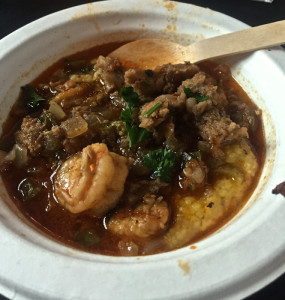
Alligator, shrimp and grits, down and dirty in New Orleans.

The adaptation of the Slow Fish 2016 continued Saturday at the Dryades Market, whose previous life had been a public school in Central City, another neighborhood steeped in diversity. Groups of concerned fishermen spoke about adequately addressing quotas and fairness issues and ways to promote local fisheries management. One common theme that emerged, perhaps prophetically, was the issue of adaptation.

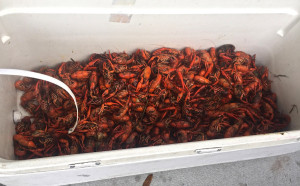
And of course crawfish. Deeper down, dirtier and delicious!
And of course, crawfish. Deeper down, dirtier and delicious!

Louisiana fishermen are constantly forced to adapt to changing ecosystem habitats, based on the chilling statistic that the coastline loses a football field of marsh every 45 minutes. Okanagan tribes have to adapt to the ebb and flow of wild sockeye migrating several hundred miles into incredibly diverse watersheds straddling the border between British Columbia and Washington state. Maine fishermen have to navigate the fluctuations in their fisheries due to the rapidly warming Gulf of Maine and the seemingly arbitrary nature of regional management.

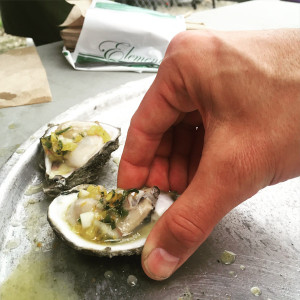
Two of about three hundred dozen oysters brought to the event.

Perhaps it was divinely appropriate that Mother Nature decided to throw a curveball and forced organizers to scramble. Because it is that instinct to go into auto pilot in the face of adversity and figure out a solution that determines success. For a Pacific salmon, that instinct to swim several hundred miles to its natal waters to spawn, die and give sustenance to its young is pure survival. For fishermen, it’s the ability to chase different available species when Nature or policy forces their hands. It’s in banding together to work toward a common cause to bring communities closer to their seafood.

Through all of the rain and high wind and last-minute venue changes, the shuttling of food from here to there…and back again, the audio-visual challenges, the taxis, carpools and long walks through a noisy French Quarter, Slow Fish 2016 attendees made connections. They found common ground. They discussed ways to organize, set goals and pursue them. They made friends.

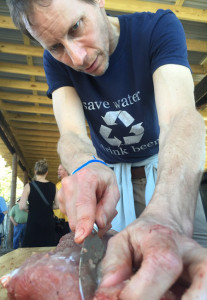
I learned some skills from Chef Zack Engel (chef de cuisine at Shaya Restaurant) and pit master Howard Conyers.

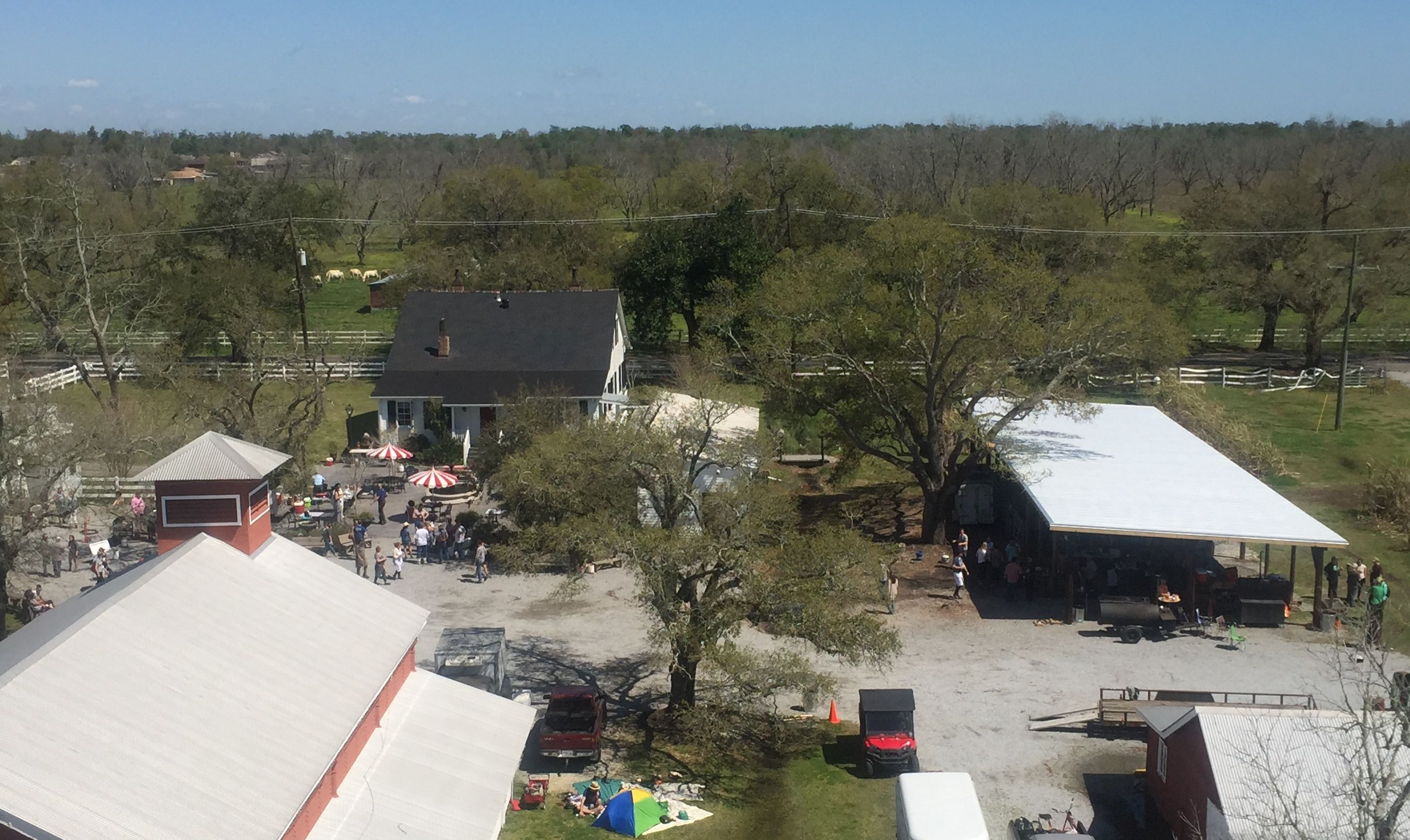
Perhaps the skies dawned on a warm,bluebird day on the tail end of the gathering at Docville Farm in Violet, La., a boucherie and seafood feast, as a reckoning of sorts. Adapt. Persevere. Hope. Something good will come out of it.

The memory of the food, the conversation, the energy and camaraderie will stay with all of us for a long time.


Recent Posts

  • Hurricane Ida wreaks havoc on Louisiana’s seafood industry
  • EPA Should Use Clean Water Act To Kill Zombie Mine
  • Slow Fish 2021: Relationship Matters
  • Faith, Façades, and Futility
  • Pebble Permit Paused: Politics at Play

Archives

  • September 2021
  • August 2021
  • April 2021
  • December 2020
  • August 2020
  • June 2020
  • February 2020
  • December 2019
  • November 2019
  • October 2019
  • July 2019
  • May 2019
  • April 2019
  • March 2019
  • January 2019
  • December 2018
  • November 2018
  • June 2018
  • May 2018
  • March 2018
  • February 2018
  • January 2018
  • December 2017
  • November 2017
  • October 2017
  • September 2017
  • August 2017
  • July 2017
  • June 2017
  • May 2017
  • April 2017
  • March 2017
  • January 2017
  • December 2016
  • November 2016
  • October 2016
  • September 2016
  • August 2016
  • July 2016
  • June 2016
  • May 2016
  • April 2016
  • March 2016
  • February 2016
  • January 2016
  • December 2015
  • November 2015
  • October 2015
  • September 2015
  • July 2015
  • June 2015
  • May 2015
  • April 2015
  • March 2015
  • February 2015
  • January 2015
Theme by Colorlib Powered by WordPress