Skip to content
One Fish Foundation
  • Blog
    • Aquaculture
    • Education
    • Environment
    • Policy
    • Wild Harvest
    • Fish Tales
  • About
    • About One Fish
    • About Colles Stowell
  • Education
    • Elementary School
    • Middle School
    • High School
  • KNOW FISH Dinners®
  • Resources
    • One Fish Podcast
    • One Fish Foundation in the news
    • The 7 C’s of Sustainable Seafood
    • Newsletter Archive
    • Recipes
      • Skate with Capers and Butter — Chef Rizwan Ahmed
      • Grandma Davis’ Fish Chowder — Jane Almeida
      • Ginger Garlic Tamari Scallops — Colles Stowell
      • Fish Stock — Evan Mallett
      • Mussels San Remo — Chef Rob Martin
      • Salted Pollock Croquettes – Chef Mark Segal
  • Connect
    • Contact OneFish
    • Social
      • Instagram
      • Facebook
      • Twitter
All Blog Posts

Fifth KNOW FISH Dinner zooms in on critical questions

  • October 15, 2017October 20, 2021
  • by Colles Stowell
Share it!
Share

“How do you know if it’s truly local?”

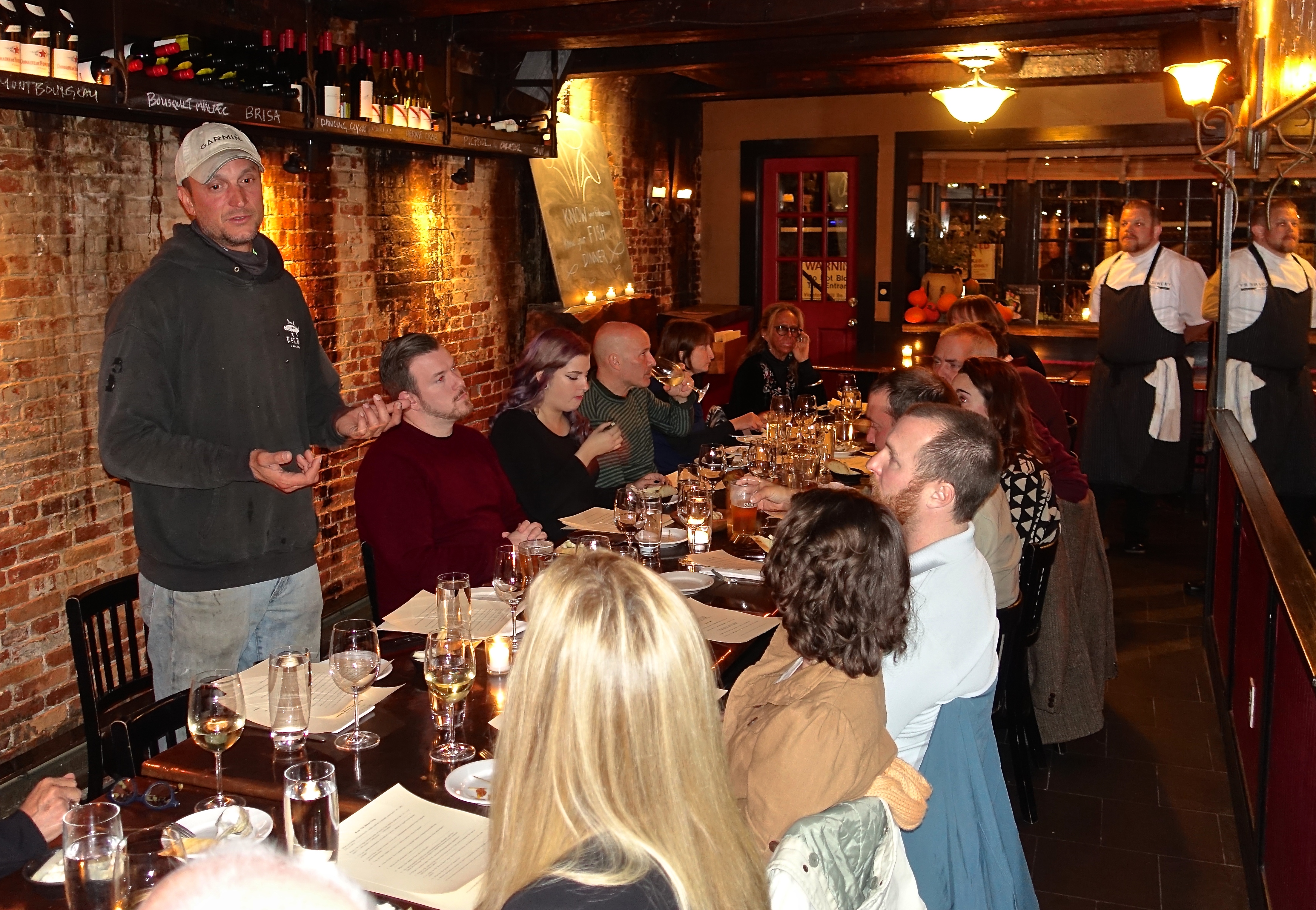
The question from Jordan Pike of Two Toad Farm in Lebanon, ME. during Thursday night’s KNOW FISH Dinner™ at 7th Settlement Brewery  in Dover, NH was seemingly simple. It is a question any farmer, fisherman, chef, baker or food producer encounters on a regular basis. But its implications are more significant because the complexity of the seafood system in the U.S.

We were discussing the dynamics of the domestic seafood system and some of the drivers behind the fact we import more than 90 percent of the seafood we eat in this country. That’s ironic when you consider we harvest over 5 million tons of seafood domestically on an annual basis… plenty enough to meet the demand.

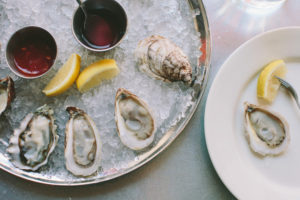
Brian Gennaco of Virgin Oysters explains why oyster aquaculture is a labor of love. Three years from seed to harvest.

Breaking the habit

One of the largest hurdles is habit. We discussed how habit drives much of the seafood purchases linked to foreign sources. For example, consider the widespread habit of buying the same thing weekly, at the lowest price, without trying to find out more about where things like frozen shrimp or salmon fillets come from. Similarly, there is the habit of continuing with a flawed management system that opens the gate for cheap imports to feed the consumer habit.

Asking questions is one of the most effective ways to change these habits. I told the 35 attendees one of the first questions to ask is “Where is it from?” Buying locally sourced seafood is at least an initial step away from imports.

But Jordan’s question is also at the crux of getting to know our food and improving the relationship we have to our seafood. At its core, the question pits small local food producers against big operators like Monsanto, Thai Union, and the now somewhat defrocked “Codfather”, Carlos Rafael. Rafael, the largest fishing operator on the East Coast, was recently sentenced to nearly four years in prison, three years of additional probation and more than $200,000 in fines after pleading guilty to 28 counts of fisheries fraud. The court also seized a small portion of his assets.
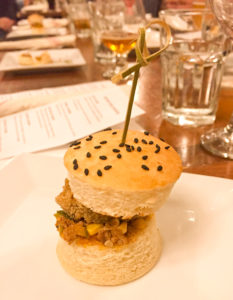
One of Brian’s delicious oysters.

Jordan took the “local” question further. “How do you know the scallops you eat aren’t coming from boats owned by Rafael?”

Become a seafood detective

The answer isn’t simple. The U.S. is lagging in terms of comprehensive, transparent labeling systems that provide easily accessible information. The EU has such a system, and both consumers and fishermen are generally happy with it; consumers for obvious reasons, fishermen because they see it as a competitive advantage.

Absent such labeling, we must try to find such information by owning the responsibility to ask questions. Thursday night, we discussed the importance of forming relationships with fishermen in our communites or with restaurants and stores that buy seafood directly from fishermen in the community or the nearby region.
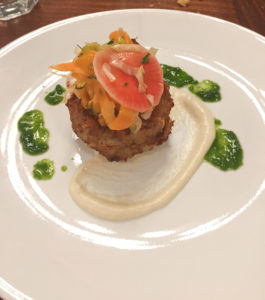
Potato fish cake (pollock), parsley two ways and a bright pickled vegetable salad.

The seafood counters and many of the restaurants I patronize know me and know I’m going to ask questions. They also know I can tell visually how relatively fresh different fish and shellfish are. They may not be able to tell exactly what boat Acadian Redfish on display is from, but they can tell me if it was caught in Casco Bay and when it was cut.

The truth is you may not really be able to learn the provenance of every piece of seafood you buy. Terms like “local” and “organic” have been co-opted improperly so often that their meanings have been diluted. So you ask questions, observe and make educated assumptions. And once you have established a relationship with a fisherman and/or a fishmonger or restaurateur you trust, you will have significantly increased the chance the seafood was harvested responsibly.

It was an excellent question that sparked a good conversation about what we as consumers can do to understand and embrace our relationship to the seafood we eat.
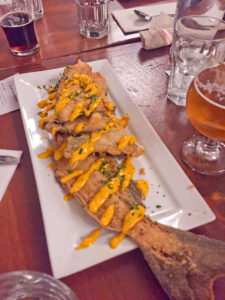
Look at all of that fried goodness! The remoulade was outstanding.

Good food, good convo

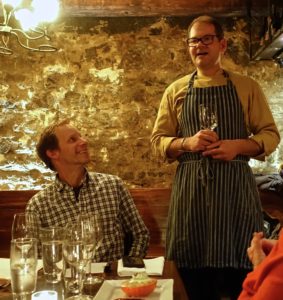
And it was just one part of a great evening of storytelling and diving into key issues with perspectives from Capt. Tim Rider of New England Fishmongers who donated the fish, Brian Gennaco of Virgin Oyster Co. who provided the oysters, and Chef Taylor Miller who put on a feast. (How about delightfully seasoned tuna pastrami, perfectly fried pollock carcasses and collars with plenty of meat on the bones, cornmeal dusted fried oyster with chorizo on brioche with garlic aioli, and some especially delicious gin-brined baked pollock served with cornmeal fried pollock with dill salt???)

We also heard from Joe Letourneau, the only other full-time, rod and reel groundfish commercial fisherman in the Gulf of Maine (aside from Capt. Rider); and, Kevin Jackson, who has a unique perspective as a NOAA observer that accompanies fishermen like Tim and Joe to research a variety of species, like wolfish. Kevin’s work is an example of scientists collaborating with fishermen on critical research to learn more about ocean resources.
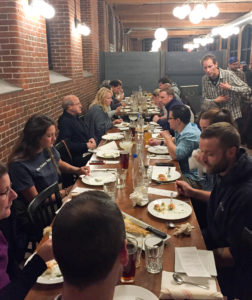
Conversation upon conversation, building a movement.

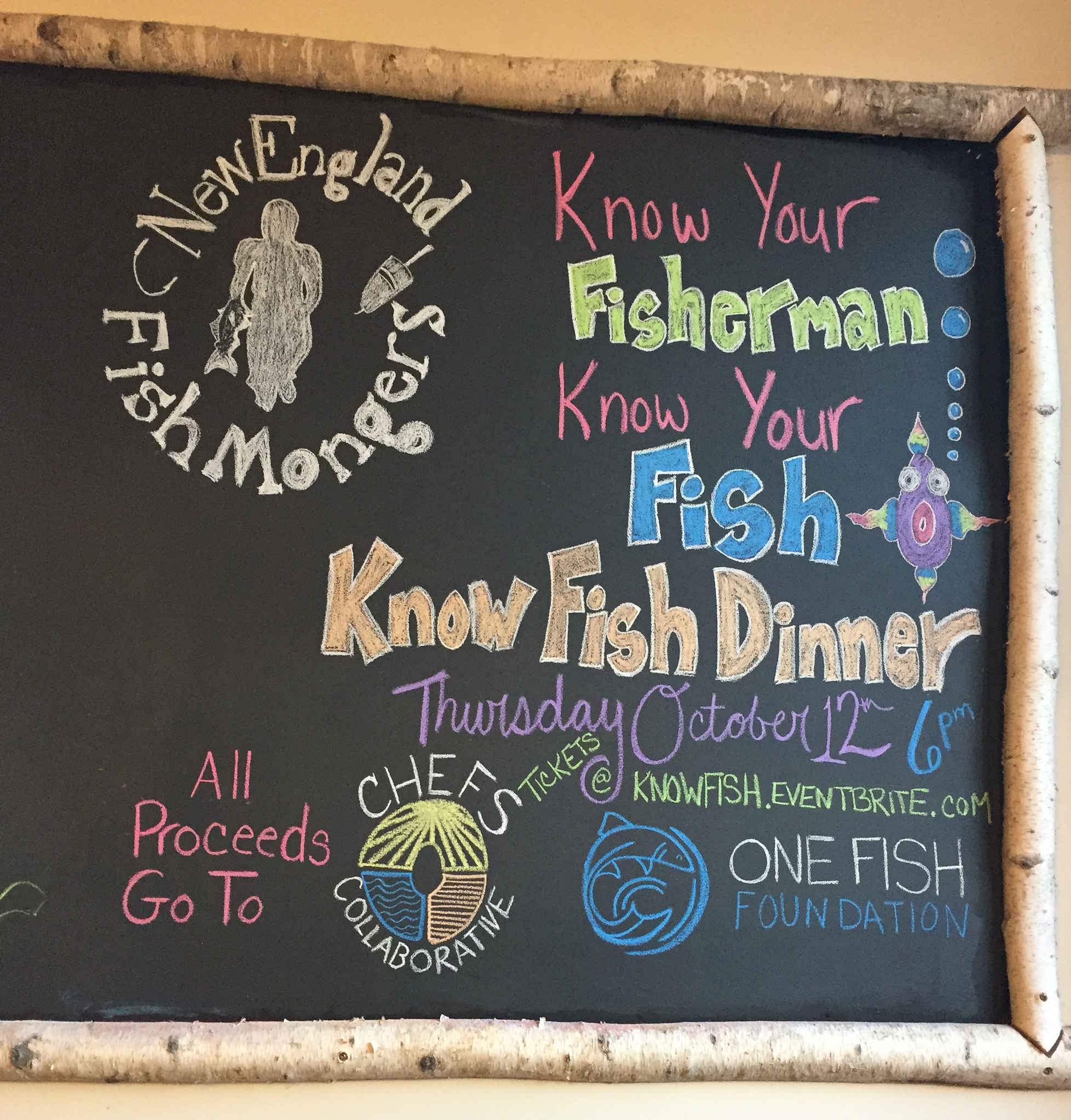
This was the 5th dinner in the KNOW FISH Dinner series, and it is a continuation of our mission to change minds one conversation at a time. Attendees left with several compelling conversations to think about, as well as a menu with the 7 C’s of Sustainability printed on the back.

The next KNOW FISH Dinner will be at Otis Restaurant in Exeter, N.H. on Nov. 2.

Come join us for great food and a broader seafood perspective!

Get tickets here.
All Blog Posts

KNOW FISH Dinners: A Second Helping

  • April 21, 2017October 20, 2021
  • by Colles Stowell
Share it!
Share

You’d call a dinner and conversation event a success if the parting words of many of the attendees echoed this theme: “We should be having more of these conversations.” By that measure, last fall’s KNOW FISH dinners were a big success. Attendees learned about the provenance of the fish they were eating, they heard from the fisherman who sustainably caught their fish that day and they had a great conversation about why it all matters and what they can do.

So we’re doing it again. This spring’s KNOW FISH dinners will be held at Franklin Oyster House in Portsmouth on May 9, and Tinos Greek Kitchen in Hampton on May 23. Both events will begin at 6 p.m.

This is your chance to learn why the domestic seafood picture is so skewed. Yes, many people know the oft-cited statistic that more than 90% of seafood eaten in the U.S. is imported. But the reasons why are a compelling motivator for finding out where, when and how your seafood was harvested.

New England Fishmongers Partner Amanda Parks getting it done.

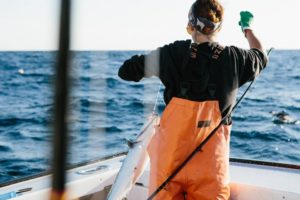
At the KNOW FISH dinners, you’ll be able to ask Capt. Tim Rider of New England Fishmongers why he risks life and limb to haul up to 80 miles offshore in the 36-foot F/V Finlander to fish with rod and reel in up to 400 feet of water. You’ll be able to ask an oysterman like Tim Henry of Bay Point Oyster Company about what it takes to grow oysters and why that is so important. You’ll learn about how their passion for what they do drives them to overcome obstacles and stay focused even as management policies change around them.

And you’ll feast on spectacular meals prepared by Chefs Matt Louis and Matt Decker of Franklin Oyster House and Chef Mark Segal of Tinos, using incredibly fresh, undeniably sustainable seafood. The fish and oysters will be whatever the ocean yields that day.

You’ll learn about some of the key domestic and global market dynamics that affect seafood sustainability. That information will help you better understand why your choices matter at restaurants and seafood stores. We’ll provide you with some memorable tips on buying seafood that is local, abundant, compliant and that minimizes ecosystem and environmental harm.

And we’ll talk about ways you can carry these messages forward into the community, and perhaps effect a sea change in seafood buying habits.

After all, this kind of change happens one conversation at a time … from the ground/sea floor up.

Come join us for great food, conversation and fun!

Get your tickets by following this link to Eventbrite.

All Blog Posts

Getting to KNOW FISH

  • November 4, 2016October 20, 2021
  • by Colles Stowell
Share it!
Share

The spiny dogfish, abundant in these waters, showed up about two hours before guests arrived. As did the cod.

Want fresh?

Dogfish intimidates some people because, well, it’s a shark, even if less than the length of your arm. But when chefs Evan Mallett of Black Trumpet and Brendan Vesey of Joinery Restaurant put their magic to this fearsome looking creature, the result was a perfectly battered seafood experience driven home by Black Trumpet’s Raisin Hell sauce.

That and the Pemaquid aquaculture oysters served with a tangy tursija (pickled vegetables) were just the greeting for those attending the second KNOW FISH dinner, which was held at Black Trumpet last week.

The food was fabulous, and it was an excellent backdrop for the interactive conversation about why our seafood choices matter.

kf-brandade-10-27-16
Cusk Brandade

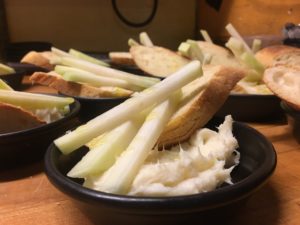
As I explained why we import more than 90% of the seafood we eat in the U.S., we feasted on locally abundant and delicious cusk, which is a bottom fish that worked wonderfully in a brandade. This is a traditional Provence dish featuring salted fish, olive oil and seasoning blended into a paté-like spread accompanied by house-made baguette and kohlrabi sticks.

Cusk made another appearance as Capt. Tim Rider described the extraordinary effort just to get the fish to the restaurant that day because the weather for several days had been inhospitable for his 36-foot F/V Finlander. He and his crew left at 2 a.m. the day of the event, only to turn around shortly after leaving the harbor because the conditions were too dangerous. Fortunately, the crew was able to leave port at 7 a.m. and find enough fish for the dinner and to bring to other customers.

As we feasted on delicately poached cusk and scallop dumplings served with golden beet and green crab broth, Tim shared why he travels up to 80 miles offshore in a small boat to fish for pollock, cusk, haddock, cod and other groundfish with rod and reel. For him, the impact of trawl nets, long lines and similar commercial fishing methods on the resource and the ecosystem is devastating.

kf-cod-10-27-16
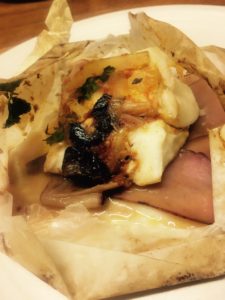
Codfish a la Provencal en Papillote

Attendees heard how the existing quota system used to manage the fishery, run like an open stock market, transfers ownership of the resource away from small-scale fishermen like him to larger operations with multiple boats. The irony is that small-scale fishermen are more likely to take care of the resource. He described efforts to increase the number of fishermen fishing with rod and reel as we dined on beautifully prepared Cod a la Provencal en Papillote (baked in paper).

Amanda Parks, Tim’s partner in New England Fishmongers, spoke of the superior quality of fish that is delivered direct, rather than passing through a series of processors and distributors in the supply chain. She shared tips on how to tell if a fish is fresh, which is crucial given that on average, seafood travels more than 5,000 miles from boat to plate in the U.S.

Black Trumpet co-owner Denise Dwinnells Mallett related a story of how she persistently asked staff at her local grocery store’s seafood counter in Maine when they would carry seafood from the Gulf of Maine. She asked until eventually, locally sourced seafood arrived. Her point? Consumers do have the power to affect change.

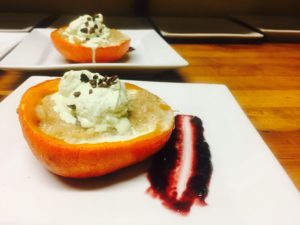
evanChef Evan explained the importance of working with fishermen like Tim practicing sustainable harvest methods, and using sustainability as a guide when choosing menu options. The coconut rice pudding baked in red Kuri squash was a refreshingly sweet and colorful taste of autumn.
kf-pudding-10-27-16
Coconut rice pudding baked in a red Kuri squash

For the second time in a row, the KNOW FISH dinner sparked curiosity and fueled compelling conversation with fishermen, fishmongers, chefs and activists. It proved that engaging the community in intimate discussions about why seafood choices matter can increase public awareness of issues like ocean health, climate change, stock health and fairness for fishermen like Tim.

We want to continue this community dialogue in an effort to spark a groundswell of change at restaurants and seafood counters. We are looking at continuing the KNOW FISH dinner series in the spring.

Stay tuned.


Recent Posts

  • Hurricane Ida wreaks havoc on Louisiana’s seafood industry
  • EPA Should Use Clean Water Act To Kill Zombie Mine
  • Slow Fish 2021: Relationship Matters
  • Faith, Façades, and Futility
  • Pebble Permit Paused: Politics at Play

Archives

  • September 2021
  • August 2021
  • April 2021
  • December 2020
  • August 2020
  • June 2020
  • February 2020
  • December 2019
  • November 2019
  • October 2019
  • July 2019
  • May 2019
  • April 2019
  • March 2019
  • January 2019
  • December 2018
  • November 2018
  • June 2018
  • May 2018
  • March 2018
  • February 2018
  • January 2018
  • December 2017
  • November 2017
  • October 2017
  • September 2017
  • August 2017
  • July 2017
  • June 2017
  • May 2017
  • April 2017
  • March 2017
  • January 2017
  • December 2016
  • November 2016
  • October 2016
  • September 2016
  • August 2016
  • July 2016
  • June 2016
  • May 2016
  • April 2016
  • March 2016
  • February 2016
  • January 2016
  • December 2015
  • November 2015
  • October 2015
  • September 2015
  • July 2015
  • June 2015
  • May 2015
  • April 2015
  • March 2015
  • February 2015
  • January 2015
Theme by Colorlib Powered by WordPress