Skip to content
One Fish Foundation
  • Blog
    • Aquaculture
    • Education
    • Environment
    • Policy
    • Wild Harvest
    • Fish Tales
  • About
    • About One Fish
    • About Colles Stowell
  • Education
    • Elementary School
    • Middle School
    • High School
  • KNOW FISH Dinners®
  • Resources
    • One Fish Podcast
    • One Fish Foundation in the news
    • The 7 C’s of Sustainable Seafood
    • Newsletter Archive
    • Recipes
      • Skate with Capers and Butter — Chef Rizwan Ahmed
      • Grandma Davis’ Fish Chowder — Jane Almeida
      • Ginger Garlic Tamari Scallops — Colles Stowell
      • Fish Stock — Evan Mallett
      • Mussels San Remo — Chef Rob Martin
      • Salted Pollock Croquettes – Chef Mark Segal
  • Connect
    • Contact OneFish
    • Social
      • Instagram
      • Facebook
      • Twitter
All Blog Posts

Seafood Learning Expeditions

  • December 9, 2019October 19, 2021
  • by Colles Stowell
Share it!
Share

With apologies to Charles Dickens, the Tale of Two Salmon began with a description of how it was the best of times, and then, how it was the worst of times.

How one species, Atlantic salmon, was pushed to near extinction because of 300+ years of intense fishing and damming of much of its critical habitat throughout New England and into Canada. How another group of salmonids, wild Pacific salmon (including king, sockeye, coho, pink and chum) were given lifelines by better management and some degree of habitat preservation.

And how the Pacific salmon in Alaska continue to provide largely abundant runs, serving a variety of stakeholders including commercial, recreational and subsistence fish harvesters. We discussed how policy there is a dynamic tool that better incorporates input from these different stakeholders, as well as up-to-the-minute harvest and escapement (fish that continue upstream to spawn) analysis to determine how and when the harvest starts and stops.

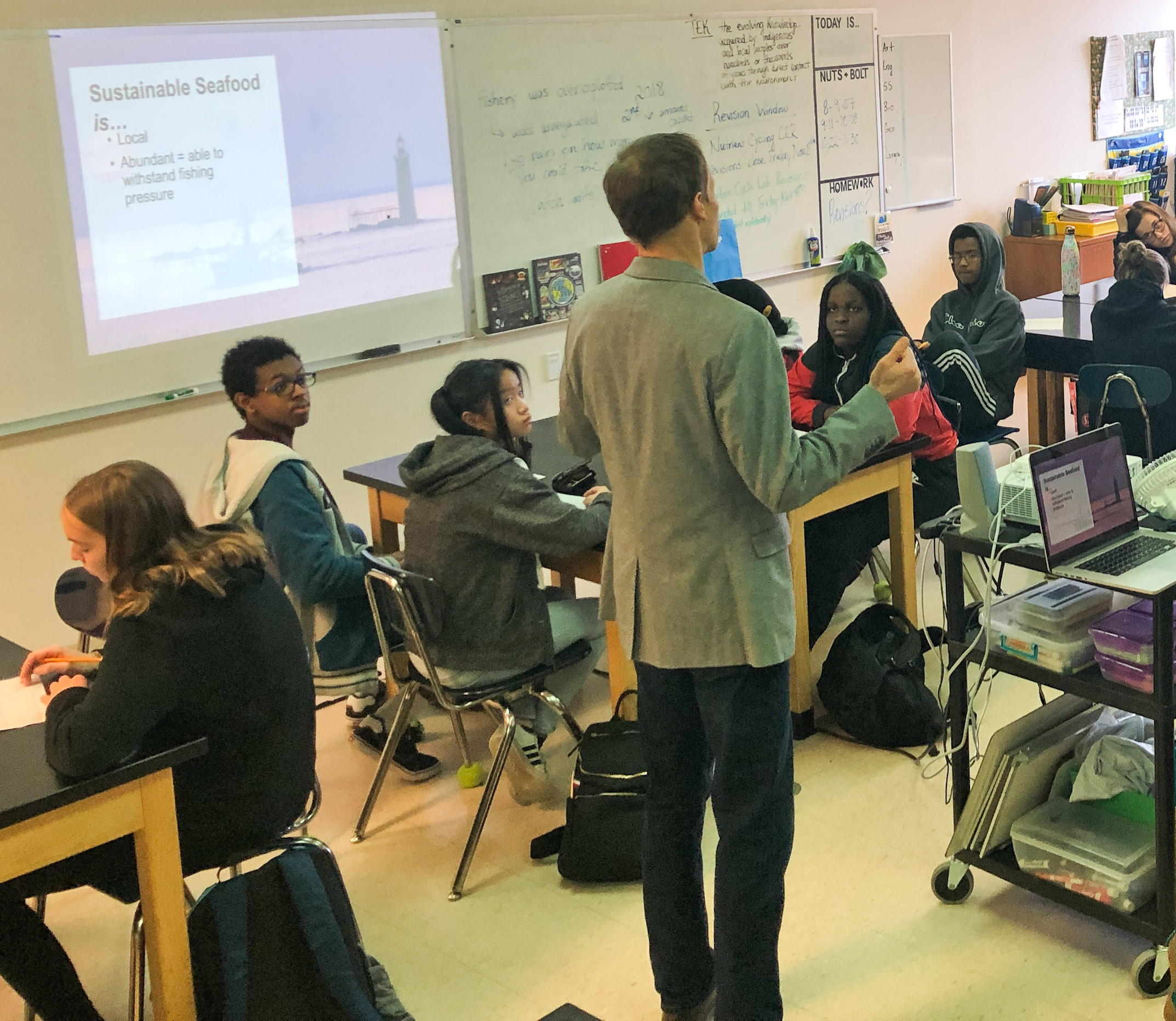
The focus on indigenous subsistence fishing was of particular importance to the 9th graders in Jenny Crowley’s ecology class at Casco Bay High School for Expeditionary Learning in Portland last month. They were learning about human interaction with natural resources and the impact humans can have on their surrounding environments. CBHS immerses students in “expeditions,” which allow them to dive deep into particular issues or topics while incorporating other facets of their education.

We talked about the delicate balance of policy on how to ensure different stakeholders have fair access to the resource. I shared my experience in Bristol Bay, Alaska this summer, talking with indigenous and subsistence fish harvesters there who described the traditions of learning to live in harmony with the salmon, the water and the land.

Finding that natural balance, taking only what they need to eat throughout the year and passing on that knowledge (like how to properly fillet a salmon using a traditional ulu knife and how to use the entire fish) are essential to maintaining that harmony from generation to generation.
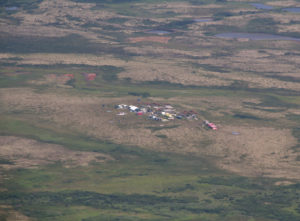
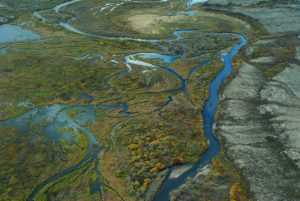
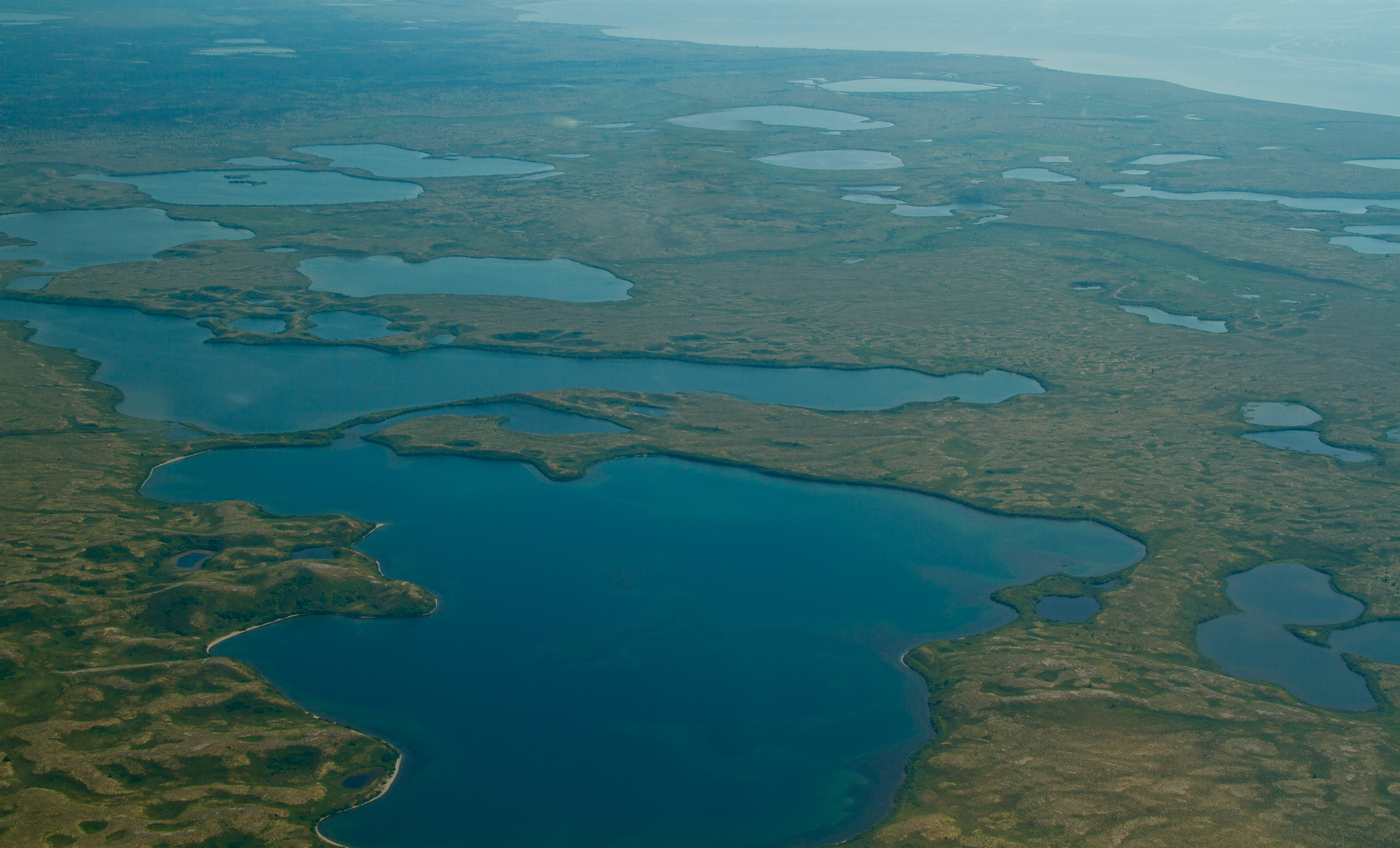
Pebble Mine exploration site. I took this photo during a flight to see how the mine would affect the headwaters of the world’s largest wild salmon run. I shared other photos depicting the breathtaking landscape that is veined with water. Students understood this one human “input” could result in devastation of that habitat.

We also spoke about how the different user groups in Alaska have united together in the past nearly two decades in solidarity to oppose the proposed Pebble Mine. It is largely due to that collaboration and the fierce determination to protect the resource that the proposed gigantic open pit copper and gold mine has not yet been built.

We talked about the tragedy of the commons and how communities working together to determine how best to manage the resource so it continues to provide for the entire community is absolutely essential.

So the students and I took those expeditions together in one-hour increments, talking about important socio-economic issues and how our choices affect the salmon and all marine life.

Collectively, we came to the conclusion that the type of community thinking in Alaska is one reason wild Pacific salmon there shade closer to the best of times.

Perhaps we should apply that model more diligently elsewhere.
All Blog Posts

Bristol Bay Beckoning

  • July 17, 2019October 19, 2021
  • by Colles Stowell
Share it!
Share

Plan for them all you want, but rich experiences often require overcoming some challenges, adapting to surprises and simply making do.

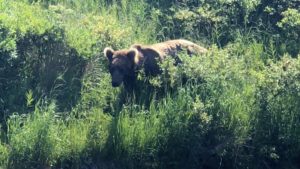
In the past two weeks in Bristol Bay, Alaska, I’ve watched massive brown bears stroll along the banks of the rivers I was fishing as they searched for their own meals, passively taking notice of us humans. Breathtaking.

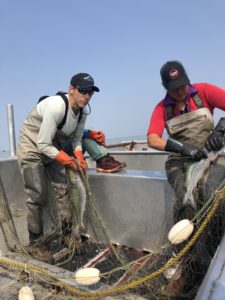
I’ve picked fish out of set nets by hand, learning from a master how to extricate gill plates, untangle fins and bleed the fish quickly and efficiently as we practiced a centuries-old ritual. Working three sets in a 15-hour period gave me a glimpse at just how demanding a full four-week season must be.

I’ve toured one of the eight or so big processing facilities that represent half of the commercial fishing economic equation in Naknek. One million fish a day are vacuumed up a large pipe from the waterfront to a huge warehouse with hundreds of hairnetted seasonal workers that head, tail, gut and fillet the fresh fish. The salmon are then either frozen and packed, or smoked, frozen and packed, each fixed with the private label of one of the fishermen who contract with the plant. It is a very smooth operation.
I’ve hitchhiked (for the first time, feeling at once a tad uneasy and adventurous) along the Alaska Peninsula Highway between Naknek and King Salmon, shortening the 15-mile distance, saving the $40 cab fare (and the $255 per day to rent a Kia) and meeting some really interesting people along the way. Hippie Doug may be a transplant from the 80s, but he sure seems to have carved out a creative, if off-color niche for himself smoking salmon in Bristol Bay.

The flora and fauna

I’ve checked off a significant, life-long bucket list item: fly fishing Alaska’s wild rivers and streams, catching a variety of stunning salmonids with different flies and approaches. The red flame of the rainbow trout and the iridescent pink spots of the Dolly Varden or Arctic Char are seared in memory, recalled at will. Same with the small chrome blue thumbprint marks along the sides of the 30 or so 2-8 inch king salmon smolts I caught while fishing King Salmon Creek alone.

We stood still and watched, being sure to keep a low profile. Click to watch a clip and turn up the volume!

Finding relatively fresh bear, moose and caribou tracks in the same vicinity along one of the creek’s banks spoke to the remarkable stable of wildlife in this place. I found a new sense of awareness following well-worn bear trails along the creek, mindfully following the advice I learned at “Bear Camp” at Brooks Creek by keeping a running conversation with myself. Ironically, I recounted a story I made up for my toddler daughter called “Esty and the Bear Cub.”

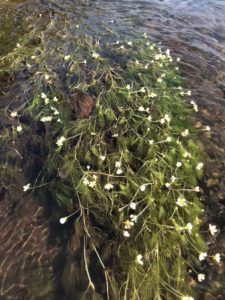
Mouse Ear Chickweed? Could be. Or it could be something else. Whatever it is, I sure did appreciate it at King Salmon Creek.

I drank in everything Nature had to offer. The colors of the fireweed, Toadflax (aka, butter and eggs), some form of lupine, something possibly called Mouse Ear Chickweed and countless other flowers I couldn’t identify. On one trek back from Contact Creek, I took in the cool shape and color of not-quite-ripe cloudberries, and the plethora of blueberry bushes along the trail, promising yet another ample food supply for bears, people and other critters in the next few weeks.

Bald eagles were fairly common, as were magpies, chickadees and some type of thrush providing the soundtrack for the wondrous ecosystem. On the flight from King Salmon to Dillingham, I watched beluga whales swimming in formation, chasing down a school of sockeye.

The people

I’ve also met some wonderful people who are corporeally and spiritually rooted to the land, the water and the resource. I was struck by their generosity, their openness and the power of their convictions. I spoke with both transplants and those whose roots to Bristol Bay extend for generations.

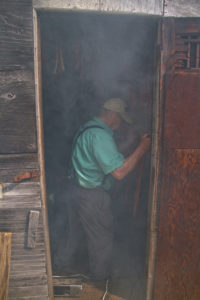
Al working his smoke shack magic.

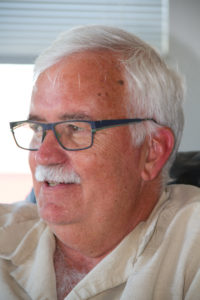
Al Aspelund and his wife Lou were my endearing hosts at Al-Lous B&B in Naknek. At 88, he is a consummate putterer, always fixing something and tinkering with his smoke shack to get the right temperature, air flow, and humidity for the sockeye and king salmon he hangs. A lifelong resident of the area, he practices the craft passed down from the Aleut traditions of his heritage.

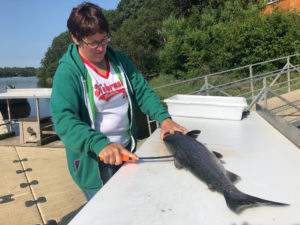
Lodge owner, fishing guide, master fish filleter and outdoors woman, Nanci Morris Lyon carefully cutting a king salmon I’d just landed.

Nanci Morris Lyon is a woman of the wilderness. She grew up on a subsistence farm in eastern Washington state, and has carried that wilderness spirit with her in her journey to become a commercial fisherman, a fishing guide and finally, a sport fishing lodge owner in King Salmon.

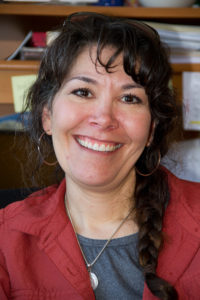
Gayla Hoseth advocates for indigenous rights and preservation of the wondrous natural resources of Bristol Bay.

Gayla Hoseth is a force of nature, striving to protect indigenous rights with a focus on preservation and access to Bristol Bay’s natural resources as director of natural resources at Bristol Bay Native Association in Dillingham, and second chief of the Curyung Tribal Council. Born and raised in the area, she clings to the traditions she fights to preserve for indigenous tribes, such as learning to use an ulu (traditional knife) to fillet salmon from her grandmother.

Years of adaptation on boat decks, in processing plants and running the Bristol Bay Economic Development Corporation have helped Norm Van Vactor put things in perspective.

Norm Van Vactor moved to Dillingham after graduating high school in the Philippines and soon became a deckhand on a tender (a boat which takes the catch from smaller boats to processors on shore). He’s spent much of his life on deck or in processing plants, eventually becoming president and CEO of the Bristol Bay Economic Development Corporation, charged with ensuring the rights of fishermen and others who want to earn a decent living in the area.

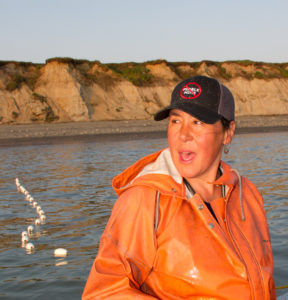
Melanie exudes good cheer, even during the fourth set of the day heading toward midnight.

Melanie Brown radiates love. She almost always has a smile on her face. She set net fishes with her son and daughter on the same sight her great grandfather established at the mouth of the Naknek River in the early 1900s, where thousands of sockeye funnel past heading many miles upriver to spawn. The one time I saw her really lose her smile was when she spoke about the impending threat of the Pebble Mine, showing her passion for protecting her rights, and those of everyone else who depend on the resource.

She wasn’t alone.

Unity in opposition

Everyone I spoke to let their raw emotions show on this topic. And every one of them echoed one clear sentiment. The proposed mine threatens something more valuable than the gold, copper and molybdenum couched in the earth at the headwaters of the world’s largest wild sockeye salmon run: the lives and livelihoods of thousands of people, natives, transplants and transient workers who depend on the health of that resource. And the economic impact of that resource cannot be overstated. The salmon fishery (both commercial and recreational) employs close to 15,000 people and generates a $1.5 billion economic impact.

A scar on the tundra near Lake Illiamna, the watershed for much of the world’s largest wild salmon run. Wrong place. Wrong mine. Repeat.

My mission to Alaska was twofold. First and foremost, I wanted to connect with these people and capture their stories for podcasts and blogs that I will share for broad distribution. This pitched battle has national significance, beyond what’s happening in Bristol Bay. These human stories will shed light on what’s at stake when huge multinational interests driven by profit and greed paint a rosy veneer over the devastating impacts of their operations. They want everyone in the lower 48 to assume this mine will bring jobs and boost local economies, ignoring the imminent ecological destruction of when (not if) the mine fails and leaks toxic chemicals into a priceless and fragile ecosystem. Flying over the pristine, water-veined tundra near Lake Illiamna, I wondered how anyone who saw the ugly outcropping of buildings dumped on this wondrous terrain could possibly think this mine was a good idea.

Second, I wanted to experience Bristol Bay firsthand, picking fish in set nets, walking across the tundra to remote rivers and streams to fly fish, seeing life in Naknek and King Salmon, touring a processor, and meeting new people. I visited at a time when the sockeye run is again above projections, showing the resilience and bounty of the resource, especially when it’s properly managed and allowed to thrive in healthy ecosystems.

I’ve done that. And there’s still much more to do. Stay tuned for the upcoming Fish Tales Podcasts featuring Nanci, Melanie, Norm, Gayla, Al and others to hear them tell their stories, and why preserving the resource matters to them, everyone in Bristol Bay, and to all of us who stand witness to the fierce battle to protect a priceless, irreplaceable resource.

All Blog Posts

Something There Is That Doesn’t Love A Mine

  • April 1, 2019October 19, 2021
  • by Colles Stowell
Share it!
Share

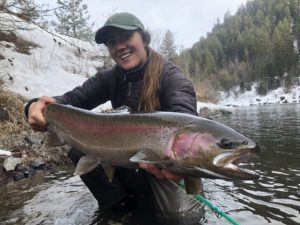
Nanci Morris Lyon’s daughter was born the year the Pebble Mine project was first proposed in Bristol Bay, Alaska. Rylie Lyon is now a sophomore in college. She is a guide at her family’s recreational fishing operation, Bear Trail Lodge, in King Salmon, Alaska. Nanci spoke out against the mine then, and she’s still doing it today.

Talk about a telling timeline.

Why is it that this mining project, purported to be resting on one of the world’s largest copper, gold and molybdenum deposits, has neither begun operation nor been abandoned as a bad job in nearly 20 years? Only recently did the U.S. Army Corps of Engineers just release its Environmental Impact Statement (EIS, which would form the basis for considering possible impacts of allowing the mine to operate) for public comment.

Ponder this the next time you use your cell phone, hop online or drive to the store: Those minerals are in more everyday items than most people know. Their claimed abundance in the geologic veins hiding in the Earth’s crust near Bristol Bay has sparked much controversy during the past two decades, sometimes, pitting neighbor against neighbor in Alaska.

Why have Lyon, her family, staff, friends and most everyone else in and around the recreational, commercial and indigenous fishing industries in the Bristol Bay region continued fighting this mine for this long? That such a unified and vocal coalition of very diverse groups and cultures directly tied to the resource continues to stand united says something.

With apologies to Robert Frost, something there is that doesn’t love a mine. Particularly this mine in this spot.


Rylie Lyon with a spring rainbow trout, just a few weeks ago.                        Photo courtesy Nanci Lyon

In perpetuity

The biggest concern is that minerals mining produces highly toxic chemicals that permeate much of the rock and other sedimentary layers exhumed from the earth in the process to extract the desired gold, copper and molybdenum. All of that nasty stuff must be stored safely somewhere forever. Whatever happens in that watershed now has generational impacts on everything, from salmon to water to land.

Mines aren’t supposed to let that crap loose in Nature. Sadly, time and again they do. Look no further than what happened in Brumadinho, Brazil in January, or what happened at the Mt. Polley Mine in 2014.

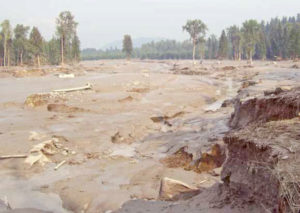
Aftermath of Mt. Polley tailings impoundment failure. This dam was initially engineered by the same firm engineering Pebble’s dam. National Park Service Photo

People like Lyon, and my friend and colleague Melanie Brown, who fishes for sockeye salmon with her mom and other family members near Naknek, have been fighting Pebble from the beginning. Melanie’s connection to Bristol Bay traces back over generations as her family has fished those waters commercially and for subsistence with the natural rhythms of returning salmon.

Opposition to the mine stems from its proposed location just north of Lake Iliamna, in the watershed of the world’s largest wild sockeye run … and the rivers that Brown, Lyon and thousands of others depend on for their livelihoods.

They don’t view the Pebble Mine as a potential resource for their phones and computers. They view it as a ticking bomb. In their minds, the question isn’t whether something is going to go wrong. It’s when, at what scale, and whether the damage is permanent. What they fear most is the salmon won’t return.

Melanie Brown doing what she loves near Naknek.  Photo courtesy Melanie Brown

Political tide change

Less than three years ago, the mine was left for dead, sentenced to purgatory by the Obama administration’s Environmental Protection Agency, which in 2014 declared the mine would violate the Clean Water Act because of its imminent threat to the wild salmon watershed. This was good news for everyone supporting the natural resource that provides a nearly $2 billion economic boost to the Alaska economy and supports over 14,000 jobs for commercial and recreational fishing businesses as well as countless related operations. Those numbers dwarf any realistic economic impact the mine would have on the state.

Then two elections happened (in 2016 and 2018), dramatically turning the political tides at both the federal and state levels and breathing life back into the project.

A 30-minute conversation between Pebble Limited Partnership CEO Tom Collier and former EPA Administrator Scott Pruitt in 2017 undid all of the work that Lyon, Brown, and many, many others amassed over decades to fight the project.

I wonder if someone uttered, “Good mines make good neighbors” in that meeting.

And now the mine’s permitting process, once estimated at decades if it ever got off the ground, is on a fast track. The Corps of Engineers on Feb. 20 released its draft EIS in “record time” by many accounts. Several critics claim the EIS glazes over if not outright ignores the ample scientific, economic and straightforward concerns voiced by recreational, commercial and indigenous fishermen, business owners, residents, scientists and countless voices from outside the state.

One chief concern is that the EIS does not account for the inevitable expansion the mine would have to undergo just to try and make a profit. Read this scathing economic review by a former permitting expert with one of the world’s largest mining operations (Rio Tinto, which previously pulled away from a financial deal with Pebble Limited Partnership). According to his analysis, the mine as proposed would have a big negative net present value of -$3 billion.

And despite loud protestations to extend the comment period sufficiently to allow thorough examination of the EIS and appropriate response, the Corps seems unwilling to do so. The comment period currently ends May 30, 2019.


Passion to safeguard Nature and livelihoods. Photo: Seafood News

Worse still, the last election produced a new pro-mine governor, who has appointed pro-mine commissioners (including a former employee of Anglo American, one of the world’s largest mining operations, which also pulled away from a financial deal with Pebble) of the departments of Environmental Conservation and Fish and Game. This move essentially sets the stage to fast-track state permits (of which there are nearly 60 to secure).

Follow the money

So why the rush? If the mine is as much a fait accomplis as its backers would have you think, why are they pushing state and federal agencies, which are supposed to have the state’s best interests (read natural resources and citizens) in mind, to approve everything now?

Perhaps it’s that Pebble’s owners want the appearance of momentum to continue so they might attract yet a fifth financial backer to the altar. The previous four, including three of the four largest mining interests in the world, bailed out citing massive opposition and the risk of economic disaster.

Maybe it’s the nifty clause that promises Collier more than $12.5 million in bonus money if he secures a positive Record of Decision from the Corps of Engineers within 4 years of submission of the permit (in Dec. of 2017). That’s on top of his $2+ million salary.

Talk about scale and incentive. The tailings impoundment to hold the toxic waste produced to extract these minerals would be up to 700 feet deep and extend for several miles. And it must be secured “in perpetuity.”

This is the same Collier recently quoted railing against the mine’s opposition: “I believe that a lot of these environmental organizations choose issues in Alaska. They make them cause celebs so they can raise money around them. And they choose Alaska primarily because they don’t have to suffer the backlash from the economic impact of the project being killed because no one gives a rat’s ass what happens in Alaska.”

Is that so? Within the Bristol Bay region, opposition to the project remains at over 75 percent, with the latest state-wide poll showing 61 percent opposed across Alaska. In 2014, 65% of Alaskans voted in favor of a measure that would require approval by the state legislature (rather than simply the state Department of Environmental Services) of any mine project that would threaten salmon habitat.

Priceless habitat.

But then again, politics and money can make a difference. A ballot measure was defeated last November that would have added enforcement teeth to existing state laws that would have made permitting a mine in crucial salmon habitat harder to do. How did this happen so soon after the 2014 vote?

Because Ballot measure 1’s proponents, which included many of the same collective of fishermen, business owners and residents opposing the mine, were out-spent by several out-of-state companies. Supporters raised close to $2 million. Opponents raised close to $12 million, with the top five cash donors being such “neighbors” as Conoco Phillips ($1.4 million), BP Exploration (Remember Deepwater Horizon! $1.05 million), Donlin gold ($976,000), Hecla Mining Company, (just shy of $1 million), Coeur Alaska, (just shy of $1 million).

Oh, and let’s not forget other outside influences, such as the Koch brothers, who funded the Alaska Policy Forum, Power the Future, and Americans for Prosperity- Alaska Chapter, which operated an influence campaign to defeat Ballot Measure 1.

Profits over living natural resources, anyone?

Rolling boulders, not pebbles up hill

Certainly the mine’s operation would most significantly benefit its owners, managers and shareholders, maybe a few dozen.

On the other side of the fence are tens of thousands currently working in harmony with the salmon resource. This has been a grueling uphill battle for Lyon, Brown and everyone else standing up to outside influence. Years of persistent, grinding effort and emotion, speaking out publicly, holding signs, singing songs and writing letters take an emotional, spiritual and physical toll.

Why keep at it?

Because it’s their way of life. A connection to the land and water and salmon deeply intertwined with who they are.

Perhaps that’s a reminder of what should be important, whether we live in Bristol Bay or not. Yes, we depend on our cell phones and stuff like that. But there’s something else at work here.

Perhaps mining interests/investors/manufacturers should find the raw materials somewhere else, where there isn’t an imminent threat to a priceless resource that may not be able to recover should when something bad happens.

Can the forces working to topple a fabled stone wall in northern New England woods serve as a proxy for what’s really at risk in Bristol Bay?

Would that we could ask the salmon.


Resources

  • Speak out: Your voice matters, whether you live in Alaska or not. Here’s a link to comment on the US Army Corps of Engineers draft EIS.
  • Let Sen. Lisa Murkowski R-Alaska, know what you think. She needs to hear from everyone, in and out of the state. Follow the link and add additional comments if you are out of state but concerned.
  • Good resource for timeline, facts and ways to engage: Save Bristol Bay
  • Pebblewatch, which also has some cool maps
  • National Park Service in-depth analysis of the long-term effects of tailings impoundment failures.
  • A Bristol Bay fisherman speaks out in Juneau Empire op-ed against the mine.
  • Op-ed by Ron Thiessen, CEO of Northern Dynasty Minerals, which owns Pebble Limited Partnership. Funny how this “neighbor” tells people not to buy into “the alarmism” about the mine, but doesn’t mention his salary is over $2 million. Even more ironic is that he encourages people to read the Army Corps of Engineers’ EIS, but fails to mention that it is incomplete and virtually ignores most of the more damning issues raised in the first phase of public comment.
  • Finally, if you love wild Pacific salmon, and would like to do something beyond commenting, check out this offer from Wild for Salmon.


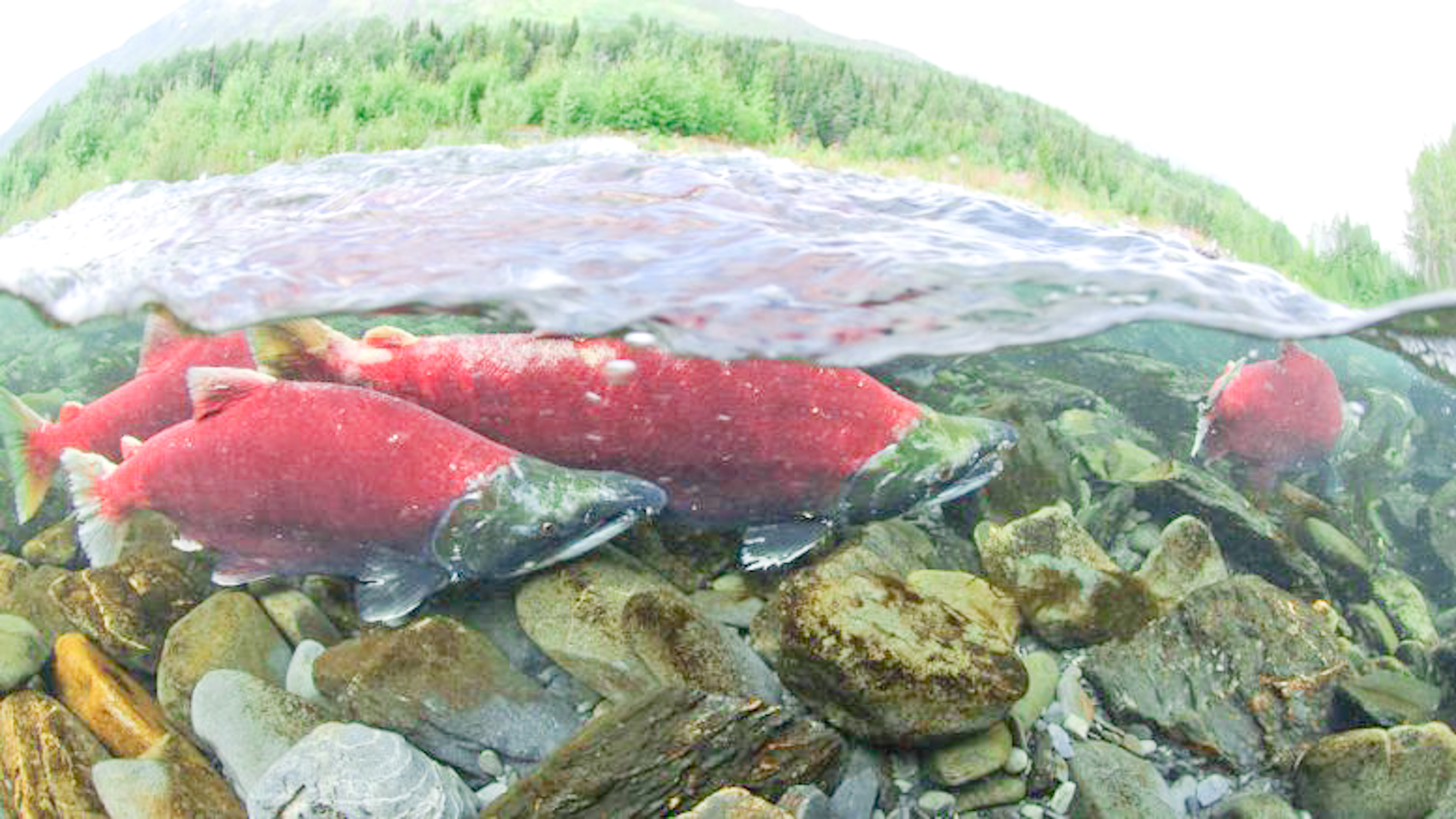
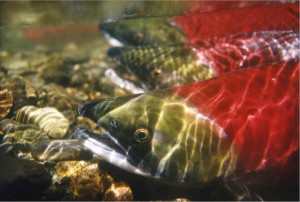
Top photo: Alaska Region U.S. Fish & Wildlife Service/Flickr

Recent Posts

  • Hurricane Ida wreaks havoc on Louisiana’s seafood industry
  • EPA Should Use Clean Water Act To Kill Zombie Mine
  • Slow Fish 2021: Relationship Matters
  • Faith, Façades, and Futility
  • Pebble Permit Paused: Politics at Play

Archives

  • September 2021
  • August 2021
  • April 2021
  • December 2020
  • August 2020
  • June 2020
  • February 2020
  • December 2019
  • November 2019
  • October 2019
  • July 2019
  • May 2019
  • April 2019
  • March 2019
  • January 2019
  • December 2018
  • November 2018
  • June 2018
  • May 2018
  • March 2018
  • February 2018
  • January 2018
  • December 2017
  • November 2017
  • October 2017
  • September 2017
  • August 2017
  • July 2017
  • June 2017
  • May 2017
  • April 2017
  • March 2017
  • January 2017
  • December 2016
  • November 2016
  • October 2016
  • September 2016
  • August 2016
  • July 2016
  • June 2016
  • May 2016
  • April 2016
  • March 2016
  • February 2016
  • January 2016
  • December 2015
  • November 2015
  • October 2015
  • September 2015
  • July 2015
  • June 2015
  • May 2015
  • April 2015
  • March 2015
  • February 2015
  • January 2015
Theme by Colorlib Powered by WordPress