 All Blog Posts
Climate Change Hampering Cod Recovery, Study Says

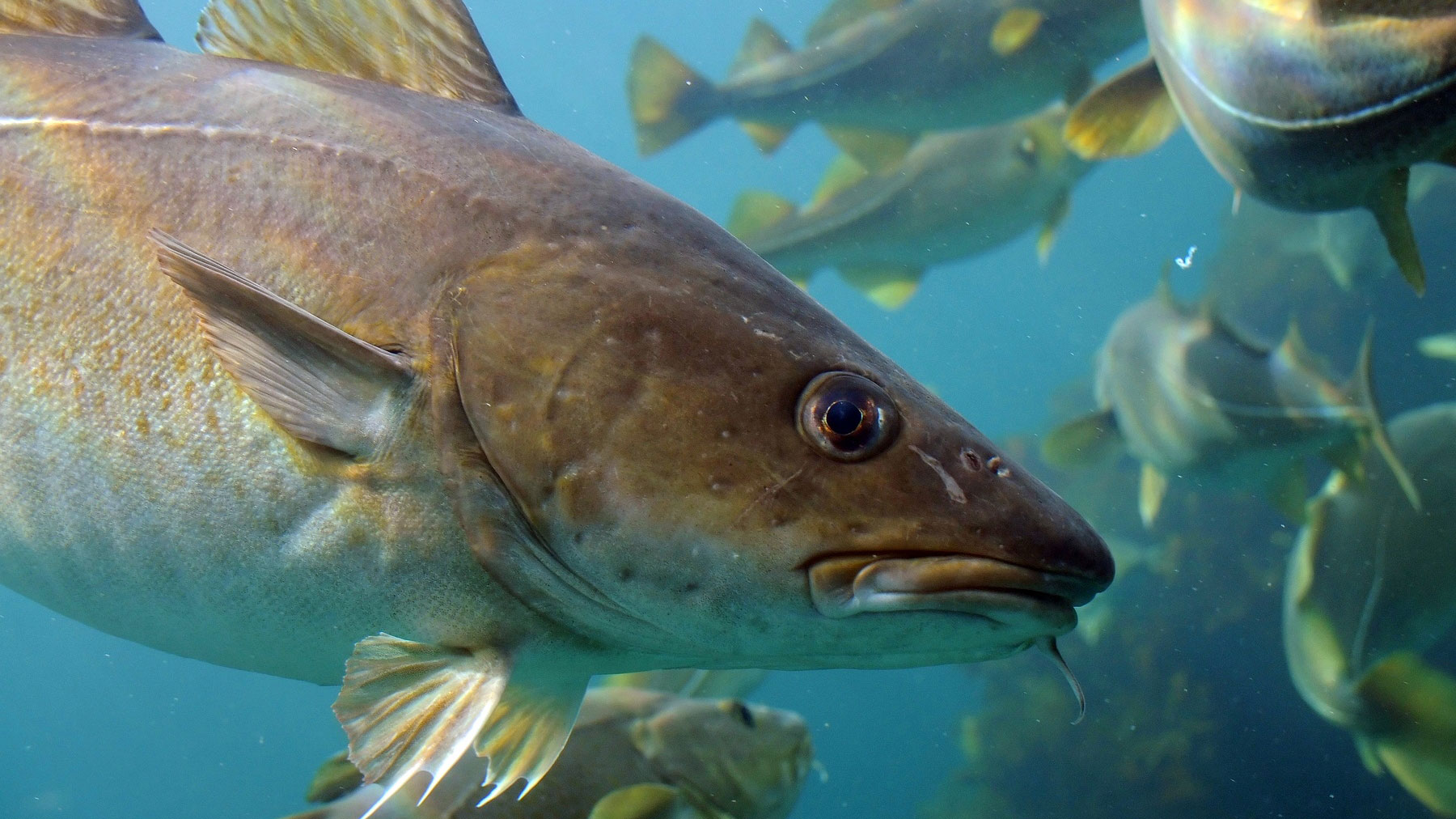
Cold water species like cod don’t like warm water. This we knew. What we didn’t know for sure was just how much. While there are still many questions, a new study published in the journal Science suggests that the warming Gulf of Maine is largely responsible for the inability of cod populations to recover.
For the past five years, environmentalists and some marine scientists have sounded the alarm that Atlantic cod populations have plummeted below the ability to recover from historic harvest levels. They worried adults would not reproduce enough to maintain healthy stocks in the face of such harvests.
Now scientists believe the warming temperatures in the Gulf of Maine are making life very difficult for juvenile cod. The Gulf of Maine, which runs from Cape Cod up to the tip of Nova Scotia, is warming faster than 99% of the world’s oceans, at a rate of .4 degrees F from 2004 to 2013, or nearly half a degree a year for 10 years.
That warmer water has coincided with a dramatic drop in the number of cod that survive to be adults. Scientists now speculate that food for juveniles, temperature-related stress and the growing number of predators brought in by the warmer water may play a role. They suggest that warmer waters may have caused a drop in some of the zooplankton the larval cod feed on.
Of note in the Science article are a couple of not-so-veiled accusations that fisheries managers didn’t react quickly or as aggressively as they should have to reduce the cod harvest in time to allow it to bounce back. The study’s authors, from the Gulf of Maine Research Institute and 11 other institutions, claim that while previous studies pointed to the damage warmer waters could do to cod reproduction and harvest levels, the fishing quota system and subsequent area closures last year were too little too late.
Additionally, the study suggests that going forward, fisheries managers need to take climate change and ocean warming further into account if they want to establish meaningful regulations.
I agree. Here’s why. The warmer climate has attracted some non-native species that alter the existing ecosystem balance. Invasive green crabs are moving north and having a devastating effect on young shellfish like mussels and clams, and they’re destroying the eelgrass habitats – crucial nurseries for a variety of fish and shellfish.
Black sea bass, typically a mid-Atlantic species, are showing up in lobster pots throughout northern New England. Researchers have found young lobsters in black sea bass bellies. Blue crabs so dear to Chesapeake Bay are now showing up in New England as well. Turns out they seem to chase the green crabs around and perhaps eat them. There’s also an Asian sea squirt that is blanketing large seafloor swaths, choking out native colonies of mussels, sea sponges and other organisms.
These are just some of the new players we know of. The Gulf of Maine is fast becoming a canary in a coalmine regarding climate change impact on marine ecosystems. It is an unwilling test case on what happens when environmental changes alter everything from migration patterns to predator-prey relationships. And as this study suggests, these changes have occurred more quickly than fisheries managers have reacted, creating situations where they’re effectively putting out fires rather than preventing them.
I attended an informative workshop last year in which scientists, fishermen, policy makers and activists discussed how to better predict climate change impacts and how to translate that into better management policies and better communication with fishermen. This was a very productive meeting, and one that needs to happen more frequently and with more stakeholder involvement. It bears repeating that more collaboration with all parties is essential to finding solutions to climate-induced marine ecosystem changes.
Here are some additional resources:
Portland Press Herald: has had a very well researched six-part series on this issue. It’s worth the read.
The Boston Globe: Story on the journal Science report.
NOAA report on current global temperature records.
photo: © Joachim S. Mueller for Pew Trusts