Skip to content
One Fish Foundation
  • Blog
    • Aquaculture
    • Education
    • Environment
    • Policy
    • Wild Harvest
    • Fish Tales
  • About
    • About One Fish
    • About Colles Stowell
  • Education
    • Elementary School
    • Middle School
    • High School
  • KNOW FISH Dinners®
  • Resources
    • One Fish Podcast
    • One Fish Foundation in the news
    • The 7 C’s of Sustainable Seafood
    • Newsletter Archive
    • Recipes
      • Skate with Capers and Butter — Chef Rizwan Ahmed
      • Grandma Davis’ Fish Chowder — Jane Almeida
      • Ginger Garlic Tamari Scallops — Colles Stowell
      • Fish Stock — Evan Mallett
      • Mussels San Remo — Chef Rob Martin
      • Salted Pollock Croquettes – Chef Mark Segal
  • Connect
    • Contact OneFish
    • Social
      • Instagram
      • Facebook
      • Twitter
All Blog Posts

Arctic Climate Change Could Have Irreversible Global Impact

  • December 21, 2016October 20, 2021
  • by Colles Stowell
Share it!
Share

Every time I read a story with dire predictions about climate change impacts I imagine a gong the size of a barn door sending a warning echo off the mountains in the distance.

A team of scientists recently released a report stating that changes in the Arctic climate, everything from melting polar ice caps to warming waters and changing ocean salinity is happening faster than previously predicted. Currently, the atmospheric temperatures there are about 20 degrees Celsius warmer than normal and water temperatures are 4 degrees warmer than normal. The likelihood of no summer sea ice forming this century is very high.

Arctic tipping points

The Arctic Resilience Report states that all of this could push conditions in the Arctic toward 19 regime shifts or tipping points – climate situations that if reached, may prove to be irreversible. For example, the Greenland ice sheet is widely considered the Northern Hemisphere’s air conditioner. It is massive, nearly 1.1 million square miles, and it serves a critical role in keeping temperatures above the equator from getting too hot. This massive sheet of ice acts like a mirror, reflecting the sun’s powerful rays back into space and minimizing solar radiation warming.
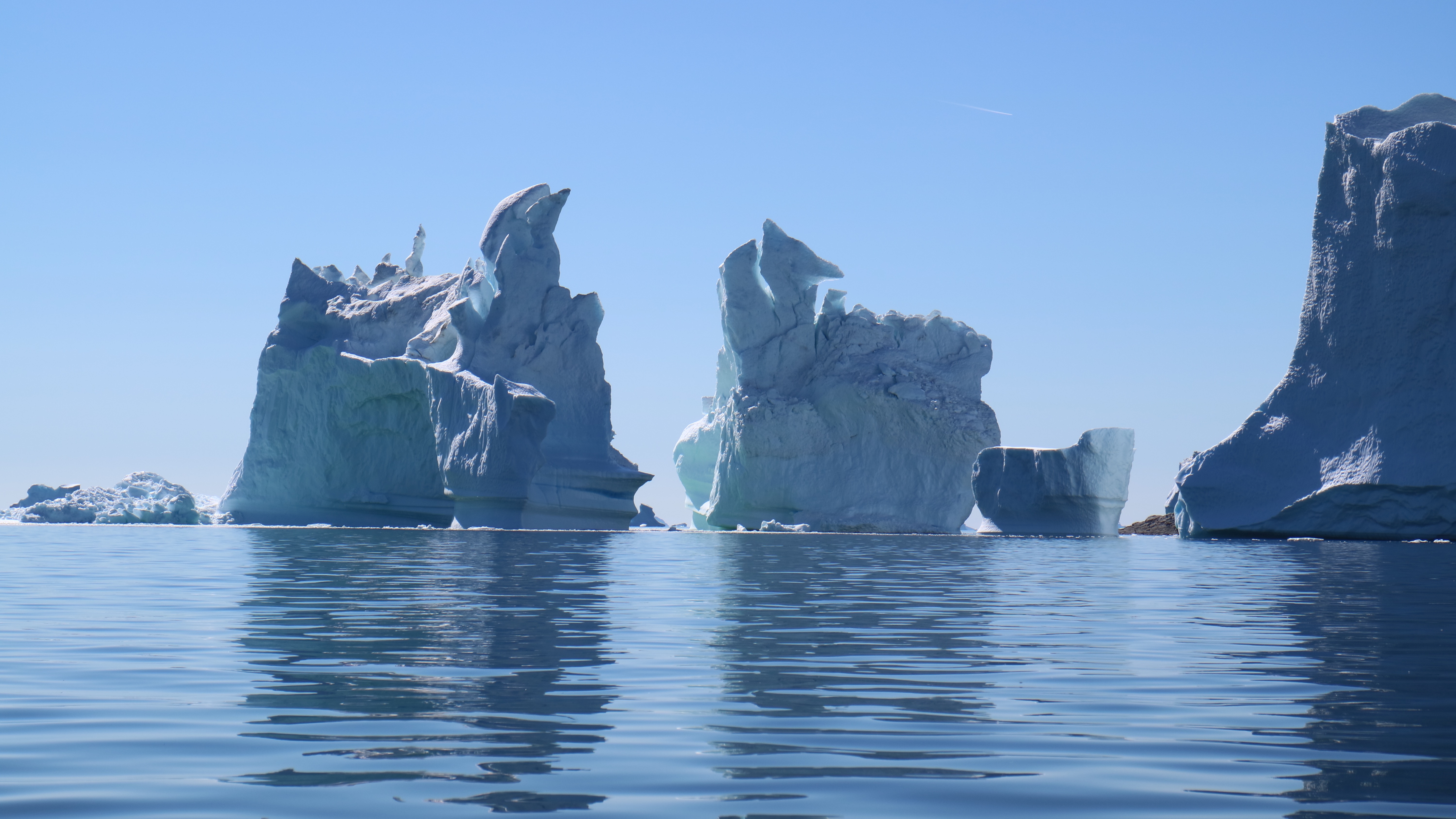
The melting Greenland ice sheet. Photo by Marcus Carson

But as global temperatures have risen, the ice sheet has become thinner and smaller, and as waters around the sheet have become warmer, they have accelerated melting. This creates a cycle in which the sheet’s shrinking could accelerate localized climate change, which could further accelerate the ice sheet’s shrinking. If the ice sheet disappears (which could take centuries), scientists predict it could cause global sea levels to rise by more than 20 feet.

This is just one of the 19 tipping points. Others include: Arctic sea ice loss, which would have some of the same effects as the melting of the Greenland ice sheet; changes in ocean salinity and current, which could spread warmer water faster than normal, with global implications; changes in land-based ecosystems that could release more greenhouse gases and reduce ice/snow reflectivity; and changes in Arctic snow patterns, which could also increase global ocean temperatures that effect climate patterns such as the monsoon season in Asia.

Fisheries impact

And then there is the impact on fisheries. The report cites manmade climate change (greenhouse gases, warming oceans, pollution, etc.) as well as other external factors like fishing pressure, as drivers for what could result in fisheries collapses in the Arctic. This could play out in a couple of different ways. First, a combination of warming water, shifting current, salinity and acidification could alter the vital nutrient upwellings that produce the plankton forage fish feed on. If the forage fish don’t thrive, neither do commercially important species like salmon, cod, pollock and shrimp. Couple that with continued fishing pressure, and you’ve got a recipe for collapse.
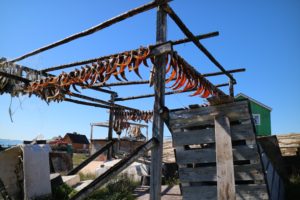
Climate change could cause fisheries collapse in the Arctic and elsewhere. Photo by Marcus Carson

The question is, how could fisheries collapse in the Arctic affect fisheries elsewhere?

This is no small question.

Complex challenges

So I asked Marcus Carson, one of the lead authors of the 218-page report. He talked about what we know and don’t know about how rapidly things are changing. “Often, when we see these things, it’s really hard to set in motion the processes we need to take them back,” he said from his home in Sweden.

“The challenge is the relational understanding. We understand the silos [warming oceans, ice melt, carbon storage in peat bogs, etc.] pretty well. What we’re lacking is how these connections in these really complex systems really work.”
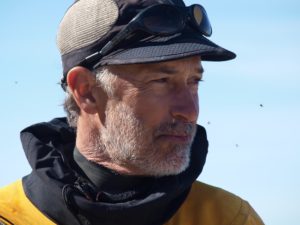
Marcus Carson. Photo by Mark Tozer

For example, he mentioned that ocean acidification, the process by which the overall acidity of the ocean increases due to increased environmental carbon release, was not included as one of the tipping points in the report because scientists couldn’t pinpoint how it will behave in concert with other factors like salinity, temperature, current, etc. What scientists do know is that the rate of acidification in the Arctic has increased twice as high as almost anywhere on earth, and that acidification is generally higher in colder water.

“What we don’t understand is the exact relation between climate change and ocean acidification where fisheries are involved,” he said. Many species follow temperature, which is the case with some species here in the Gulf of Maine. For example, as waters have warmed off Long Island Sound, lobsters have pushed north and east, and there is no sustainable lobster fishery there anymore.

We also know as we dump more carbon into the atmosphere and put more chemicals into our estuaries, the acidity goes up. But as Carson said, we don’t yet know how changes in acidification from these types of drivers will work in concert with temperature, salinity, current to affect marine food webs. Species that are more tolerant of some or all of these drivers will likely thrive more in a changing Arctic climate than others.
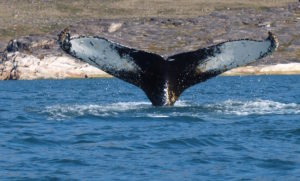
We need to better understand how all climate change factors could affect entire food webs. Photo by Mark Tozer

“There may be some biological variability that might get species competing with each other moving into the same space,” he said.

When it comes to impact on climate change in the Arctic affecting fisheries there and elsewhere, we still have to take a broad view. There will undoubtedly be an impact, especially when considering how currents will channel warmer, denser water globally.

A global climate

“There’s a saying around the working groups of the Arctic Council. ‘What happens in the Arctic doesn’t stay there.’ A lot of changes beyond seasonal fluctuations aren’t generated there. They start outside the Arctic, and get in there,” he said. And the changes in the Arctic may have global impacts.

“The implication with these 19 potential shifts … is that when these things start interacting with one another, the concern is that we could be setting forces in motion that are wildly out of our control,” he said.
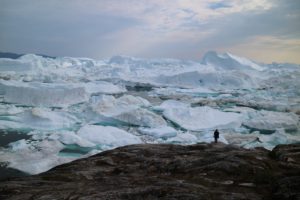
The cycle continues. Melting ice sheet allows more solar rays to warm oceans and atmosphere, accelerating ice melt. Photo by Marcus Carson

Not surprisingly, almost every response option cited in the report for the 19 tipping points calls for some form of reducing global greenhouse gases and shifting toward renewable energy.

This is the same message a majority of scientists have been saying in ever growing numbers and volume. However, the incoming administration has virtually declared war on climate change science.

Asked about threats to defund NASA’s climate science regimen, Carson used the analogy of “tearing the instrument panel out of your plane while in flight. It’s like you want to poke our eyes out while we’re heading into these big changes.”

Indeed.

That gong is getting louder. Do you hear it?
 

All Blog Posts

Oceans Rising Faster Now Than In Past 3,000 Years

  • February 24, 2016October 20, 2021
  • by Colles Stowell
Share it!
Share

I wonder if there will ever be a tipping point for climate change deniers. That is, I wonder if a critical mass of scientific evidence suggesting man-made greenhouse gas emissions could ever sway even some of the most outspoken critics of climate change.

Perhaps not.

But as scientific methods become more exact, the scope and depth of research more extensive, and the conclusions of experts around the world more universal, denial becomes harder, and more futile.

New research released Monday suggests that not only have oceans risen over the past roughly 3,000 years, but that seas have risen faster in the 20th century than in the previous 27 centuries. Moreover, this century’s global sea level rise is largely due to anthropogenic greenhouse gas emissions, studies say. In effect, the research highlights just how much we have contributed to global warming and global sea level rise above normal fluctuations.

For example, one study, published in the journal Proceedings of the National Academy of Sciences, points to a strong link between global temperatures and sea levels. The study suggests sea levels would have risen by as much as 7 centimeters in the 20th century without global warming, reflecting the “typical” fluctuations that occur naturally. With global warming caused by man, scientists suggested global sea levels have risen by twice that much or 14 centimeters.

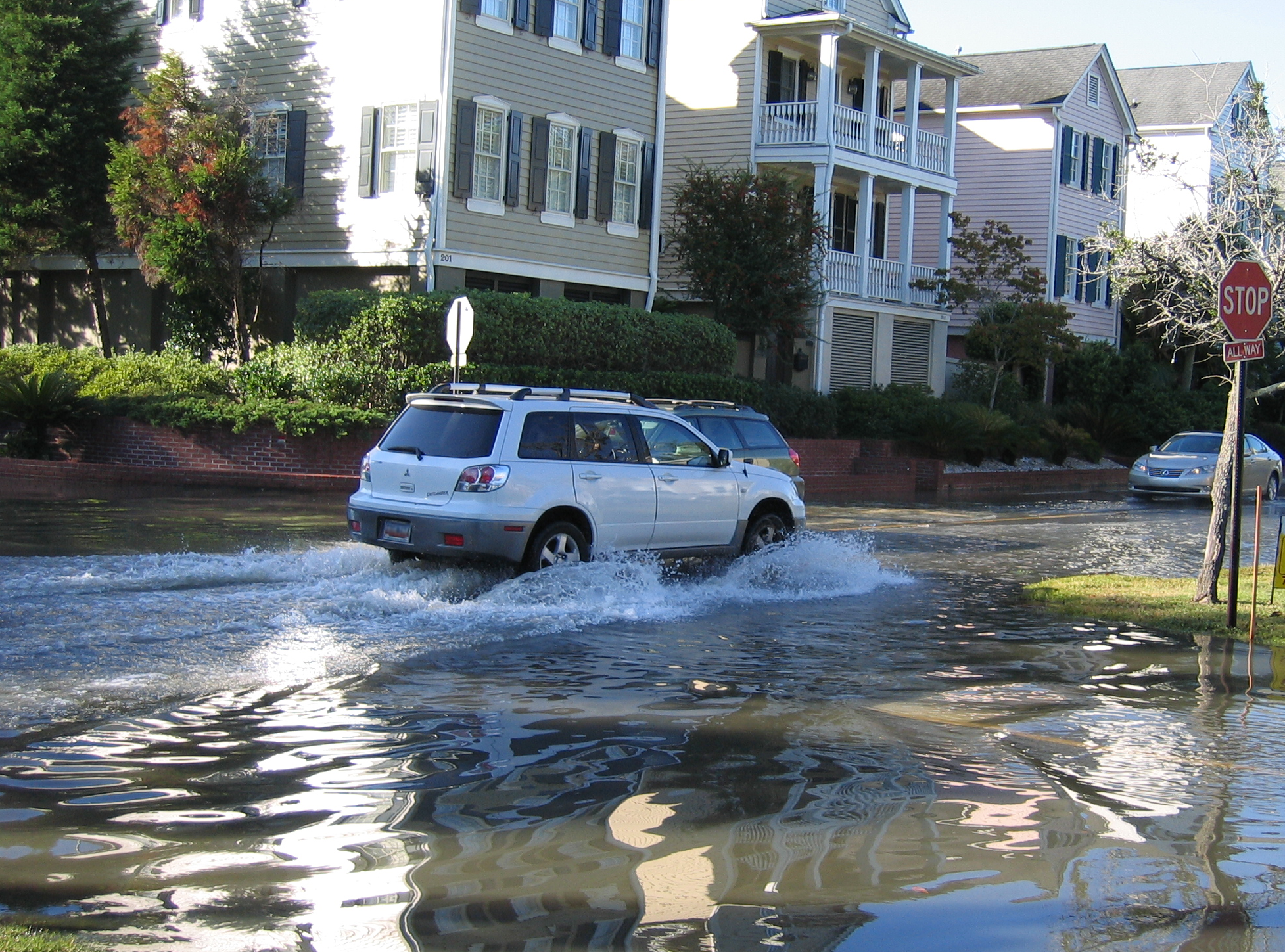
That may not sound like much, but when you account for oceans rising at a current rate of about a foot a century, several coastal communities are already imperiled. If seas rise by as much as four feet by 2100, as many scientists have predicted, communities like Miami, Charleston, S.C. and New Orleans could be under water.

Another study issued Monday, highlights how steadily rising waters have already affected coastal communities, and how much of that is attributable to greenhouse emissions. Scientists used data from instruments called tide gauges, which measure flooding based on above normal water levels in coastal communities around the country. They found that about two thirds of the nuisance flood days (days when waters flooded streets, clogged storm drains etc., but not catastrophic flooding) since 1950 have been caused by man-made emissions. More specifically, researchers found the greatest increase in the number of flood days occurred between 2005 and 2014.

For example, the number of flood days in Wilmington, N.C. jumped from 14 in the 1955-1964 decade to 376 in the last decade of 2005-2014. Researchers attributed 308 days, or more than 80% of those days to human-caused climate change. The researchers also suggested that trend of “nuisance flooding” where low-lying coastal communities experience flooded roads, dying grass, over-taxed infrastructure from high tides amplified by rising oceans will continue, costing billions of dollars in damage and pushing some communities further into danger.

Over time, this kind of flooding also dramatically changes coastal habitat for seafood, forcing many species to relocate, which in turn affects local fishermen as well.

So I wonder how high the pile of scientific and economic evidence needs to get to start changing some of the skeptics’ minds.

Perhaps it won’t happen until they’re flooded with it.


Photo: car driving through flooded street in Charleston, S.C.  credit: NOAA

All Blog Posts

Climate Change Could Threaten Several Northeast Fisheries New Study…

  • February 6, 2016October 20, 2021
  • by Colles Stowell
Share it!
Share

Go ask Long Island lobstermen … if you can find any … what they think about climate change. Trouble is, there aren’t many left because there aren’t many lobsters left in Long Island Sound. Same thing with Atlantic cod fishermen. There aren’t nearly as many boats targeting cod compared to 25 years ago because there are fewer fish.

We can blame climate change to a degree. No, it would be shortsighted to blame all fisheries depletions on warming waters. Myriad factors including fishing pressure can conspire to harm stock health. But a new study from NOAA underscores a concern many scientists and fishermen share: ever warming waters will continue to dramatically impact fisheries.

Published in the journal PLOS ONE, the study relies on a new methodology to look at how 82 species in the Northeast region have been and will be affected by climate change. Specifically, the study measures which species will be most vulnerable to climate change effects, including ocean acidification, as well as which species’ migratory patterns will most likely change because of ocean warming. In a nutshell, species that live along the ocean floor such as cod, mussels and lobsters, and those like salmon and sturgeon that migrate between salt and fresh water are most at risk.

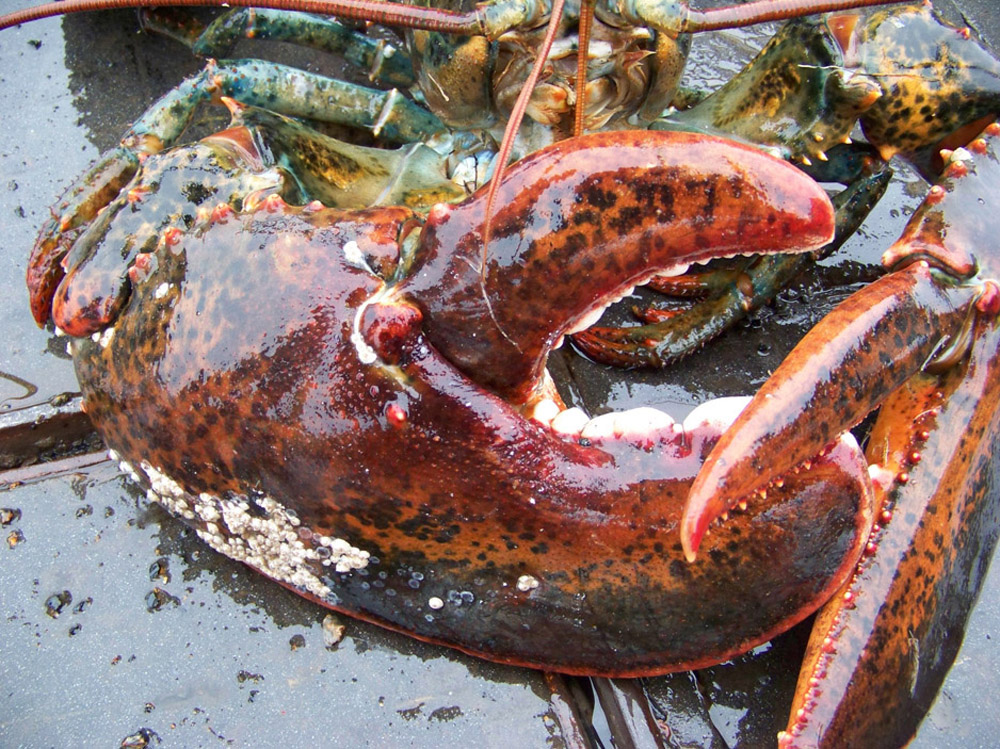
Some of the species’ responses we already know. As the Gulf of Maine warms faster than 99% of all ocean climates on earth (at a rate of a half a degree Fahrenheit increase per year for the past decade), several native species have reacted. Lobsters have moved north and east along the coast, leaving fisheries in Long Island and Cape Cod in succession. The Northern Shrimp fishery has collapsed in the past few years. Scientists speculate the combination of warming waters limiting spawning and reducing the amount of plankton the shrimp eat is largely to blame. Scientists also say these warming waters limit cod reproduction and health and survivability of juveniles.

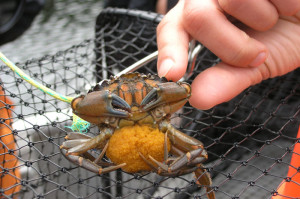
European green crab. Credit: NOAA

Gulf of Maine temperature increases have opened the door to invasive species like black sea bass and scup, and have made bays and estuaries more hospitable to European green crabs, whose numbers have risen exponentially in the past few years. Green crabs wreak havoc on eelgrass flats as they burrow in to eat larval mussels, clams and oysters.

Jon Hare, a fisheries oceanographer at NOAA Fisheries’ Northeast Fisheries Science Center (NEFSC) and lead study author, said the main purpose of this study is to give fisheries managers and other stakeholders tools to take climate change into account when devising management policy.

“We’re never going to have perfect information,” he said. “The ecosystem is going to change because of a combination of anthropogenic influence such as greenhouse gas and natural climate variability.” To keep up with the pace of that change, which has been dramatic in the past 10 years, Hare and his colleagues developed a methodology that incorporates already established research and factors in expert extrapolation. This methodology helps them predict things like how mussels will respond to warming waters or how they will react to increased acidity in their ecosystem in the next 10 years.


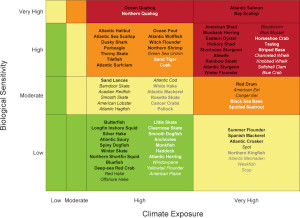
Overall climate vulnerability is denoted by color: low (green), moderate (yellow), high (orange), and very high (red). Certainty in score is denoted by text font and text color: very high certainty (>95%, black, bold font), high certainty (90–95%, black, italic font), moderate certainty (66–90%, white or gray, bold font), low certainty (<66%, white or gray, italic font). Source: Hare et al (2016)

The scientists graded each of the 82 species’ vulnerabilities taking into account different variables, and set those grades to peer review. The result is a composite view of how likely a species may suffer reproductive pressures from increased temperatures or how likely a species may change migratory patterns.

Hare said other studies are beginning in the Bering Sea and off the coast of California, and the National Marine Fisheries Service wants to conduct these studies on all U.S. coasts.

No doubt much discussion will arise from this study and others like it. Some will question the study’s approach, efficacy or even need. Some fishermen may view the study as simply another tool for regulatory bodies like the New England Fisheries Management Council to further restrict fishing without real stakeholder permit. Others might ask why this hasn’t occurred before.

I see a couple of potential positive outcomes. First, the fact that NOAA is not only acknowledging climate change, but also actively trying to take steps to factor that into management decisions is significant. Like any federal agency, NOAA moves at a glacial pace (I wonder how long we’ll be able to use that descriptor…). But Hare and his colleagues eschewed the traditional approach to ecosystem-based management via species-specific analyses, which could take decades, to adopt a faster, potentially more efficient methodology for studying the issue. This is largely because climate change has been transforming ecosystems faster than we can study them.

Secondly, Hare says he hopes this tool becomes iterative — that in fact it will adapt as ecosystems change so scientists and researchers will have a chance to keep closer tabs of impacts than before. Some of fishermen’s frustrations with past NOAA research/policies is that that they are static, and don’t change dynamically with ecosystems. But Hare hopes the iterative process for this methodology will take into account fishermen input when considering which species may be affected by climate change. “Fishing communities will be impacted as well,” he said.

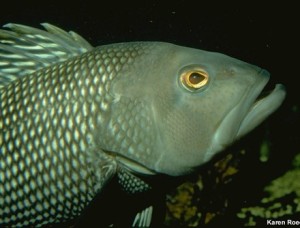
One impact is that some of these communities will start adapting to the changing marine ecosystems and harvest “locally abundant” species that were once considered invasive species. For example, black sea bass have started showing up in lobster traps in Maine because they’ve followed the warming trend north. Now they are an available seafood choice in local stores and restaurants.

black sea bass Credit: NOAA

I too hope this process becomes more collaborative. Because without that interactive participation in the science and policy making, the process will continue to be viewed by many as a set of unilateral decisions curtailing fisheries at the expense of small scale fishermen. As Hare said, even if we magically stopped all green house emissions now, the lingering effects of warming oceans would continue for decades.

Acting now, collaboratively, is the best chance at present for ensuring we effectively manage fisheries even as warming waters seek to change the dynamics. I attended a workshop a year ago in which scientists (including Hare), fishermen, and policy makers discussed how to better predict climate change impacts on fisheries and how to communicate that to fishermen.

Perhaps this is the first step.


Lobster photo credit: NOAA

All Blog Posts

Rising Temperatures Raising Global Warming Alarms

  • January 28, 2016October 20, 2021
  • by Colles Stowell
Share it!
Share

Summers in New Orleans can all but suffocate the uninitiated. The heat and humidity in August make a five block walk feel like a five mile run in normal conditions. The last time I experienced it for any length of time was in 1985, when I rode the streetcar to and from downtown for a summer job as an accounting clerk. After a couple of days of showing up drenched in my suit and tie, I began tucking my office clothes in a backpack and wearing shorts for the commute. Read more “Rising Temperatures Raising Global Warming Alarms” →

All Blog Posts

Climate Change Could Have Unintended Benefit in Arctic

  • October 19, 2015October 20, 2021
  • by Colles Stowell
Share it!
Share

There have been enough scary headlines about climate change for us to know that warming temperatures could have disastrous effects on our planet. Increased carbon content from industrial processes leads to higher atmospheric and oceanic temperatures fueling melting glaciers and ice caps leading to rising oceans, etc. Read more “Climate Change Could Have Unintended Benefit in Arctic” →

Recent Posts

  • Hurricane Ida wreaks havoc on Louisiana’s seafood industry
  • EPA Should Use Clean Water Act To Kill Zombie Mine
  • Slow Fish 2021: Relationship Matters
  • Faith, Façades, and Futility
  • Pebble Permit Paused: Politics at Play

Archives

  • September 2021
  • August 2021
  • April 2021
  • December 2020
  • August 2020
  • June 2020
  • February 2020
  • December 2019
  • November 2019
  • October 2019
  • July 2019
  • May 2019
  • April 2019
  • March 2019
  • January 2019
  • December 2018
  • November 2018
  • June 2018
  • May 2018
  • March 2018
  • February 2018
  • January 2018
  • December 2017
  • November 2017
  • October 2017
  • September 2017
  • August 2017
  • July 2017
  • June 2017
  • May 2017
  • April 2017
  • March 2017
  • January 2017
  • December 2016
  • November 2016
  • October 2016
  • September 2016
  • August 2016
  • July 2016
  • June 2016
  • May 2016
  • April 2016
  • March 2016
  • February 2016
  • January 2016
  • December 2015
  • November 2015
  • October 2015
  • September 2015
  • July 2015
  • June 2015
  • May 2015
  • April 2015
  • March 2015
  • February 2015
  • January 2015
Theme by Colorlib Powered by WordPress