Skip to content
One Fish Foundation
  • Blog
    • Aquaculture
    • Education
    • Environment
    • Policy
    • Wild Harvest
    • Fish Tales
  • About
    • About One Fish
    • About Colles Stowell
  • Education
    • Elementary School
    • Middle School
    • High School
  • KNOW FISH Dinners®
  • Resources
    • One Fish Podcast
    • One Fish Foundation in the news
    • The 7 C’s of Sustainable Seafood
    • Newsletter Archive
    • Recipes
      • Skate with Capers and Butter — Chef Rizwan Ahmed
      • Grandma Davis’ Fish Chowder — Jane Almeida
      • Ginger Garlic Tamari Scallops — Colles Stowell
      • Fish Stock — Evan Mallett
      • Mussels San Remo — Chef Rob Martin
      • Salted Pollock Croquettes – Chef Mark Segal
  • Connect
    • Contact OneFish
    • Social
      • Instagram
      • Facebook
      • Twitter
All Blog Posts

Slow Fish 201: Building Accountability in Seafood

  • January 31, 2019October 19, 2021
  • by Colles Stowell
Share it!
Share

Sometimes it’s tough to see the forest through the trees. Or in this case, effective fisheries enforcement through the quagmire of domestic fishing regulations.

Consider that laws established to ensure responsible harvest, proper trade/market practices and truth in advertising throughout the supply chain are enforced by at least four different federal agencies with different agendas, priorities, authority, funding and resources. Factor in state and local agencies involved in the process, and you’ve got layer upon layer of bureaucracy. And yet, there are still gaps.

This is why we conducted the Slow Fish 201 webinar: Building Accountability in Seafood Weds. Jan. 23. We wanted to shed light on this complexity and the challenges it presents as well as some innovative thinking on how to create markets that organically root out fraud (more on that later).

Alphabet soup: NOAA, FDA, CBP, USDA

In broad terms, the National Oceanic and Atmospheric Administration’s Office of Law Enforcement has jurisdiction over seafood entering the U.S., and can conduct warrantless inspections on vessels as they enter US waters. But it does not have the same broad authority once the seafood has crossed the border. The Department of Homeland Security’s Customs and Border Protection also has some authority to inspect and ensure proper labeling of seafood entering the U.S.

Once seafood has passed beyond US borders, the responsibility to enforce labeling, country of origin, food safety and related laws generally belongs to the Food and Drug Administration and to a lesser degree, the US Department of Agriculture (primarily for farm-raised seafood). There are of course, exceptions to these rules where, for example, NOAA does have some jurisdiction on product within US borders (which makes the situation all the more confusing to those in and outside the supply chain.

With all of these layers of protection, intelligence and resources, you’d think we’d have a good handle on fraud.

And still, less than 1% of the seafood we import in this country, representing some 90% of domestic consumption, is inspected. That doesn’t even account for what happens within the domestic seafood supply chain, such as the co-optation of core trusted values, as happened with the Sea To Table news last summer.

No wonder consumers, fish harvesters, retailers and everyone else in the supply chain is confused and likely frustrated. How do you keep tabs on all of that?

A label’s cautionary tale

Patty Lovera, food and water policy director for Food & Water Watch, has spent decades navigating the domestic food policy system. She began the webinar with a high-level view of the matrix of federal agencies and laws responsible for safeguarding the stream of seafood in the supply chain. In short, the very Jenga-like structure leaves many gaps in enforcement, too much room for interpretation and hence, exploitation, and some confusion among supply chain players about how to honestly comply with the law.
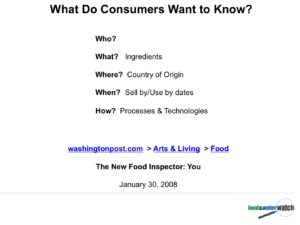
As Patty Lovera mentioned and others echoed, consumer education is critical in the seafood supply chain.

She presented the Certified Organic label as a cautionary tale when laws and values don’t gibe. Established to distinguish farmers who adhere to a set of standards that prohibits hormones, antibiotics, certain pesticides and other additives and destructive practices, the label became a battle cry in the conflict with huge multinational corporations seeking to own the food system.

Millions of dollars, countless hours, political wrangling, lawsuits, arm-twisting, scheming and in some cases, outright capitulation have led to a severely diluted label bearing no resemblance to the original mission. More than three decades of haggling, and products either owned or supported by the likes of industrial agriculture giants Monsanto, Dow Chemical and Tyson foods bear the Certified Organic seal.

The message? Labeling schemes and the values they promote can be co-opted if not rooted in strong values backed by stronger laws.

Congressional commitment

We were fortunate to have Congressman Jared Huffman (D-Calif.) join the conversation. He’s quite busy as he’s just taken the gavel for the powerful House Natural Resources Subcommittee on Water, Oceans and Wildlife, which is responsible for reauthorizing the Magnuson Stevens Act (MSA), otherwise known as the Fish Bill.

“I believe we’ve got to be supporting U.S. fishermen in an increasingly competitive international market.”

Congressman Jared Huffman

In outlining some of his priorities for the subcommittee, he said we need to preserve the health of the oceans, fix some of the environmental rollbacks established by the current administration and do what is necessary to help U.S. fishermen make a good living. “I believe we’ve got to be supporting U.S. fishermen in an increasingly competitive international market,” said Huffman.

He also mentioned “…ways to improve traceability throughout the supply chain. There may be new technology that could be utilized, examples from businesses that are doing some of this work. It’s clear to me that we need to better enforce, maybe even strengthen, existing policies to ensure accurate labeling, increased transparency and consumer trust.”

Marketing, education and leveling the playing field

Noah Oppenheim, executive director of the Pacific Coast Federation of Fishermen’s Associations and the Institute for Fisheries Resources, followed on that theme, saying that fraud has a significant impact on community-based fish harvesters who are trying to abide by the law.

“It’s only fair that the accountability that fishermen have been holding themselves to is rewarded in the marketplace.”

Noah Oppenheim

“Fraud can occur at any place in the market,” Oppenheim said. “It’s a huge problem, and we have to find comprehensive solutions that make it harder for anybody on the end of the chain of custody to mislabel or fraudulently market their product.”

He also spoke of the need to enhance education and marketing to help consumers better understand the value of domestic fisheries. “It’s only fair that the accountability that fishermen have been holding themselves to is rewarded in the marketplace.”

Jes Hathaway, editor in chief of National Fisherman, a national trade publication, echoed Oppenheim’s call for better education and more funding for marketing programs.

She zeroed in on increased funding to boost the infrastructure at our ports to level the playing field between domestic seafood standards and standards for imports. “As long as it’s easier to bring seafood into port in a container than to bring it in your fish holds, we are doing our seafood industry, our fishermen and our citizens a disservice.”

“As long as it’s easier to bring seafood into port in a container than to bring it in your fish holds, we are doing our seafood industry, our fishermen and our citizens a disservice.”

Jes Hathaway

Hathaway also proposed “encouraging region- and fisheries-specific solutions to the problem beyond Magnuson.” One such approach, in her view, would be to provide funding for test programs to track seafood from boat to plate in different regions. While some programs exist, she would like to see more cooperation and investment in such programs, rooted in common values across different supply chains and geographies.

Pier to peer community accountability

One of the webinar’s recurring themes hinged on supplementing better, more comprehensive enforcement of stronger laws with cultural changes within the fishing community. As Hathaway suggested, “Federal legislation is rarely a panacea for every issue in fisheries.” However, one possible path toward ensuring stakeholder buy-in while potentially reducing fraud involves a community accountability model.

Kevin Scribner, owner/operator of Forever Wild Seafood and one of Slow Fish national’s team leaders, described the notion of creating a seafood community accountability program, in effect, a cooperative rooted in a shared set of values. If you agree to uphold the values, you become part of the community that will support those values, identify and address any violation of those values (fraud), and offer support to those who need it.

This type of community accountability promotes a self-policing model that discourages any missteps while promoting the values that engender public trust. Scribner described it as a system in which “We take care of and manage our own.” But it would also be a system that is open to anyone willing to embrace the core values, which may be similar to the Slow Fish values of good, clean, fair, and/or the Local Catch Core Values embracing community-based fishermen.

“…a reliable trusted knowledge-based system of accountability can be developed and maintained by a seafood community that is committed to and guided by core values.”

Kevin Scribner

“We have confidence that with the proliferation of direct and immediate communication tools plus refined methods of traceability and a commitment to transparency, that a reliable trusted knowledge-based system of accountability can be developed and maintained by a seafood community that is committed to and guided by core values,” Scribner said.

A seafood community accountability framework would not seek to rebel against nor replace existing federal, state and local laws in place. Rather, it would operate under the umbrella of existing fisheries laws, augmenting the overall effort to minimize fraud while uplifting the values that support responsibly managed fisheries.

There’s much more to discuss on this topic, including different values and traceability and transparency technologies to support those values, all of which we’ll revisit in the third webinar in the Slow Fish 201 Webinar Series on Feb. 27. Stay tuned for more information regarding time, panelists and questions to be asked and answered.

The webinar closed out with some insightful questions from the audience regarding fair pay for seafood processing employees, economic justice to ensure fair pricing and access to quality seafood for all demographics and ways to measure success in the mission to uphold values and minimize fraud.

We will revisit all of these topics in some form in one of the following webinars.


Resources

If you’d like to watch the video recording of this webinar, follow this link.

If you’d like to watch the video recording of the first webinar, follow this link.

If you’d like to continue the discussion, visit the Local Catch Forum here.

If you’d like to communicate directly with one of the panelists, send an e-mail to colles@onefishfoundation.org.

Want a more in-depth understanding of the federal agencies at work against seafood fraud? Follow these links:

Congressional Research Foundation report on Seafood Fraud

University of Minnesota Food Policy Center Report


All Blog Posts

Aquaculture, Antibiotics and Their Dark Path to Our Diets

  • January 17, 2017October 20, 2021
  • by Colles Stowell
Share it!
Share

“Why does that matter?”

It’s one of the first questions I get when I tell middle school students that 90% of the seafood eaten in this country is imported.

So I begin with the big picture, that much of that seafood is coming from countries that put a lot of chemicals in their seafood. Countries like China, Thailand, Chile and Ecuador don’t have the same health safety standards the U.S. does. I watch their facial expressions as I start talking about how and why antibiotics, hormones, bleach and other chemicals are used.

In just a few minutes, it does matter. They care where their seafood comes from.

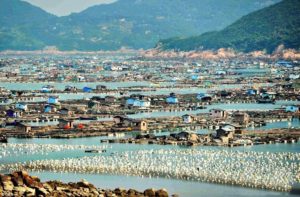
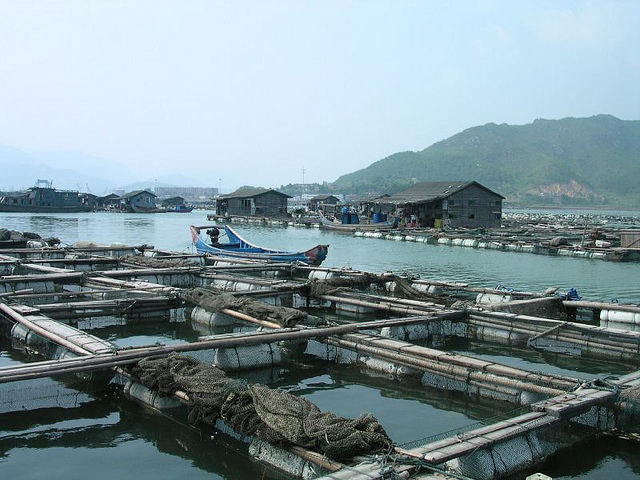
Massive floating community of fish farms in Luoyuan Bay, in south-eastern China’s Fujian province.

Why this happens

Sometimes the middle school students ask why this happens. More often though, that question comes from high school students and adults. I then explain how the FDA is outgunned simply by the fact agents only inspect 1-2% of all seafood imports. Over the past few years, I’ve watched the FDA issue more and more alerts authorizing agents to outright halt various shrimp and other seafood shipments from China, Malaysia, India and other countries because of links to US-banned antibiotics.

But the answer is really more complicated than that. Part of it has to do with U.S. consumption habits. We eat a lot of shrimp, but we don’t want to pay much for it. So the much cheaper product from Asia or South America floods supermarkets where consumers scoop it up without looking at the label or questioning the origin.

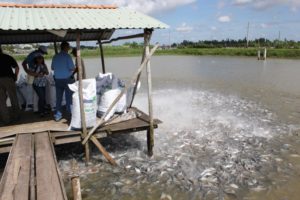
Fish farm in Viet Nam.

Lack of transparency

Part of the answer has to do with profit and the complex international seafood export industry. Bloomberg Business last month released an exhaustively researched, but well narrated story about this complex system. The report details how much of the seafood from China, which owns 60% of the $90 billion global aquaculture market, is shipped through other countries before arriving in the Western Hemisphere, thereby avoiding steep tariffs and close inspection (when it happens). This process is called transshipping, and it’s becoming widespread and difficult to track down, further masking true seafood origin.

I recommend reading the story if you have 20 minutes or so. Here is the link.

Here are a couple of highlights:

  • Asia has a centuries-old tradition of linking aquaculture and agriculture. Waste from pigs goes into ponds where tilapia and geese are raised. The tilapia gets much of their protein and nutrients from that waste.
  • As diseases have increased in pigs, farmers have increased the use of antibiotics to fight the disease. The antibiotics pass to the fish and/or shrimp.
  • Larger operations treat shrimp and fish with antibiotics to ward off disease.
  • Increased antibiotic use has given rise to potentially lethal antibiotic-resistant superbugs, which are becoming more common.
  • A recent study found that between 42% and 83% of Chinese shrimp carry bacteria that can destroy penicillin and most of its variants.
  • A 2006 FDA study found a quarter of all Asian seafood tested had traces of chemicals banned in the U.S. This has led to a succession of FDA bans and alerts.
  • The increased scrutiny has pushed some foreign seafood export operations into transshipping through countries like Malaysia that don’t have the high tariffs and increased inspection standards imposed by the FDA on China, for example.
  • Tracking the origin of transshipped seafood can be difficult. The Bloomberg report cites examples of companies that have been accused by the FDA, and that have folded, with new export companies cropping up shortly thereafter.
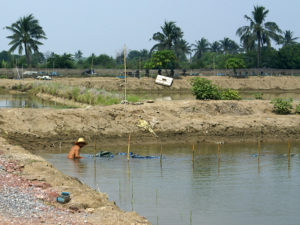
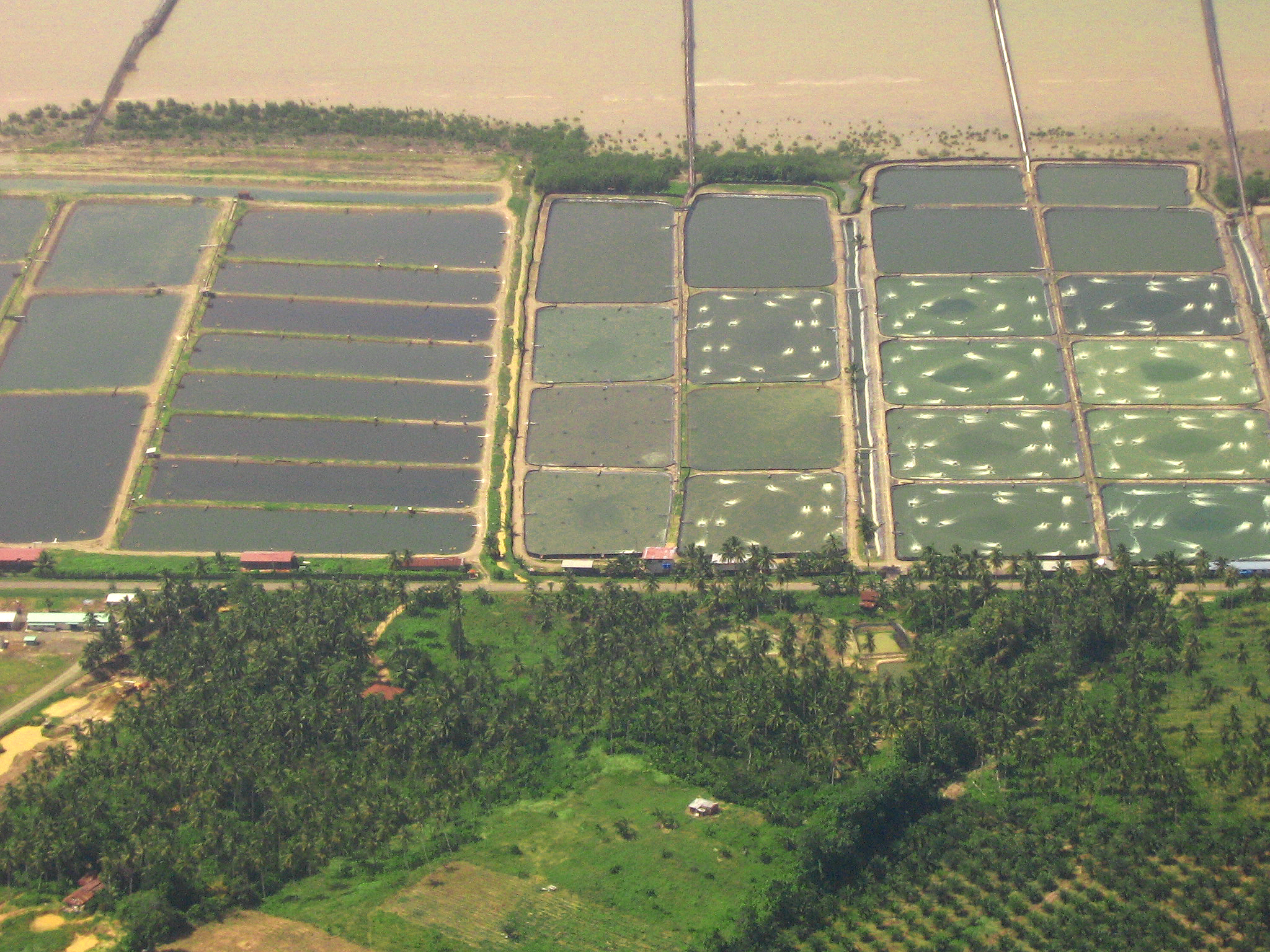
Shrimp pond in Thailand.

So what’s the lesson? Read labels. Ask questions. And if you can’t get seafood that is local or at least domestic to the U.S., consider other options. If you just absolutely have to have the farmed shrimp from Thailand because of the price, understand the implications … to your health and to the support of exporters more concerned with profit than customer health.

We can’t effect change in the domestic seafood web without at least first getting smarter about it.

That we can do.


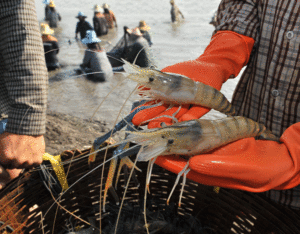
Top photo: Tiger prawn farm in Malaysia.

Aquaculture

Canada Greenlights GE Salmon

  • June 5, 2016October 20, 2021
  • by Colles Stowell
Share it!
Share

Congrats Canada! You may become the first nation in the world to sell genetically modified animals as food.

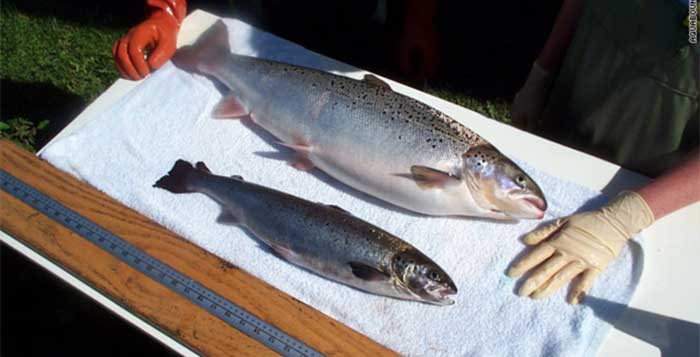
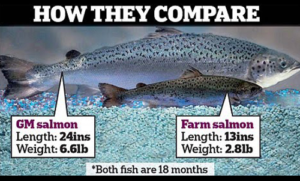
That’s because the health ministry approved Mass.-based AquaBounty’s genetically engineered (GE) salmon as a safe food source for sale May 19. Dubbed “Frankenfish” by critics, AquAdvantage salmon are grown from eggs developed in Prince Edward Island and raised in land-based pens in Panama. AquAdvantage salmon promises to grow to market size twice as fast, requiring about a quarter of the feed than other farmed salmon. Proponents see this as reducing environmental impact while meeting increasing demand. Critics see it as a dangerous money grab setting a bad precedent.

From the Health Canada statement announcing the approval:

“GM [genetically modified] foods are becoming more common every day and are part of the regular diets of Canadians. GM foods that have been approved by Health Canada have been consumed in Canada for many years, and are safe and nutritious. Changes to the genes of plants and animals can improve food quality and production – for instance by reducing the need for pesticides, making crops resistant to drought, preventing bruising, or allowing foods to be grown more quickly.”

I’ll get back to that last sentence. First, some background. The U.S. Food and Drug Administration actually approved AquaAdvantage Salmon for sale last November, but ran into a wall of opposition, including a legal challenge filed by several environmental groups such as the Center for Food Safety, Food and Water Watch and Friends of the Earth. They claim the FDA does not have the authority to regulate GE animals based on a decades-old law used to regulate animal drugs and cosmetics. To wit, the FDA used the 1938 Food and Drug Cosmetic act to qualify the gene manipulation in GE salmon as an animal drug safe for human consumption.

Huh? As I’ve blogged before, this just seems like a ridiculous premise to be basing an important food safety issue potentially affecting millions of U.S. consumers.

So, the U.S. market may have to wait a bit longer for its shot at GE salmon than Canada. Unless there is another legal challenge in Canada. Ecology Action Centre in Halifax is currently appealing a federal court ruling against the centre’s previous suit challenging Canada’s approval of production of the eggs at a plant in PEI.

AquaBounty says it won’t have any market-ready salmon for a year.

Transparency and fairness

The issues surrounding GE salmon are many, but they generally center on transparency and fairness. Most critics want — at a minimum — mandatory labeling of all GE salmon, not to mention all GE foods. But the industry has fought this tooth and nail, claiming that it would unfairly bias consumer decisions because of the negative connotation widely associated with the genetically modified food industry.salmon comp

This has been borne out by several studies showing that despite scientists’ proclamations that GE foods are safe for human consumption, an overwhelming majority of consumers, up to two-thirds or more, do not trust the science. Not only do they think GE salmon isn’t safe, they also don’t think scientists have a clear understanding of all of the potential health risks. Not coincidentally, a majority of scientists in a poll by the Pew Research Center and U.S. members of the American Association for the Advancement of Science suggests 88% of scientists polled believe genetically modified foods are safe to eat, while only 37% of the U.S. public thinks it’s safe.

I am in the same camp. I don’t think enough long-term, independent research has ruled out all risks associated with ingesting this type of hormone. Consider that FDA approval is based on the agency’s analysis of the test results paid for and submitted by AquaBounty … not by an independent third-party group with no vested interest in the outcome. For reference, see page 16 of this Congressional Research Service report, noting concerns over the FDA review process. To me, this leaves too much room to force the results into pre-determined conclusions, and perhaps explains in part why there is so much general skepticism about safety.

As such, I think the transparency issue is paramount. If the FDA or Health Canada deem GE salmon safe, they should require all such products be clearly labeled. One would think that if AquaBounty wants to appear trustworthy, it would label its product to demonstrate it’s not hiding anything from customers.

Ah, but there’s the problem. AquaBounty is following Monsanto’s playbook, spending tons of money to prevent labeling. Both the FDA and Health Canada claim that labeling is not necessary because “scientific research” suggests that there will be no “material difference” in the nutritional profiles between GE products and a non-GE counterpart. The FDA is offering GE producers like AquaBounty the option of voluntarily labeling the product, which is code for “You don’t have to do this.”

Here’s the fairness issue. Consumers wishing to buy organic pancake mix can look at the product to see a seal indicating the producer has paid a fee to have the product inspected and certified, along with a label that clearly indicates all of the ingredients. Hell, the same is true for a box of non-organic cookies. Salt, sugar, fat grams. All of that stuff must be listed somewhere. So why shouldn’t AquaBounty be compelled to tell the public that a hormone from an ocean pout (a completely different species) has been used in the “manufacturing” of that salmon fillet? Even if you can argue that doesn’t change the nutritional profile, it sure changes the ingredient list that yielded the end product.

Several big-name stores like Whole Foods, Trader Joes, Safeway and Kroger have pledged to not sell GE salmon.

It’s a slippery slope. Approving GE salmon using antiquated animal drug legislation or whatever other rationale without a fully thorough, third-party, long-term analysis is bad enough. Allowing AquaBounty to hide its product in a veil of secrecy, deliberately misinforming consumers, is egregious.


Top photo credit: AquaBounty

All Blog Posts

What’s In Your Imported Farm-Raised Shrimp?

  • May 3, 2016October 20, 2021
  • by Colles Stowell
Share it!
Share

A recent Food and Drug Administration alert about farmed shrimp from Asia raises health questions about the food system that delivers imported shrimp to the U.S. and the rest of the world. The notice also serves as a warning to consumers to know more about where the seafood comes from and how it was grown or harvested.

Forty-five out of 138 shipments (32%) from the Malaysian Peninsula sampled between October 1, 2014, through September 30, 2015 were found to have carcinogenic substances the FDA doesn’t want in our food. So the FDA has given inspectors the authority to reject all shrimp shipments from the Malaysian peninsula, save for a few exceptions, without a physical inspection.

What did they find? Antibiotics called nitrofurans and chloramphenicol, both of which have proved harmful to human health with prolonged exposure. Additionally, prolonged use can create antibiotic-resistant bacteria that can make matters worse.

So carcinogenic antibiotics were found in aquaculture shrimp from Asia.

Shock. Surprise.

The question is why. To better understand, let’s take a quick look at how shrimp farming typically works, and why it should give anyone pause when at a grocery store, seafood market or restaurant.

Big business, big risks

Shrimp farming is a huge business. Some estimates have global farmed shrimp at 3.7 million metric tons in 2014, worth between $12 billion and $15 billion dollars. The drive to grow profits as well as shrimp means increasing production.

Shrimp farming often starts by destroying and removing ecologically critical mangrove ecosystems (nurseries for many species) to create retention ponds where the shrimp will grow. These ponds are usually fed with seawater that passes through the ponds and often re-enters the ocean … carrying much of the waste filtered through ponds carrying thousands of pounds of shrimp and their feces. Many operations claim they filter the water before it enters the ocean, but…

But because shrimp are the number one consumed seafood around the world, many operations in Third World countries in Central and South America and Asia jam as many shrimp into these ponds as possible. Without proper filtration, those shrimp are highly susceptible to disease, because, you know, they’re swimming in their own poop.

Bad medicine

For the past decade or so, many operators have found it easier to use antibiotics and other potentially harmful materials to fend off the bacteria that could cause disease. Those antibiotics don’t just disappear overnight. They don’t always fend off disease either, resulting in huge losses. Just witness recent cases of “early mortality syndrome (EMS)” in Asia.asianshrimpfarm_405x250

EMS is a devastating disease borne of a microorganism found in estuaries around the world, and showing up in overcrowded ponds that have poor filtration. The bacteria shut down the shrimp’s digestive system, killing the shrimp. Its infection rate is fast and efficient, meaning it can quickly kill all of the shrimp in a pond. EMS has mostly been found in Asia, but has also cropped up in Mexico.

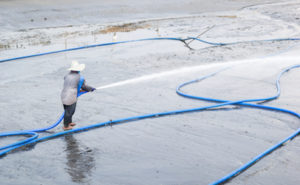
To try and avoid catastrophic losses, growers choose from a menu of preventative measures, such as chlorine, superphosphates and ozone to disinfect the water, probiotics to fight off the bad bacteria and stabilize the water quality and antibiotics to treat illness. Aside from the potential threats to human health, another issue with these approaches appears to be that they may actually make the ponds more susceptible to infection, according to some scientists.

None of this is good for the shrimp or consumers.

Market impact

The Global Aquaculture Alliance estimates EMS causes $1 billion in losses annually. This explains why shrimp farmers are willing to do most anything to bring “healthy” shrimp to market … including using antibiotics the US FDA deems carcinogenic.

Here are some problems with this food system:

  • 90% of the seafood eaten in the U.S. is imported;
  • 50% of the seafood consumed in the U.S. is farm raised;
  • Only 5% of the seafood consumed in the U.S. is farm raised domestically;
  • 90% of the world’s shrimp exports come from Asia and India;
  • 55% of global shrimp production is aquaculture;
  • The U.S. is far more strict about safe aquaculture practices than most of the world;
  • The FDA is understaffed for inspectors, particularly those inspecting incoming seafood.

Source: UN Food and Agriculture Organization 2014 Status of the Stocks

This all means that most of the farmed shrimp consumed in this country was farm-raised in Asia, where there is a greater chance that it was treated with chemicals deemed unsafe to consume by the FDA. And there aren’t enough inspectors checking all of the imports.

How could this situation get much worse? If the latest trade deal, the Trans-Pacific Partnership, is approved in Congress, the few inspectors checking U.S. imports may have their hands tied. The pact allows signatories like Thailand, Viet Nam and yes, Malaysia to sue the U.S. claiming that applying more strict U.S. health codes to imported seafood constitutes unfair trade practices. The result could be sanctions, fines and an open door to products tainted with carcinogenic substances.

Get smart

In the classroom the message always comes back to awareness. I encourage students to question where their seafood comes from. I considered it a shrimp-diseasemoral victory a few months ago when a 6th grader told the class she stopped her mom from ordering shrimp because it was from Thailand.
It’s that kind of awareness that helps students, their parents and anyone else understand that shrimp coming from Asia, or anywhere outside the U.S. is a good thing to avoid.

So you may want to pause before ordering the shrimp cocktail. Try to find the country of origin. If the shrimp isn’t from the U.S., you may want to consider another option. Because when the FDA sends up a red flag like this, it’s a good idea to take note.


Photo credits in order: Eco News Network, Food Safety News, U.S. Bureau of Labor Statistics

All Blog Posts

FDA Rubber Stamps Genetically Modified “Frankenfish”

  • November 23, 2015October 20, 2021
  • by Colles Stowell
Share it!
Share

You may well have heard last week the FDA cleared the path for genetically modified salmon to hit the market after a protracted five-year review. It was a landmark decision that could have long-lasting implications for other genetically engineered (GE) products such as livestock (pigs, cattle, chickens) as well as reinforcing industry opposition to labeling such products (as in produce).

In a nutshell, the FDA determined the AquAdvantage salmon created by Massachusetts-based AquaBounty is safe to eat, and does not require specific labeling to identify that the fish has been genetically modified.

The AquAdvantage salmon are grown from eggs developed in Prince Edward Island and raised in land-based pens in Panama. The industry selling point for GE salmon is that it grows twice as fast on about a quarter of the feed that traditionally farmed salmon require. So some advocates point to AquAdvantage as a more environmentally friendly method of aquaculture that could meet the huge demand for salmon without raping wild populations.

Sadly, this decision sets a very bad precedent that could really confuse consumers, not to mention raising all kinds of scary questions about what happens when we eat food that has been injected with growth hormones.

Let’s take a look at some of the more pressing concerns:

  • Hormone use – The fish are developed with a growth hormone gene from a Chinook salmon and more genetic material from an ocean pout that help the salmon grow to market weight in less than 20 months, while traditional farming requires up to 36 months. While the FDA says this hormone is safe for the fish and for humans, there really hasn’t been enough detailed study about the long-term health effects on humans who ingest this kind of hormone.
  • No labeling – If it’s safe for consumers, why not label the product? It’s a simple question that has been raised about GE produce. Short of a credible answer, we’re left to suspect that there’s something AquaBounty or Monsanto don’t want us to know. The FDA says it can only compel GE manufacturers to claim the product has been genetically altered “… if there is a material difference – such as a different nutritional profile – between the GE product and its non-GE counterpart.” So what part of injecting a hormone combining material from two vastly different species to create a third isn’t “a material difference?”
  • FDA regulation: So this is interesting. The FDA wants to regulate GE salmon under the same framework as it regulates veterinary drugs because of the hormone involvement. The FDA says the hormone “meets the definition of a drug.” This suggests the FDA doesn’t have an effective framework for adequately reviewing and regulating GEsalmon. To wit, the FDA seems to be applying antiquated ideological governance to a very modern, technical challenge.
  • Geography: I can’t put my finger on it, but something seems strange about a Mass. company using eggs developed in Canada to “create” fish to be raised in Panama. Smacks a little too much like “Blade Runner” to me.

From a practical standpoint, the labeling issue is almost hypocritical. If food manufacturers are required to tell how much sugar, salt and fat grams go into a box of cereal, why shouldn’t salmon farmers have to tell the truth about genetically engineering the fish? If it’s about a potential stigma image, then create a better, more believable narrative, or just don’t genetically engineer the fish. Trying to mask it just raises more suspicion. The FDA’s one consolation to those clamoring for GE labeling? Voluntary labeling.

Yeah, that’s likely to happen.

I admit I’ve evolved a bit in my thinking on finfish aquaculture. I still have many questions and several concerns. But some operations using closed, re-circulating systems that minimize environmental and ecosystem impact and use more plant-based feed could meet a need. Any operation certified as having outright banned hormones or antibiotics and having eliminated the problem of farmed fish escapes is better than GE.

It will be at least two years before Frankenfish hits markets. And even then, it will likely be only a small fraction of globally available farmed salmon as AquaBounty’s infrastructure is still small. Whole Foods, Trade Joes, Safeway and Kroger have all pledged to not sell the fish. The Center for Food Safety has said it will sue the FDA over this decision.

Polls in the last five years by NPR and New York Times suggest overwhelming majorities of the public would not eat GE salmon.

Count me as one in those numbers. I fear this will open a door we shouldn’t open now, and once we step through, there won’t be any turning back.


Recent Posts

  • Hurricane Ida wreaks havoc on Louisiana’s seafood industry
  • EPA Should Use Clean Water Act To Kill Zombie Mine
  • Slow Fish 2021: Relationship Matters
  • Faith, Façades, and Futility
  • Pebble Permit Paused: Politics at Play

Archives

  • September 2021
  • August 2021
  • April 2021
  • December 2020
  • August 2020
  • June 2020
  • February 2020
  • December 2019
  • November 2019
  • October 2019
  • July 2019
  • May 2019
  • April 2019
  • March 2019
  • January 2019
  • December 2018
  • November 2018
  • June 2018
  • May 2018
  • March 2018
  • February 2018
  • January 2018
  • December 2017
  • November 2017
  • October 2017
  • September 2017
  • August 2017
  • July 2017
  • June 2017
  • May 2017
  • April 2017
  • March 2017
  • January 2017
  • December 2016
  • November 2016
  • October 2016
  • September 2016
  • August 2016
  • July 2016
  • June 2016
  • May 2016
  • April 2016
  • March 2016
  • February 2016
  • January 2016
  • December 2015
  • November 2015
  • October 2015
  • September 2015
  • July 2015
  • June 2015
  • May 2015
  • April 2015
  • March 2015
  • February 2015
  • January 2015
Theme by Colorlib Powered by WordPress