 All Blog Posts
Hurricane Ida wreaks havoc on Louisiana’s seafood industry

This time, the levees around New Orleans held. The reduced flooding in the city after Hurricane Ida helped minimize the catastrophic loss of life following Hurricane Katrina 16 years ago.
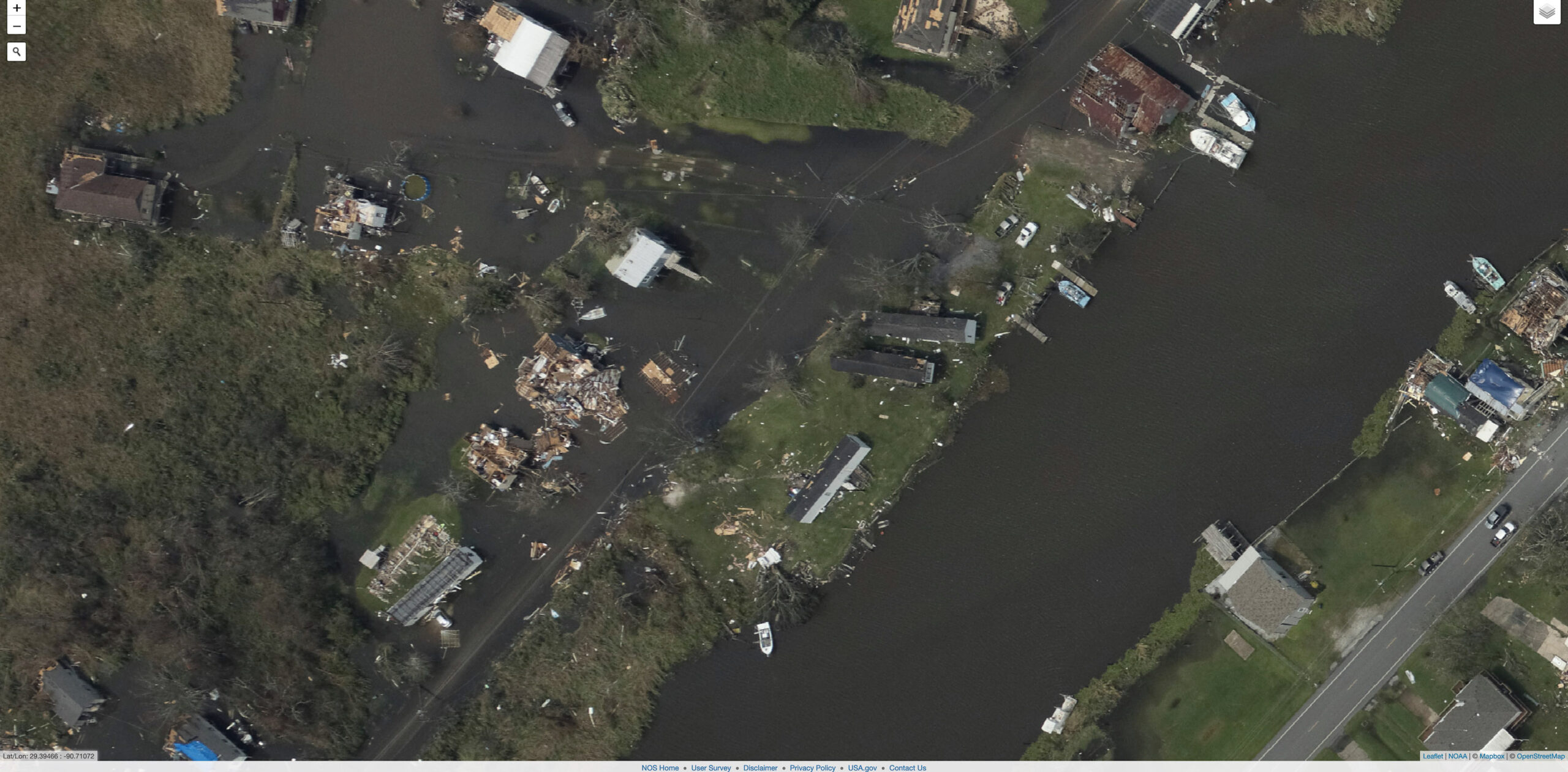
But some levees in southern parishes didn’t fair as well. And Ida’s widespread devastation fueled by sustained 150 mph winds will have long-term consequences for Louisiana’s seafood industry.
I spoke with Lance Nacio, owner of Anna Marie Seafood in Montegut, La. on Monday to get a sense of what folks down there are dealing with. Here is a quick snapshot of our conversation:
- He and his family are fine, living on his two fishing boats and in his house. The house, the boats and the processing facilities all weathered the storm pretty well, though there are some things to fix.
- His boats are trapped in the canal across the street from his house until Sept. 29, which is the estimated time when power should be restored to allow the drawbridges to raise and let the boats motor to the Gulf of Mexico and begin fishing.
- More than 60% of the structures in Terrebonne Parish (the 2,000-square mile parish south and west of New Orleans where Lance and many other fishermen live) are uninhabitable, according to authorities.
- Lance predicts that many residents will not return in what may be a more expansive exodus than after Katrina.
- This exodus will not only include fishermen, but also those who run critical infrastructure operations like docks, ice houses, boat maintenance operations, processing facilities, etc.
- He will be working with Chef Dana Honn of Carmo to provide meals for first responders and line crews from across the country.
In essence, the industry in the state that provides the highest volume of domestically harvested wild shrimp and crab is in trouble. The entire regional seafood supply chain from boat to plate will likely be a shell (take or leave the pun) of itself in just a few months, sending shock waves across the country and around the world. As Dana said, “The fish will be out there. But with no infrastructure in place, who’s going to come back?” Louisiana Congressman Garrett Graves has formally called on the US Department of Commerce to declare a Fisheries Disaster Determination for the region to unlock funds to counteract the pending economic damage.
Worse still is the likelihood that further climate change will spin off more intense hurricanes like Ida and Katrina more frequently, leaving the Gulf Coast more vulnerable to long-term ecosystem damage.
This summer alone has seen several catastrophic events highlighting how climate change can have severe impacts on food systems:
- the sweltering heat weave that smothered the Pacific Northwest for several days, literally cooking some oysters in their shells;
- the anemic wild Pacific salmon runs in the Yukon territories, forcing remote Indigenous communities to scramble for winter food stores;
- the devastating fires across California and other western states that have devoured millions of acres of old growth forest (very important to watersheds) and farmland.
Want to get involved? Here are a few ways to do so with a focus on Hurricane Ida’s aftermath:
- Several people and organizations are raising funds for relief efforts, including providing food, shelter, medical services and supplies, debris removal, and repairs. Here are a couple of resources:
- Chef Dana is raising money to support Lance’s efforts to help his community and feed first responders and line workers.
-
Venmo: @Lance-Nacio
-
PalPal: orders@annamarieshrimp.com
-
Zelle: Lance Nacio
-
- Coastal Communities Consulting, Inc. is a nonprofit organization supporting coastal businesses and fishermen in La. It is doing good work to provide info on everything from prescriptions to food and water as well as coordinating donations.
- Gulf South Rapid Response Community Controlled Fund provides disaster relief directly to frontline communities in the Gulf South impacted by climate disasters. Local leaders have committed to a transparent and accountable process for the money – which will allow communities to practice self-governance and self-determination.
- Chef Dana is raising money to support Lance’s efforts to help his community and feed first responders and line workers.
- The Gulf Coast Center for Law and Policy is hosting a national press conference Thursday Sept. 9 from 10:30 am – 11:30 am CDT to address Ida’s impact on the Gulf Coast region and the nation. Here’s a link to more information.
- Learn more about the Sustaining America’s Fisheries for the Future Act, which is a congressional bill that mandates accounting for climate change when setting fisheries policy in the U.S. This bill officially calls for the re-authorization of the Magnuson-Stevens Act, the primary fisheries management policy for the U.S. If you agree with its direction, contact your Congressional representatives and tell them to support it.
- Learn more about the Keep America’s Waterfronts Working Act, a congressional bill that aims to preserve working waterfronts, like the ones in jeopardy in southern Louisiana following Hurricane Ida. Again, if you like what you see, contact your Congressional representatives.
The last thing we can all do is spread the word. The more folks know what’s going on and what’s at stake, the more the broader community can get involved and help chart the industry’s future.
We’ll post more updates in this blog and via our Facebook page.
Top photo: NOAA satellite image of Hurricane Ida’s destruction in Terrebonne Parish.