 All Blog Posts
Latest Gulf of Mexico Oil Spill Raises More Flags

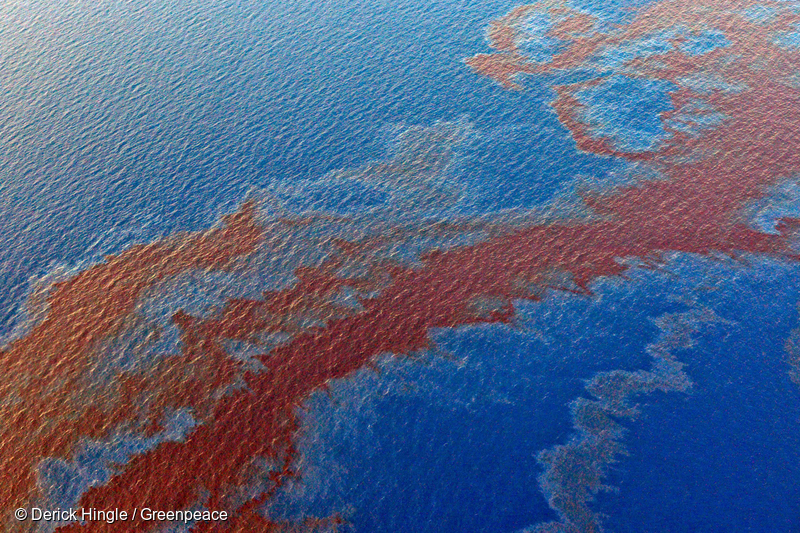
Here we go again. Another giant oil company is responsible for another oil spill in the Gulf of Mexico. Last week, a pipeline owned by Shell Oil sprung a leak, releasing nearly 90,000 gallons of oil that spread out in a slick the size of Manhattan more than 90 miles off the coast of Louisiana.
To be sure, this incident is much smaller than the Deepwater Horizon disaster in 2010, when a BP-owned oil rig caught fire, killing 11 workers and dumping more than 3 million barrels of oil into the Gulf. That disaster, and the downstream environmental, ecosystem and economic impacts it continues to wreak on the region, still qualifies as the largest manmade disaster of its kind in the U.S.
This latest release from Shell is no trifling matter. Shell says it has stopped the leak and shut off flow to the other wells the flow line connected. The Coast Guard deployed five ships and 150 people to place booms in the water to collect the oil/water mixture. The process of skimming the oil is similar to a vacuum cleaner for water, where the booms collect the mixture. Then the oil and water is likely separated, with the water returned to the gulf.
The Coast Guard announced Monday that it had completed the skimming operation, after collecting about 84,000 gallons of oil and water. So as is bound to happen, some of the oil remains in the ecosystem. The question is how much of a direct impact it will have. Some of the oil, which is light, sweet crude oil, will likely evaporate, and some will be consumed by bacteria, according to Tulane Professor Eric Smith.
Since the BP spill, there have been a variety of damning reports about how the oil and the many toxic dispersants released to “control” the situation have effected fish, shellfish and plants. The list includes everything from widely reported deaths of dolphins (up to 1,400 according to NOAA) and countless seabirds such as cormorants and pelicans to damage to juvenile tuna cardiovascular systems.
When I visited Venice, La. last November, I was struck by how much visible infrastructure there is along the Mississippi River delta and out in the Gulf. It looked like more than I could remember from my last time there, some 30 years ago. But what I later learned was the scope of the subsea infrastructure, the network to transport all of that oil and natural gas from the offshore rigs to the mainland. Some satellite overlays make the network look like a very tight, and complex cobweb.
The Shell leak apparently occurred on a transport line near a subsea terminal. And it will likely be awhile before there is any conclusive statement of cause. According to the federal Bureau of Safety and Environmental Enforcement, there have been 147 spills, releasing about 516,000 gallons of oil in the gulf since 2012.
So I have to wonder. With some 31,000 miles of pipeline (some of it installed 60 years ago) sprawled out on the ocean floor, what’s its lifespan? That is, do we really know enough to ensure such failures won’t happen again?
These are the questions I have when we get a reminder like this that placing such infrastructure near critical wildlife habitat has consequences. We can’t just rely on booms, bacteria and sun evaporation to keep cleaning up our messes. The Gulf is still recovering from the last time we relied on those approaches.
photo credit: Derick Hingle/Greenpeace