Skip to content
One Fish Foundation
  • Blog
    • Aquaculture
    • Education
    • Environment
    • Policy
    • Wild Harvest
    • Fish Tales
  • About
    • About One Fish
    • About Colles Stowell
  • Education
    • Elementary School
    • Middle School
    • High School
  • KNOW FISH Dinners®
  • Resources
    • One Fish Podcast
    • One Fish Foundation in the news
    • The 7 C’s of Sustainable Seafood
    • Newsletter Archive
    • Recipes
      • Skate with Capers and Butter — Chef Rizwan Ahmed
      • Grandma Davis’ Fish Chowder — Jane Almeida
      • Ginger Garlic Tamari Scallops — Colles Stowell
      • Fish Stock — Evan Mallett
      • Mussels San Remo — Chef Rob Martin
      • Salted Pollock Croquettes – Chef Mark Segal
  • Connect
    • Contact OneFish
    • Social
      • Instagram
      • Facebook
      • Twitter
All Blog Posts

Seafood Learning Expeditions

  • December 9, 2019October 19, 2021
  • by Colles Stowell
Share it!
Share

With apologies to Charles Dickens, the Tale of Two Salmon began with a description of how it was the best of times, and then, how it was the worst of times.

How one species, Atlantic salmon, was pushed to near extinction because of 300+ years of intense fishing and damming of much of its critical habitat throughout New England and into Canada. How another group of salmonids, wild Pacific salmon (including king, sockeye, coho, pink and chum) were given lifelines by better management and some degree of habitat preservation.

And how the Pacific salmon in Alaska continue to provide largely abundant runs, serving a variety of stakeholders including commercial, recreational and subsistence fish harvesters. We discussed how policy there is a dynamic tool that better incorporates input from these different stakeholders, as well as up-to-the-minute harvest and escapement (fish that continue upstream to spawn) analysis to determine how and when the harvest starts and stops.

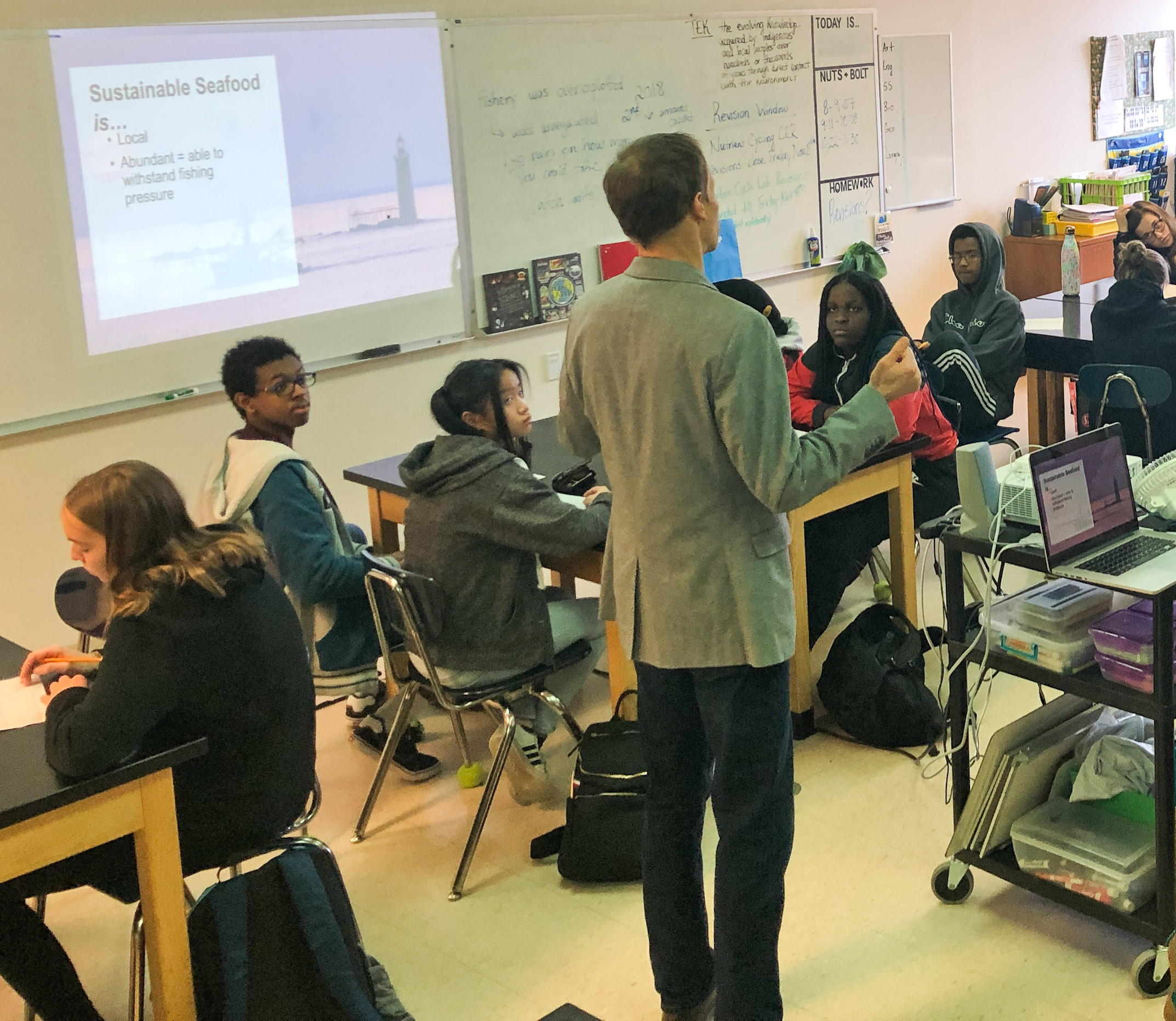
The focus on indigenous subsistence fishing was of particular importance to the 9th graders in Jenny Crowley’s ecology class at Casco Bay High School for Expeditionary Learning in Portland last month. They were learning about human interaction with natural resources and the impact humans can have on their surrounding environments. CBHS immerses students in “expeditions,” which allow them to dive deep into particular issues or topics while incorporating other facets of their education.

We talked about the delicate balance of policy on how to ensure different stakeholders have fair access to the resource. I shared my experience in Bristol Bay, Alaska this summer, talking with indigenous and subsistence fish harvesters there who described the traditions of learning to live in harmony with the salmon, the water and the land.

Finding that natural balance, taking only what they need to eat throughout the year and passing on that knowledge (like how to properly fillet a salmon using a traditional ulu knife and how to use the entire fish) are essential to maintaining that harmony from generation to generation.
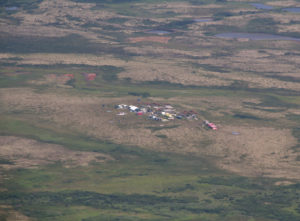
Pebble Mine exploration site. I took this photo during a flight to see how the mine would affect the headwaters of the world’s largest wild salmon run. I shared other photos depicting the breathtaking landscape that is veined with water. Students understood this one human “input” could result in devastation of that habitat.

We also spoke about how the different user groups in Alaska have united together in the past nearly two decades in solidarity to oppose the proposed Pebble Mine. It is largely due to that collaboration and the fierce determination to protect the resource that the proposed gigantic open pit copper and gold mine has not yet been built.

We talked about the tragedy of the commons and how communities working together to determine how best to manage the resource so it continues to provide for the entire community is absolutely essential.

So the students and I took those expeditions together in one-hour increments, talking about important socio-economic issues and how our choices affect the salmon and all marine life.

Collectively, we came to the conclusion that the type of community thinking in Alaska is one reason wild Pacific salmon there shade closer to the best of times.

Perhaps we should apply that model more diligently elsewhere.
All Blog Posts

Students Tackling Sustainability Challenges

  • May 16, 2015October 20, 2021
  • by Colles Stowell
Share it!
Share

The proposal was to create an aquaponics operation that would raise fish and lettuce in a clean environment. No hormones, antibiotics, or pesticides. The system would feature a continuously cleaned tank for the fish, filtering the waste into another system that converts the waste into nitrogen that plants floating on Styrofoam flats in a separate tank would use to grow.

The goal was to come up with a community-oriented operation that would “grow” sustainably raised seafood and produce accessible to the community. Farm to table. Sustainable.

The presenter was a freshman at Casco Bay High School, in Portland, Me., and he was speaking to an audience of about 35 people yesterday.

For the second year in a row, I had the honor to serve as an expert panelist witnessing the presentations from promising freshmen, who proposed a variety of sustainable food solutions for the Portland area. I was once again impressed by the depth of their research, the level of investment in their projects and the overall quality of the proposed solutions.

One student proposed farming blue mussels near net pen salmon to filter the salmon waste, which otherwise would negatively effect the surrounding ecosystem in high concentrations. Essentially, the mussels would serve as a natural filtration system. Other students called for a variety of management measures to mitigate overfishing, while also proposing funded retirement plans to support out-of-work fishermen.

Some students promoted increased development and use of community gardens to help solve food insecurity challenges. This solution would also shorten the distance from farm to table, minimize the use of harmful pesticides and improve the quality of the food we eat. Other students called for increased education about national and local hunger issues, and the need to teach students the importance of growing and supporting organically grown produce.

While none of these solutions are truly groundbreaking, they are the culmination of several months of hard work. Students immersed themselves in their projects, called expeditions. They identified a particular food sustainability challenge, dove into the research, and picked out workable solutions for their communities. They took the time to familiarize themselves with the key issues so they could intelligently answer questions about the projects.

Perhaps most encouraging, these students have now become evangelists for the food sustainability issues that affect them and/or their communities. They have come up with answers that could work. They are thinking for themselves.

I had to remind myself that these are freshmen.

Seafood sustainability is a complex challenge with global, national, regional and local implications. There is no one black-and-white solution. We all need to think about it. And we need to pour as much energy, enthusiasm and creativity as possible into working solutions.

So I am encouraged and rejuvenated when I see the efforts of 9th graders who demonstrate that they too have a stake in the sustainability movement.

Recent Posts

  • Hurricane Ida wreaks havoc on Louisiana’s seafood industry
  • EPA Should Use Clean Water Act To Kill Zombie Mine
  • Slow Fish 2021: Relationship Matters
  • Faith, Façades, and Futility
  • Pebble Permit Paused: Politics at Play

Archives

  • September 2021
  • August 2021
  • April 2021
  • December 2020
  • August 2020
  • June 2020
  • February 2020
  • December 2019
  • November 2019
  • October 2019
  • July 2019
  • May 2019
  • April 2019
  • March 2019
  • January 2019
  • December 2018
  • November 2018
  • June 2018
  • May 2018
  • March 2018
  • February 2018
  • January 2018
  • December 2017
  • November 2017
  • October 2017
  • September 2017
  • August 2017
  • July 2017
  • June 2017
  • May 2017
  • April 2017
  • March 2017
  • January 2017
  • December 2016
  • November 2016
  • October 2016
  • September 2016
  • August 2016
  • July 2016
  • June 2016
  • May 2016
  • April 2016
  • March 2016
  • February 2016
  • January 2016
  • December 2015
  • November 2015
  • October 2015
  • September 2015
  • July 2015
  • June 2015
  • May 2015
  • April 2015
  • March 2015
  • February 2015
  • January 2015
Theme by Colorlib Powered by WordPress