Skip to content
One Fish Foundation
  • Blog
    • Aquaculture
    • Education
    • Environment
    • Policy
    • Wild Harvest
    • Fish Tales
  • About
    • About One Fish
    • About Colles Stowell
  • Education
    • Elementary School
    • Middle School
    • High School
  • KNOW FISH Dinners®
  • Resources
    • One Fish Podcast
    • One Fish Foundation in the news
    • The 7 C’s of Sustainable Seafood
    • Newsletter Archive
    • Recipes
      • Skate with Capers and Butter — Chef Rizwan Ahmed
      • Grandma Davis’ Fish Chowder — Jane Almeida
      • Ginger Garlic Tamari Scallops — Colles Stowell
      • Fish Stock — Evan Mallett
      • Mussels San Remo — Chef Rob Martin
      • Salted Pollock Croquettes – Chef Mark Segal
  • Connect
    • Contact OneFish
    • Social
      • Instagram
      • Facebook
      • Twitter
All Blog Posts

Faith, Façades, and Futility

  • December 9, 2020October 19, 2021
  • by Colles Stowell
Share it!
Share

Politics can be a complex cocktail of all three.

Too often our faith that politicians will do the right thing falters behind false promises and frustration.

Such is the case with environmental protections. Heavily influenced by giant corporations spending billions in lobbying efforts to extract oil, natural gas, timber, minerals, etc., folks in Congress walk a fine line between their concern for staying in office (which requires funding), and following up on their promises to constituents. They often defend their positions with vows to increase jobs and boost the economy while still expressing concern for the environment. That is, they want constituents to believe all these things can co-exist with extractive industries, when they rarely can. You can’t have your cake and eat it too.

Witness the roller coaster ride to protect wild salmon habitat throughout Alaska in the past few months.

You may have noticed the US Army Corps of Engineers recently denied the permit for the proposed Pebble Mine in Bristol Bay. This is great news, and it’s an astounding turnabout from as recently as July when the Corps had issued its final environmental impact statement (EIS) essentially paving the way for the permit’s approval.
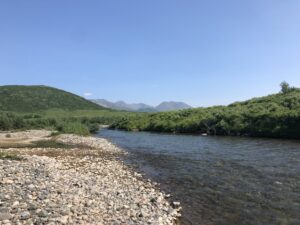
Contact Creek, Bristol Bay. These crystal clear waters invite countless salmon to migrate to their spawning grounds.

The EIS blatantly ignored several glaring environmental threats posed by what would have been North America’s largest open pit copper and gold mine. Chief among those threats is the risk of a failed tailings dam (which holds toxic waste rock from the mining process) because of potential design flaws, earthquakes, and other natural forces. Moreover, because there’s no magic wand that would make several million tons of toxic waste disappear, the threat of a dam failure would be permanent, which the Army Corps failed to address in the EIS.

Changing tides

Then the momentum changed rapidly. First, several prominent Republicans, including Donald Trump, Jr., spoke out against the mine, setting off a chain reaction of other public figures, including President-elect Joe Biden, denouncing the project. The Corps then sent a letter to Pebble’s owners in late August calling for a mitigation plan that would explain how Pebble would mitigate for the wetlands, rivers, and streams its project would permanently destroy. This was the first signal from the Corps that it was willing to acknowledge the science clearly showing the Pebble Mine would cause significant harm to the Bristol Bay watershed and its salmon fishery.

Then a series of damning secret tapes released in September revealed the greed and audacity of the mine’s owners, who bragged about controlling the state’s governor and US Senators. The mine’s owners also boasted on tape that they viewed the mine not as the 20-year project stated in the permit, but as a much larger 200-year mining operation.

The Corps took the next step on Nov. 25 when it announced its denial of Pebble’s permit, stating the project did not meet its mitigation standards and the proposal was contrary to the public interest. The permit denial was a surprising and much welcome gift to the people of Bristol Bay who have been fighting for their homes, livelihoods, and traditions since the Trump Administration re-opened the door for the mine to proceed in 2017.
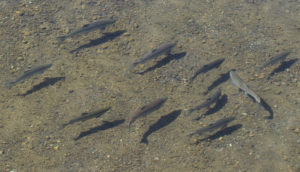
Sockeye on the move in the Brooks River, Bristol Bay.

Seeking permanence

Again, this is great news. I think of all of the salmon warriors I’ve met in the past several years who continue to dedicate so much of themselves to protect the world’s largest intact wild salmon run. I think of the amazing coalition of different user groups like commercial, recreational, and subsistence fishermen and women, who are often at loggerheads, that continue to stand united against this imminent threat to their salmon and their lives.

However, the Bristol Bay watershed is not fully protected. Pebble is stopped for now. But this salmon-rich region will not be fully safe from such threats until permanent protections are in place. If we have learned anything from the last four years, it’s that Bristol Bay is at risk from changes in political winds. So we need to ensure that it is protected for generations to come.

On December 2nd, the Bristol Bay region released its vision for what these long-term protections should look like and a two-step roadmap for how we might get there. First, the EPA needs to use its authority under the Clean Water Act to veto the Pebble Mine and establish clear, science-based restrictions on mining activity in Bristol Bay’s headwaters. The region has been asking for an EPA veto from the outset.

Second, Congress needs to designate a national fisheries area to provide permanent federal protection for the watersheds of Bristol Bay against any toxic mine waste from any project like Pebble.
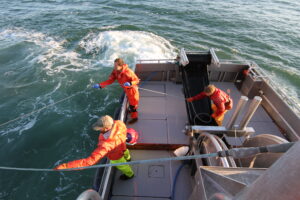
Captain Steve Kurian and crew aboard the F/V Ava Jane, fishing for sockeye in the mouth of the Naknek River.

Copper, wood, and oil 

All of this comes back to the question of why the administration changed its mind so fast. And it speaks to the façades so prominent in politics. Alaska Governor Mike Dunleavy has been quite vocal in his support of the mine, even posing for a photo aboard Air Force One ostensibly during a meeting to promote the mine.

Until recently, Alaska’s US Senators Lisa Murkowski and Dan Suillivan have said they opposed the mine, but they’ve been fairly non-committal about actually stopping Pebble … even after a majority of Alaskans had said they oppose the mine. Neither senator called for a clear, outright rejection of the project until after the release of the Pebble Tapes claiming they were in the pockets of Pebble’s owners and sitting quietly in the corner while the permitting process played out. Strange timing.

Bristol Bay is just one example of the pitched battles to protect vital natural resources across Alaska and throughout the US. During all of the publicity around the mounting political opposition to Pebble, the administration began to redouble efforts to green light other extraction projects it had advocated for in the past couple of years.
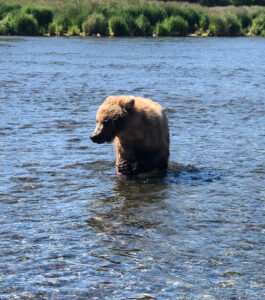
Brown bear on the prowl below Brooks Falls near Naknek and Brooks lakes.

The administration accelerated a push to remove the so-called “roadless rule” protection from the Tongass National Forest, the largest intact temperate rainforest in the world. Removing this protection literally paves the way for clear-cut logging in this pristine, 9 million acre forest, which has been described as the lungs of North America because of its oxygen output and carbon sequestration. It also contains thousands of streams that are home to myriad species, including many anadromous fish like wild salmon and trout.

At the same time, the administration opened up the Arctic National Wildlife Refuge (in Northern Alaska) to oil drilling, having posted the auction for permits on Dec. 7.

Is it a coincidence that these two environmental threats were more actively pushed forward while Pebble was retracted?

Ironically, Murkowski, Sullivan, and Congressman Don Young released a joint statement on Oct. 25 supporting logging in Tongass as creating jobs. The same delegation released another joint statement on Dec. 3 praising the administration’s decision to formally open ANWR to oil drilling by selling leases.

The timing of all of this raises questions considering the Army Corps called for the mitigation plan in late August and denied the permit on Nov. 25. Some observers who closely watch environmental politics suspect a deal was made. Save Bristol Bay, but sweep aside the roadless rule and open up drilling in ANWR.

Perseverance 

Enter the futility of politics. If in fact a deal was made to save Bristol Bay at the expense of the others, the frustration is maddening. The notion of trading precious natural resources like poker chips is appalling. Especially when the pristine ecosystems in question support myriad species as well as Alaska citizens and tens of thousands of jobs in industries that carry a multi-billion dollar economic impact to the state … without the ecological threat of rampant logging and mining.

Sadly, backroom deals happen all the time.

Here’s what we know:

  1. It would be folly to assume that Bristol Bay got the reprieve at the expense of Tongass and ANWR simply because of a backroom deal. There are too many mitigating factors for these decisions to be made solely based on one such deal. The issues are just too complex.
  2. We may never know for sure if any deal may have at least played some role in the overall outcome. Even if so, that doesn’t change the reality that all three regions absolutely need permanent protections.
  3. Bristol Bay’s reprieve remains temporary until protections become permanent.
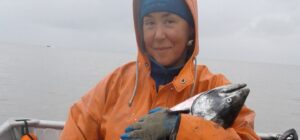
Melanie Brown, salmon warrior. She fishes commercially on the site her great grandfather established on the Naknek River.

The sheer will and collective unity to protect the resource, the people, and the Native cultures that depend on the annual return of Bristol Bay salmon is at the heart of why the Pebble Mine is not now operating. Even when the mine seemed inevitable back in July and countless folks on the frontlines felt burned out from standing up to the mine for as long as 15 years, the fight continued. More people from diverse backgrounds rallied to the cause. This powerful coalition will continue to fight until Bristol Bay gains permanent protection.

Perhaps we should view the collective efforts that put the Pebble Mine on its deathbed as a blueprint for how to address similar threats to important natural resources. It’s a testament of how standing up to heavily funded corporations and confounding politics to protect priceless resources is not only possible, but definitely achievable.

There are already long-standing, dedicated movements to safeguard both Tongass and ANWR (see calls to action below). The success of this opposition, as with every other effort to protect critical habitat, again hinges on the continued persistence, time, energy, and faith of a broad coalition willing to persevere against what seems like long odds. In the end, our voices matter, whether we live in the region, state, or even time zone where these ecological challenges exist.

For if we don’t unite to navigate the political waters to protect our most precious resources wherever they are, the resulting cocktail will prove toxic.


Calls to action

Here are ways to learn more and engage:

Stop Pebble Mine Now: Direct calls to action to ask EPA to veto Pebble Mine and ask Congress to permanently protect Bristol Bay.

Salmonstate Tongass Action Page: Direct appeal to the incoming Biden administration to protect Tongass.

Defend the sacred: Here is a specific month-long targeted call to action.
 

All Blog Posts

Arctic Climate Change Could Have Irreversible Global Impact

  • December 21, 2016October 20, 2021
  • by Colles Stowell
Share it!
Share

Every time I read a story with dire predictions about climate change impacts I imagine a gong the size of a barn door sending a warning echo off the mountains in the distance.

A team of scientists recently released a report stating that changes in the Arctic climate, everything from melting polar ice caps to warming waters and changing ocean salinity is happening faster than previously predicted. Currently, the atmospheric temperatures there are about 20 degrees Celsius warmer than normal and water temperatures are 4 degrees warmer than normal. The likelihood of no summer sea ice forming this century is very high.

Arctic tipping points

The Arctic Resilience Report states that all of this could push conditions in the Arctic toward 19 regime shifts or tipping points – climate situations that if reached, may prove to be irreversible. For example, the Greenland ice sheet is widely considered the Northern Hemisphere’s air conditioner. It is massive, nearly 1.1 million square miles, and it serves a critical role in keeping temperatures above the equator from getting too hot. This massive sheet of ice acts like a mirror, reflecting the sun’s powerful rays back into space and minimizing solar radiation warming.

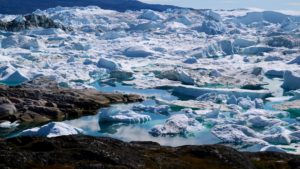
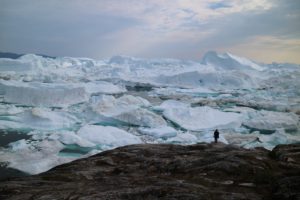
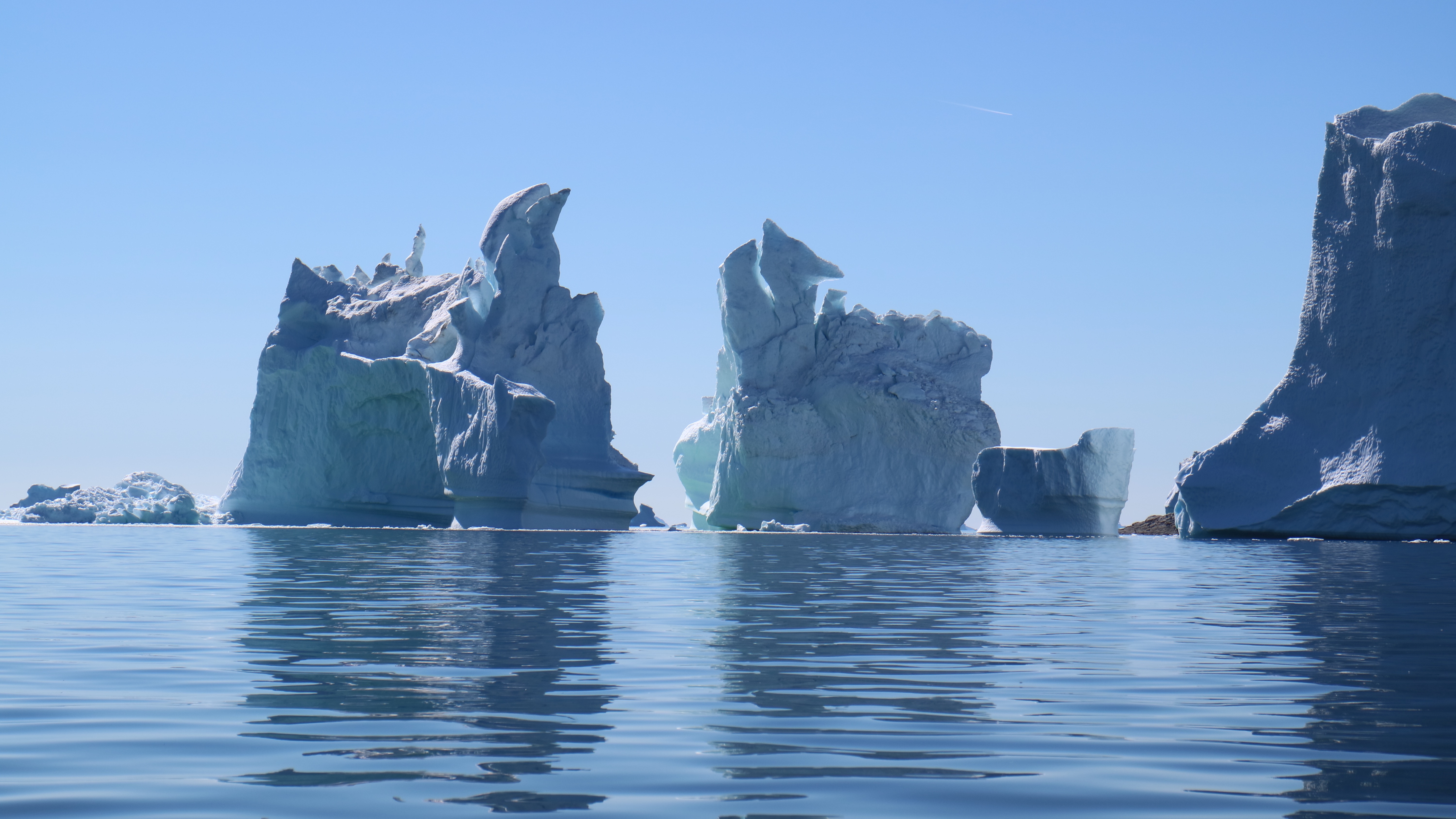
The melting Greenland ice sheet. Photo by Marcus Carson

But as global temperatures have risen, the ice sheet has become thinner and smaller, and as waters around the sheet have become warmer, they have accelerated melting. This creates a cycle in which the sheet’s shrinking could accelerate localized climate change, which could further accelerate the ice sheet’s shrinking. If the ice sheet disappears (which could take centuries), scientists predict it could cause global sea levels to rise by more than 20 feet.

This is just one of the 19 tipping points. Others include: Arctic sea ice loss, which would have some of the same effects as the melting of the Greenland ice sheet; changes in ocean salinity and current, which could spread warmer water faster than normal, with global implications; changes in land-based ecosystems that could release more greenhouse gases and reduce ice/snow reflectivity; and changes in Arctic snow patterns, which could also increase global ocean temperatures that effect climate patterns such as the monsoon season in Asia.

Fisheries impact

And then there is the impact on fisheries. The report cites manmade climate change (greenhouse gases, warming oceans, pollution, etc.) as well as other external factors like fishing pressure, as drivers for what could result in fisheries collapses in the Arctic. This could play out in a couple of different ways. First, a combination of warming water, shifting current, salinity and acidification could alter the vital nutrient upwellings that produce the plankton forage fish feed on. If the forage fish don’t thrive, neither do commercially important species like salmon, cod, pollock and shrimp. Couple that with continued fishing pressure, and you’ve got a recipe for collapse.

Climate change could cause fisheries collapse in the Arctic and elsewhere. Photo by Marcus Carson

The question is, how could fisheries collapse in the Arctic affect fisheries elsewhere?

This is no small question.

Complex challenges

So I asked Marcus Carson, one of the lead authors of the 218-page report. He talked about what we know and don’t know about how rapidly things are changing. “Often, when we see these things, it’s really hard to set in motion the processes we need to take them back,” he said from his home in Sweden.

“The challenge is the relational understanding. We understand the silos [warming oceans, ice melt, carbon storage in peat bogs, etc.] pretty well. What we’re lacking is how these connections in these really complex systems really work.”

Marcus Carson. Photo by Mark Tozer

For example, he mentioned that ocean acidification, the process by which the overall acidity of the ocean increases due to increased environmental carbon release, was not included as one of the tipping points in the report because scientists couldn’t pinpoint how it will behave in concert with other factors like salinity, temperature, current, etc. What scientists do know is that the rate of acidification in the Arctic has increased twice as high as almost anywhere on earth, and that acidification is generally higher in colder water.

“What we don’t understand is the exact relation between climate change and ocean acidification where fisheries are involved,” he said. Many species follow temperature, which is the case with some species here in the Gulf of Maine. For example, as waters have warmed off Long Island Sound, lobsters have pushed north and east, and there is no sustainable lobster fishery there anymore.

We also know as we dump more carbon into the atmosphere and put more chemicals into our estuaries, the acidity goes up. But as Carson said, we don’t yet know how changes in acidification from these types of drivers will work in concert with temperature, salinity, current to affect marine food webs. Species that are more tolerant of some or all of these drivers will likely thrive more in a changing Arctic climate than others.

We need to better understand how all climate change factors could affect entire food webs. Photo by Mark Tozer

“There may be some biological variability that might get species competing with each other moving into the same space,” he said.

When it comes to impact on climate change in the Arctic affecting fisheries there and elsewhere, we still have to take a broad view. There will undoubtedly be an impact, especially when considering how currents will channel warmer, denser water globally.

A global climate

“There’s a saying around the working groups of the Arctic Council. ‘What happens in the Arctic doesn’t stay there.’ A lot of changes beyond seasonal fluctuations aren’t generated there. They start outside the Arctic, and get in there,” he said. And the changes in the Arctic may have global impacts.

“The implication with these 19 potential shifts … is that when these things start interacting with one another, the concern is that we could be setting forces in motion that are wildly out of our control,” he said.

The cycle continues. Melting ice sheet allows more solar rays to warm oceans and atmosphere, accelerating ice melt. Photo by Marcus Carson

Not surprisingly, almost every response option cited in the report for the 19 tipping points calls for some form of reducing global greenhouse gases and shifting toward renewable energy.

This is the same message a majority of scientists have been saying in ever growing numbers and volume. However, the incoming administration has virtually declared war on climate change science.

Asked about threats to defund NASA’s climate science regimen, Carson used the analogy of “tearing the instrument panel out of your plane while in flight. It’s like you want to poke our eyes out while we’re heading into these big changes.”

Indeed.

That gong is getting louder. Do you hear it?


All Blog Posts

Climatologist Sees Climate Change as Innovation Opportunity

  • April 11, 2016October 20, 2021
  • by Colles Stowell
Share it!
Share

Cameron Wake is used to being called “Dr. Doom.” He’s an ice core paleoclimatologist at the University of New Hampshire who’s been studying glaciers and their behavior for more than 30 years. He’s been on the forefront of some of the leading research into climate change, much of which now predicts more than six feet of sea level rise by 2100. That’s not fully accounting for the possible 20-25 additional feet of higher water if all of the earth’s glaciers melt.

So naturally, he does his best to be optimistic.

“Climate change is the innovation opportunity of the 21st century,” he says, whether at a climate summit hosted by MIT Seagrant in 2014, or at an intimate gathering of 200 in Portsmouth, N.H. on March 28. Even though the range of possible sea level rise jumped 2.6 feet from 2014 to 2016, his insistence on the opportunity angle echoes some of the enthusiasm born of the global climate accord reached in Paris in December.

“Climate changes,” he said. “It always has and it always will. The biggest difference today is that there is an extensive and ever-growing body of scientific evidence that shows that humans are the main driver of that change.”

But, we have time to avoid some of the darkest “Dr. Doom” predictions … if we act now, and decisively, he said.

There is an interesting dialectic at play with climate change that can be a bit challenging to grasp. At the Maine Fisherman’s forum last month, NOAA’s John Hare made a striking comment: “Climate change has a long memory.” The next 25-50 years of climate change are already fixed based on what we’ve done up until now. However, the steps we take now to reduce greenhouse gases, widely accepted as the leading culprit causing global warming, will affect our climate after 50 years or so.

In Portsmouth, Wake described why studying the different strata of glaciers yields so much information about what the climate has done in the past. “Glaciers are great archives,” he said. “We can look at oxygen isotopes to see what has happened.” One fairly constant measure is that when CO2 levels are high, the temperatures are higher, when they are low, temperatures are low.

Wake put some of the need to act immediately and globally in context with some recent data:

  • Within the past 18,000 years, massive ice sheets that once covered North America and Northern Europe have melted;
  • To slow long-term climate change effects, we need to keep global CO2 at 400 parts per million. We are now on a path toward 1,000 parts per million;
  • Arctic sea ice is the air conditioner for the northern hemisphere, reflecting UV rays back into the atmosphere. If that ice melts, it will lead to warming of the atmosphere and the oceans, accelerating global warming;
  • We’ve seen a significant reduction in Arctic sea ice in the summer since 1975. Sea ice is likely going to disappear in the Arctic Ocean this summer;
  • The rate of the Greenland ice sheet moving toward the ocean where it melts has doubled in the past decade. One particular glacier, the size of Mount Washington in N.H., has doubled its rate toward the Atlantic;
  • We may not fully understand the physics of glacial movement and melting in light of global warming for another decade;
  • There will be no shortage of fresh water in New England. The number of rain events in Southern N.H. with more than four inches in 48 hours is projected to jump from four between 1980-2009 to nearly 12 between 2070 to 2099. This means we’ll have more water falling in fewer events, making coastal and flood plain areas more vulnerable;
  • “It’s a challenge to talk about future on climate because we don’t know what humans are going to do,” said Wake, explaining why climatologists now use two scenarios representing high and low carbon emissions. While there is little variability between the two scenarios until 2050 because the pattern is locked, potential temperature ranges for New Hampshire vary widely afterward. If we drastically cut greenhouse gases, the average number of summer days hotter than 90 degrees Fahrenheit would be 20-25. If we continue on our current path of greenhouse gas emissions, New Hampshire could experience 50-60 days above 90 degrees;

“We can’t wait until 2050 or 2080 to address this challenge,” he said. “We won’t have enough money in one year to adapt. We need to keep checking back in with the science. Where there is little tolerance for risk, communities should commit to 4 feet of sea level of rise, but be flexible to manage to 6.6 feet.”

Solutions

To begin with, we need to at least meet the emissions goals set at the Paris accord. It was a significant achievement to get nearly 200 nations to commit to do something to reduce carbon emissions, with a goal of limiting global temperature increase to 2 degrees Celsius (3.5 degrees Fahrenheit) by 2100. But even with those commitments, we’d only keep the global temperature rise to 3 degrees Celsius, many scientists say. We have to get the largest polluters, China, the U.S., India and other countries to cut more.

“We must decouple economic growth from greenhouse emissions,” said Wake. That means leaving a lot of fossil fuels in the ground. To prevent global temperature increases of more than 2 degrees Celsius, we must not burn 82% of the coal, 49% of the gas and 33% of the oil global reserves. We also need to increase annual global renewable energy investments to at least $1 trillion, he said. That kind of investment will likely yield innovations that make renewable energy more affordable and accessible on a global scale.

Most importantly, he said, we need to make personal commitments to reduce our carbon footprints. “I think every home should be its own powerhouse,” he said. Solar panels, efficient heating systems, better insulation, efficient windows, etc. are all some of the ways to reduce the carbon footprint of our homes.

“Think about what you can do. Your family. Your community.”

Resources

 Cameron Wake’s slide presentation in Portsmouth

Chasing ice: Incredible video of largest ice calving event (Ilulissat Glacier, Greenland) ever captured on film.

New York Times article on new research showing how quickly the West Antarctic ice sheet could melt

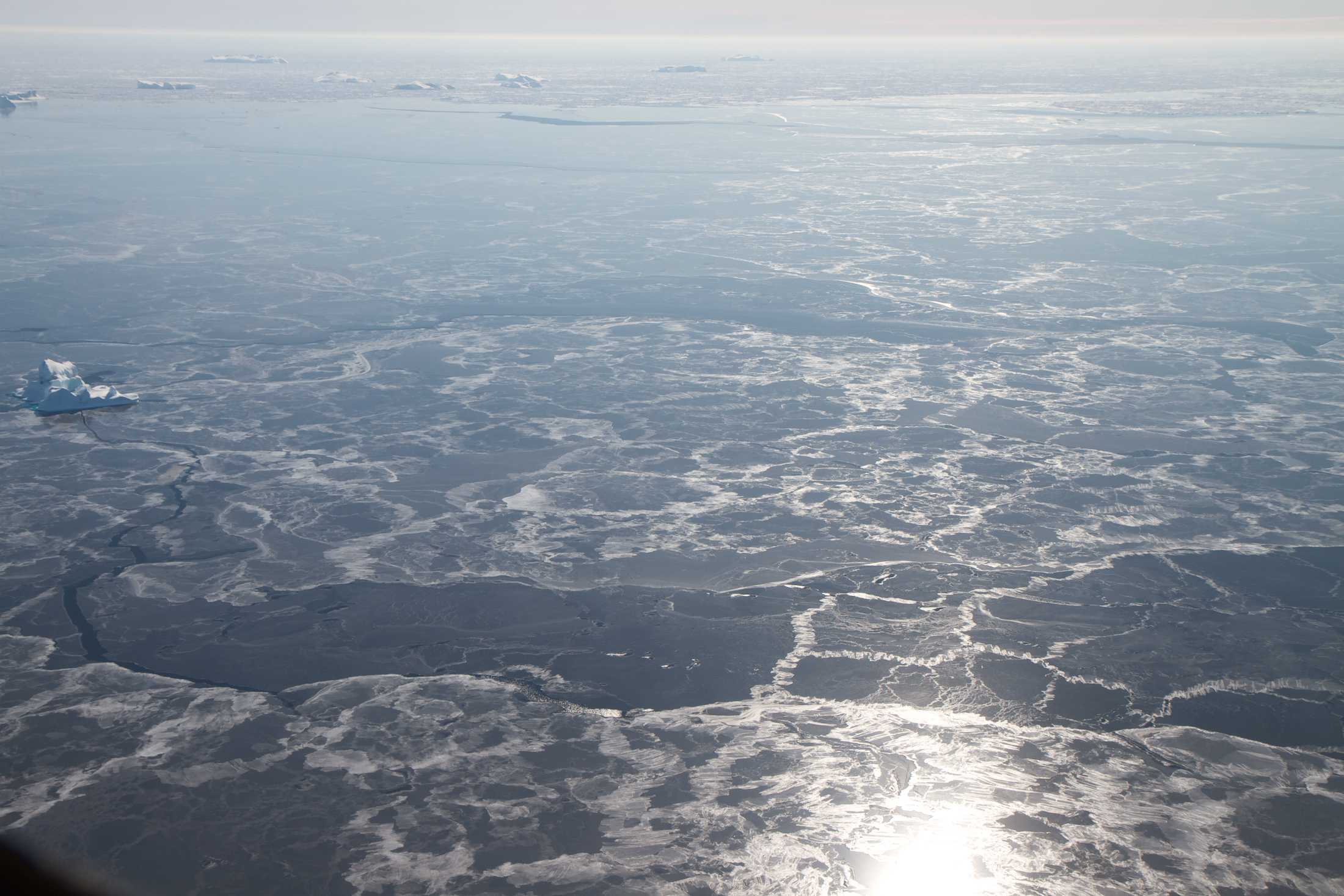
photo: Thin sea ice and a few floating ice bergs near the Denmark Strait off of eastern Greenland. Credit: NASA/Jefferson Beck

All Blog Posts

Climate Change Could Have Unintended Benefit in Arctic

  • October 19, 2015October 20, 2021
  • by Colles Stowell
Share it!
Share

There have been enough scary headlines about climate change for us to know that warming temperatures could have disastrous effects on our planet. Increased carbon content from industrial processes leads to higher atmospheric and oceanic temperatures fueling melting glaciers and ice caps leading to rising oceans, etc. Read more “Climate Change Could Have Unintended Benefit in Arctic” →

Recent Posts

  • Hurricane Ida wreaks havoc on Louisiana’s seafood industry
  • EPA Should Use Clean Water Act To Kill Zombie Mine
  • Slow Fish 2021: Relationship Matters
  • Faith, Façades, and Futility
  • Pebble Permit Paused: Politics at Play

Archives

  • September 2021
  • August 2021
  • April 2021
  • December 2020
  • August 2020
  • June 2020
  • February 2020
  • December 2019
  • November 2019
  • October 2019
  • July 2019
  • May 2019
  • April 2019
  • March 2019
  • January 2019
  • December 2018
  • November 2018
  • June 2018
  • May 2018
  • March 2018
  • February 2018
  • January 2018
  • December 2017
  • November 2017
  • October 2017
  • September 2017
  • August 2017
  • July 2017
  • June 2017
  • May 2017
  • April 2017
  • March 2017
  • January 2017
  • December 2016
  • November 2016
  • October 2016
  • September 2016
  • August 2016
  • July 2016
  • June 2016
  • May 2016
  • April 2016
  • March 2016
  • February 2016
  • January 2016
  • December 2015
  • November 2015
  • October 2015
  • September 2015
  • July 2015
  • June 2015
  • May 2015
  • April 2015
  • March 2015
  • February 2015
  • January 2015
Theme by Colorlib Powered by WordPress